

The sacrifice of the soldiers and generals for the Hindavi Swarajya as envisaged by Chhatrapati Shivaji Maharaj is supreme. Similarly, in the present times, many devout Hindus and patriotic citizens of this country have been striving to protect the Nation & Dharma.
The ‘Warriors of Hindutva’ is a series of Articles that sheds light on their life and struggle to protect Hindu Dharma. We hope that it serves as a catalyst for the mission of establishing the ‘Hindu Rashtra’ and inspires many others. – Editor
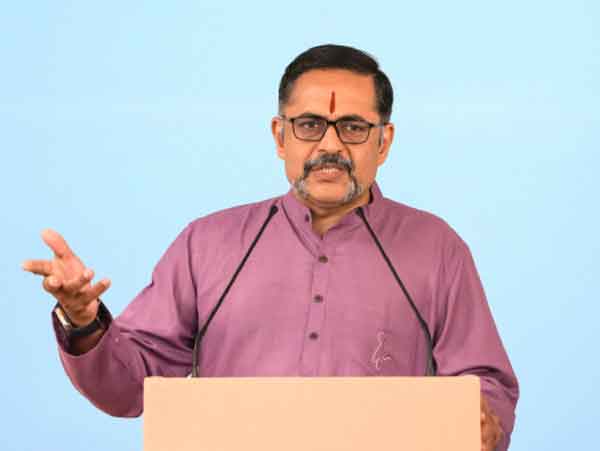
Dr Amit Thadhani is a renowned general surgeon who has been practising in Mumbai and Navi Mumbai for the past 25 years. He is the former President of the Chembur branch of the Indian Medical Association and a key member of several medical organisations. He is also a social activist who has provided free medical treatment to over 11,000 patients in disaster-affected regions of India and Nepal. He plays the guitar in the ‘All-Doctor Musical Band’ and engages in organic farming in his leisure time.
Dr Thadhani has presented through various platforms, a well-researched argument exposing the conspiracy to falsely implicate the devout Hindus in the murders of so-called progressive figures. He has strongly refuted the false narrative of ‘Saffron Terror’ and continues to raise awareness about this issue across platforms. He is also vocal against the Government control of temples and actively promotes public awareness on this issue. Let us learn more about his multi-faceted contributions.
1. Contributions to Medicine and social work
Dr Amit Thadhani, a skilled surgeon, has been active in the medical field for 25 years. He is a trustee of the voluntary organisation ‘PEHL Services’. Along with his colleagues and organisations such as Chinmaya Mission, Shantikunj Ashram, and the Rashtriya Swayamsevak Sangh (RSS), he has provided free medical treatment to over 11,000 patients in disaster-affected areas of Uttarakhand, Nepal, Chennai, and Maharashtra.
He has organised medical camps for tribal communities in three Districts of Maharashtra and has facilitated free healthcare services for rural populations through Government and charitable hospitals. His organisation supports the education of 500 children, and thousands benefit from its programmes. In Lucknow (Uttar Pradesh), his organisation holds skill development programmes for young boys and girls who are victims of sexual abuse. Various child and women safety programmes are also conducted under his organisation.
2. Exposing the conspiracy against the devout Hindus in the Dabholkar murder case through his book
Dr Thadhani brought to light the conspiracy to falsely implicate the devout Hindus in the Dabholkar murder case. He authored a book presenting the Hindu perspective to society.
Upon realising that the list of suspects in the Dabholkar case kept changing, he undertook a deep and investigative study of the matter. He discovered that the devout Hindus and seekers of Sanatan Sanstha named in the case were innocent and had been targeted out of malice despite lack of evidence. Eyewitnesses in the case had identified different individuals as the assailants at the behest of the Police, and even the suspect sketches had been altered.
Opposing the anti-Superstition law was one of the motivations cited against the accused. Old emails from seven years prior were retrieved to build a narrative that Dabholkar had been under surveillance before being killed.
Three of the accused in the case have already been acquitted by the Court, and there is hope that the two currently on trial in the Bombay High Court will also be exonerated soon.
Dr Thadhani wrote a book titled ‘The Rationalist Murders’ in Marathi and English, where he discusses the 10,000-page chargesheet, multiple Court rulings, numerous false reporting by media based on anonymous CBI sources, and how these efforts misdirected the investigation.
3. Legal petition against corruption in Online booking for darshan in Temple
During the COVID-19 pandemic, Mumbai’s famous Shri Siddhivinayak Temple began charging fees for entry.
Dr Thadhani filed a petition against this practice to put an end to it. During the pandemic, the Government banned in-person visits to the Temple and mandated Online registration through an App. Middlemen standing outside the Temple would block most of the App’s slots, forcing ordinary devotees to pay large amounts to gain entry. All of this happened in plain sight of Temple staff and security. After Dr Thadhani’s petition, the Temple trustees resumed allowing direct entry and curbed the misuse of the App by middlemen.
He also raised his voice against the corruption in the Temple through social media. Newspapers published a few articles on the matter, prompting the Temple authorities to implement a new system, limiting online reservations to just one day in advance.
(Ref.: SanatanPrabhat.org)
See on the above website : Dr Amit Thadani busts the myth of doctors ‘looting’, explains failure of Ayushman Bharat.
Dr Amit Thadhani’s views on Government-controlled temples, including Mumbai’s Shri Siddhivinayak Ganapati Temple

In 1980, citing internal disagreements among trustees of the Shri Siddhivinayak Ganapati Temple at Prabhadevi, the Maharashtra Government issued an ordinance and later turned it into a law, bringing the Temple under Government control.
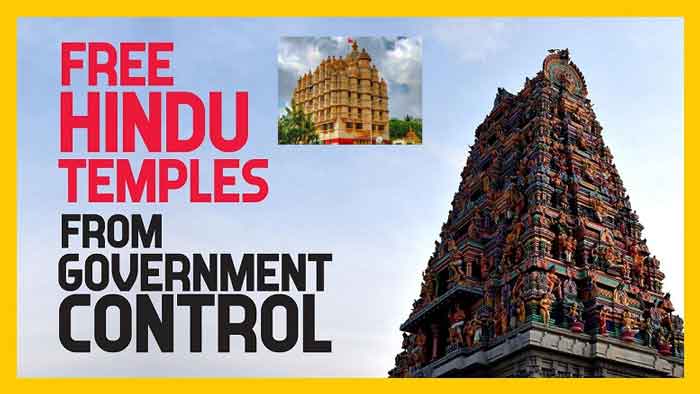
The trust was renamed ‘Shri Siddhivinayak Ganapati Mandir Trust’. The law mandates that all trustees must be Hindus, but this is not always followed. The staff receive salaries, and every trustee is a political figure. The Temple’s funds should be used for its development, rituals, and property purchases, but in practice, this doesn’t happen. Funds are diverted to schools, hospitals, and charities.
For instance, money from the Temple is used to fund the Siddhivinayak Cancer Hospital in Miraj. There are systemic flaws at every level of the Temple’s administration.
Through the Right to Information Act, we obtained financial records and exposed corruption. Temple funds are even given to Muslims – why are those who don’t believe in the temple being funded by it ? Instead of appointing only political leaders as trustees, competent individuals should be selected.
Temples should be freed from Government control and handed back to devotees, and temple funds must be used exclusively for Hindus, Hindu Dharma, and temple development.
We are actively working with the devout Hindu organisations to achieve these goals.
– Dr Amit Thadhani
 The Temple has fixed deposits worth ₹472 crore and gold and silver worth ₹300 crore !
 Criminal case against 11 members of a Christian organisation who claimed that “Hindu is an abusive term, meaning thief, bandit and slave” will not be quashed !
 The Ahmedabad Terror Verdict: A Strategic Milestone in the Evolution of the Indian State
 Fanatical Muslims attack historic Shri Kalimata Temple in Bangladesh
 Nehruji’s Selection by Gandhiji for Congress Presidentship Again and Again
 K’taka Govt to conduct survey to remove encroachments on temple lands : Deputy Chief Minister