
Special Historical Feature | How Jawaharlal Nehru Was Chosen Over Sardar Patel in 1946
At a Glance• Twelve of the fifteen Provincial Congress Committees reportedly nominated Sardar Vallabhbhai Patel in 1946.• Mahatma Gandhi expressed his preference for Jawaharlal Nehru.• Nehru ultimately became Congress President and later India’s first Prime Minister.• The article draws upon historical works, archival newspapers, and contemporary accounts to examine this leadership decision.• It also revisits Gandhi’s earlier support for Nehru in 1929 and 1937. |
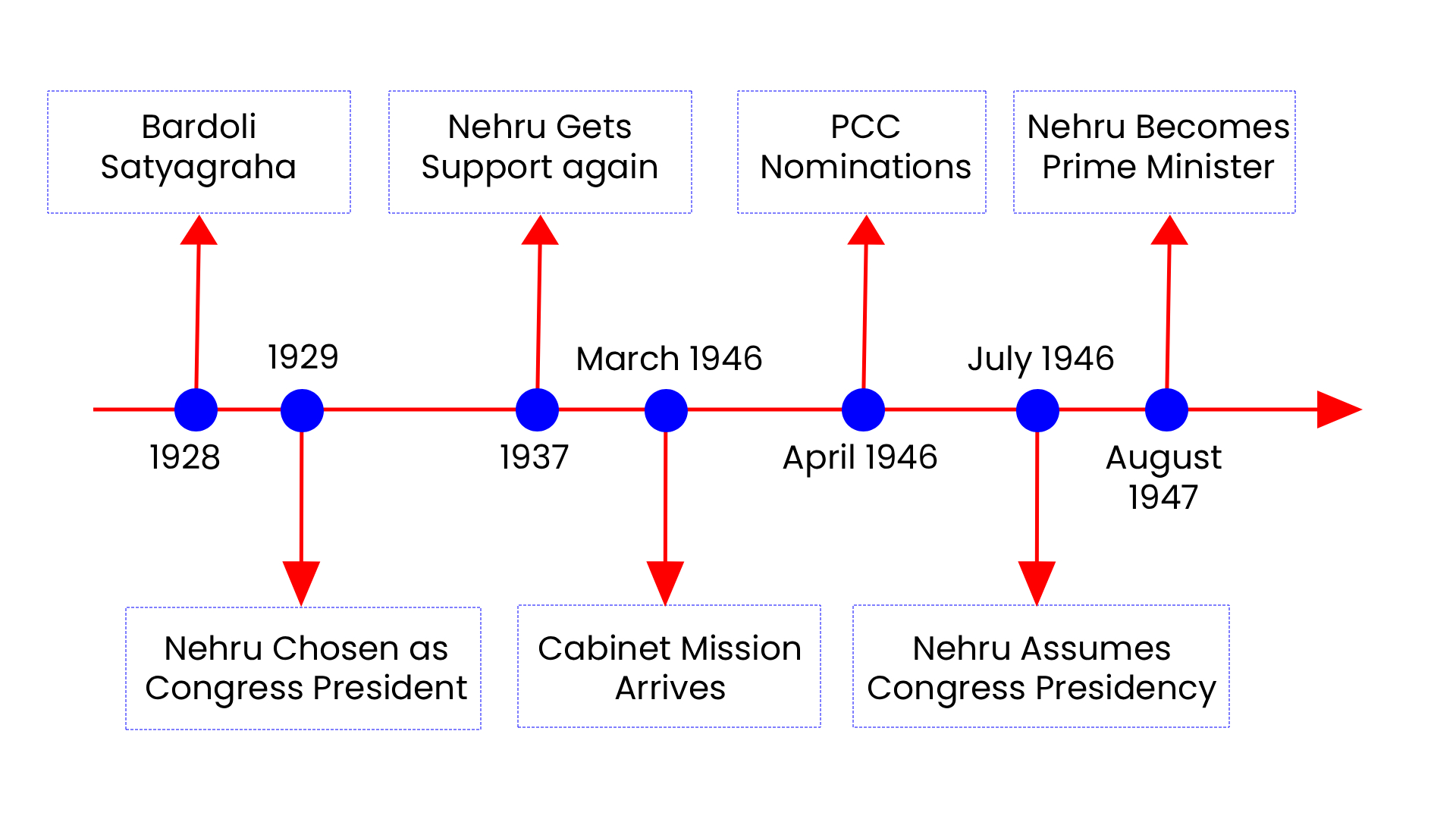
Key Members mentioned in this article
| Person | Role |
| Mahatma Gandhi | Congress leader |
| Jawaharlal Nehru | Congress leader |
| Sardar Vallabhbhai Patel | Congress leader |
| Acharya Kripalani | Congress leader |
| Maulana Azad | Congress President |
| Stafford Cripps | Cabinet Mission member |
| Rajmohan Gandhi | Historian and author |
Historical Note
This article presents an interpretation of historical events based on published books, archival records, newspaper reports, and contemporary accounts cited by the author. Readers are encouraged to study the referenced sources to explore the subject in greater depth.
Why the 1946 Congress Presidency Mattered
Nehru’s selection as Congress President in disregard of Patel in 1946 was not the only occasion when undue favour was shown to Jawaharlal Nehru. This was the third occasion when Gandhiji tilted the balance in favour of Nehru, against Patel, in the selection of the Congress President. This fact is in the public domain, but only recently has his selection, in contravention of democratic norms, become a matter of public discourse.
Nehruji’s Selection in April 1946: Assumption of Office on July 6 :
The reasons as to why Gandhi Favoured Nehru
|
Selection by Gandhiji this time resulted from several factors. An important factor was the meteoric rise in his stature since 1920, driven by family wealth and his father’s political clout. Nehru came to have the chance to cultivate relations with the British politicians since the 1930s, which paid him rich dividends. This fact may have made Gandhiji put his weight in Nehru’s favour in the scale. Krishna Menon, acting as a literary agent and fierce promoter of Nehruji, ensured that his writings were published globally, making him known in countries outside India. Stafford Cripps of Cripps Mission fame and leader of the Cabinet Mission was intimately involved with Krishna Menon and the India League in the 1930s. He became a member of the war cabinet in 1942. He was sent to India in March 1942. He retained a role in Indian affairs as a member of the Cabinet Mission and Secretary for India in the British Cabinet. He served in the 1945-51 Atlee ministry, therefore had a voice in sending a viceroy to India whose wife came to have an intimate relationship with Nehru.
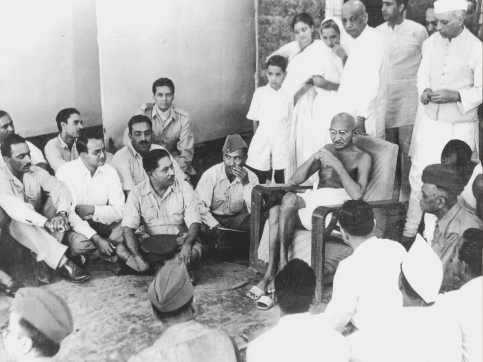
Gandhi at one of his meetings
In Mid-March 1946, Nehru was invited by Mount Baton to Singapore, and a grand welcome was arranged by the future viceroy of India for the intended Prime Minister of India. The ostensible purpose for this invitation was to defuse political tensions surrounding the Indian National Army, but the real purpose was to build a personal relationship with the future Indian leadership. The relations so forged proved ominous for the future.
Provincial Congress Committee Nominations
The Cabinet Mission arrived in Delhi on March 24, 1946. Nehru returned to Delhi after his journey to Singapore and Malaysia on March 26. Cripps, an important member of this mission, a left-wing British Labour Party politician, had visited India in 1939 as Nehru’s personal guest. Before this, Nehru and his daughter Indira visited England and stayed for some days at Cripps’ country house in the summer of 1938.
The National Archives of the United Kingdom reveal that the Labourites were as imperialistic as the Conservatives. Only they were more realistic. They deceived Nehru with their left-wing credentials.
Provincial Congress Committee Nominations
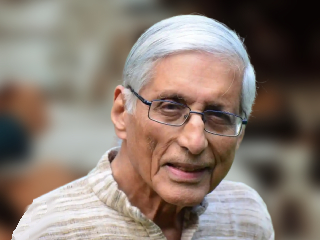
Rajmohan Gandhi, Mahatma Gandhi’s Grandson
Rajmohan Gandhi exposes Gandhiji’s favouritism for Nehru in great detail in his well-researched work ‘Patel: A Life’. He writes forthrightly in the introduction of this book, “Whether or not Gandhi was unjust to Patel when the moment arrived to select free India’s first Premier is a question that frequently crops up. The answer disclosed by my inquiry will be found in these pages. But the opinion of some that the Mahatma had been less than fair to Vallabhbhai was a factor in my decision to attempt to write the latter’s life. If a wrong had been perpetrated, some reparation from one of the Mahatma’s grandsons would be in order”.
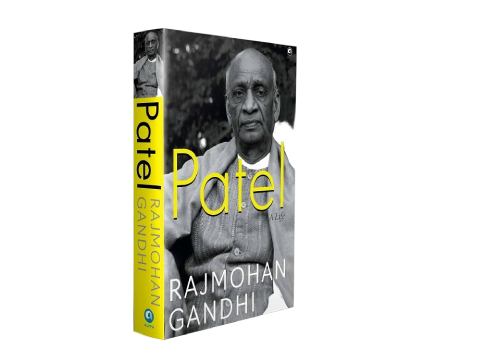
‘Patel: A Life’, a book written by Rajmohan Gandhi
Rajmohan Gandhi gives details of the selection of Nehruji in 1929, 1937 and 1946 in his work. The mode of selection of Nehruji in 1946 has been described in pages 369 to 372 of his book.
In 1946, Maulana Azad, who had remained Congress President since 1939, wanted to be re-elected, as there was an opportunity to become Prime Minister of the country. His ambition perturbed Pandit Nehru, who had his own ambition. But Patel was most eligible for the position as most provincial Congress Committees had nominated him. Kripalani, too, had been proposed.
April 29 was the last date for nominations. Gandhiji had indicated on 20 April, privately, his favour for Nehruji. To discourage, Azad Gandhiji wrote to him, “In today’s circumstances, I would if asked prefer Jawaharlal. I have many reasons for this”.
Despite Gandhiji’s indication, 12 of the fifteen Provincial Congress Committees nominated Patel and none for Nehru. If Gandhi had his reasons for wanting Jawaharlal, the party had its for reason for wanting Patel, whom it saw, as Kripalani later said, as “a great executive, organiser and leader”, writes Rajmohan Gandhi.
Though Gandhi wanted Nehruji, his nomination almost missed the due date, April 29. No PCC had proposed his name. In deference to Gandhiji’s wishes, Kripalani sent a paper round, proposing the name of Jawaharlal on April 25, during a Working Committee meeting in New Delhi. According to Kripalani, “the members of the Working Committee signed it and also some local members of the AICC.” This suggests that Vallabhbhai also signed Nehru’s nomination.
Gandhiji argued that
(1) Nehruji could not be replaced, as at that time he was most suitable for taking charge from the Englishmen. He, being a Harrow boy, a Cambridge graduate and a barrister, was wanted to carry on the negotiations with Englishmen.
(2) Nehru’s rapport with a large section of Muslims, contrasted with Vallabhbhai’s disinclination to establish it.
(3) Gandhiji feared that Nehru would not be prepared to take second place.
(4) A reason for Nehru’s choice by him was that he was better known abroad than Sardar and therefore would make India play a role in international affairs.
(5) Gandhi realised that Jawaharlal’s selection would not deprive India of Patel’s services and that the two would work as partners. “They will be like two oxen yoked to the governmental cart. One will need the other, and both will pull together,” said he.
Call him adroit or resourceful, Gandhiji made simple-minded Achary Kriplani pull his chestnuts out of the fire, a tool to fulfil his heart’s wish.
Patel’s Response
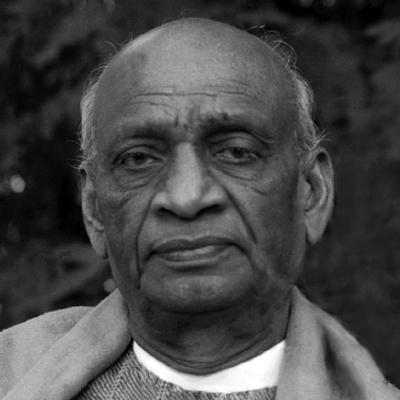
Sardar Vallabhai Patel (The “Iron Man” of India)
As soon as Nehru had been formally proposed, Kripalani withdrew his own nomination and handed Patel a fresh piece of paper with the latter’s withdrawal written out on it. Vallabhbhai was pulling out, Kripalani’s draft said, “so that Nehru could be elected unopposed.” All that was now needed was Patel’s signature. He showed the sheet to Gandhi, who, despite his preference, allowed Jawaharlal to stand down in the Sardar’s favour. “No, PCC has put forward your name,” the Mahatma said to Nehru, “only the Working Committee has.” To this remark, Jawaharlal responded with “complete silence.’’ Obtaining confirmation that “Jawahar will not take second place,” Gandhi asked Patel to sign the statement that Kripalani had prepared. Vallabhbhai did so at once. The exercise was nothing new. He had earlier withdrawn from the contest in 1929, 1936, and 1939.
“Gandhi had once again sacrificed his trusted lieutenant for the sake of the glamorous Nehru.” But Patel did not protest. Nor did he defy the Mahatma. The Mahatma’s preference must have wounded him. According to some who knew him at this time and later, the denial of Congress’s Presidency in 1946 “rankled” in Vallabhbhai’s spirit. Disagreeing, others point out that the selection of Nehru did not affect Patel’s involvement in Congress and governmental affairs. The fact that Gandhi had given Jawaharlal a chance to withdraw may have softened the blow felt by Vallabhbhai. In any case, he did not sulk. A week after Nehru was nominated, Patel was making everyone, including Gandhi, “laugh a lot.” Writes Rajmohan Gandhi.
Patel could resist the lure of rank. Nehru could not. Believing, like Gandhi, that Jawaharlal would either take the number one spot in government or stay out, Vallabhbhai reasoned that whereas office was likely to moderate Nehru, rejection would drive him into opposition. Patel shrank from dividing the Congress at this crucial juncture.
The case of Azad was different. He wanted to remain President till November so that he, rather than Nehru, would have received Wavell’s letter of July 22, which invited the Congress President to lead the Government. But Jawaharlal, backed by Gandhiji, took over from Azad when the AICC met in Bombay early in July.
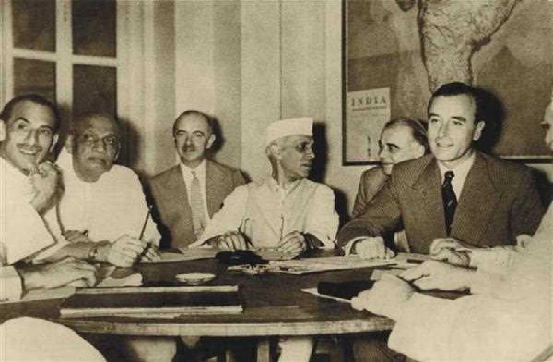
Nehru with his political circle
There was a news item in the Indian Daily Mail of Singapore, May 2, 1946, captioned “Pandit Nehru Sure Next Congress President”. It is informed that there were five nominations: of Nehruji, Patel, Kriplani, Jaiprakash Narayan and Netaji. The news said the last two were invalid as they were not member of the congress. Patel and Kriplani were withdrawing at Azad’s appeal, and an official announcement was expected shortly. But the thing had already happened on April 25. This paper of May 10 reported the election of Nehru on May 9. It said, “Pandit Javaharlal Nehru was today elected President of the next session of the Indian National Congress. His election was uncontested”. (The election was a result of the resignation of Maulana Abul Kalam Azad as Congress president.) In fact, there was no election. There was a selection by Gandhiji. Nehruji was thrust upon the country willy-nilly. The withdrawals reported in the news resulted from a political manoeuvre, of which the chief perpetrator was Mahatma Gandhi.
These news items sent to newspapers for public consumption contained half-truths. These must not have been circulated without the express wish, connivance or knowledge of Gandhiji. But it would be sacrilegious to say that Gandhiji was a party to spreading the garbled news.
1928 Calcutta Session:
In this session presided over by Motilal Nehru, the all-party Nehru Report was approved, and an ultimatum was issued to the British government.
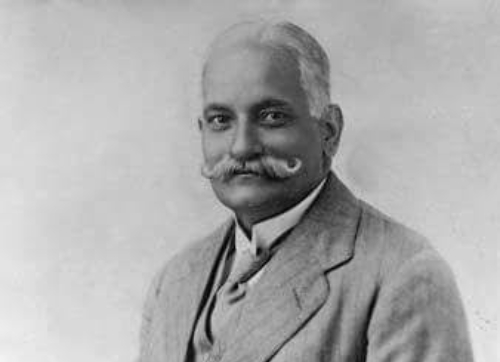
Pandit Motilal Nehru
Just a few months back, Gandhiji, women and peasants of Bardoli had given the honorific title of Sardar to Patel. Gandhiji had left this movement wholly to him, saying, “If you miserably fail, you will not rise again for several years, but if you succeed, you will have done much to lay the foundations of Swaraj.” (Rajmohan Gandhi, Patel a Life, p. 152). As the fight went well, Gandhiji said, “Long live the Sardar to fight many a good fight,…The battle in Bardoli is going on very well.” (Op. cit. p. 155)
Yet Patel was a nonentity compared to Jawaharlal Nehru at the 1928 Calcutta session. Nehru was a prominent figure here. When a resolution about the success of Bardoli was moved in open session, at once a cry went up, where the Sardar? He was sitting cross-legged among the Gujarat delegates on the open ground. People shouted, “The Sardar must stand and show himself”. He stood up and folded his hands in a greeting. “To the plat-from!” cried everyone. Vallabhbhai signalled a refusal with his hand and tried to resume his seat, but he was pushed onto the stage against his will. Applause broke out and continued for minutes. When it finally ended, Vallabhbhai expressed his thanks in two short sentences. (Op. cit. p. 173)
Selection of Nehruji in 1929:
But his hard-earned Sardarship was of little worth when compared to the stature he had come by. “In August (1929), a special meeting of the All-India Congress Committee was called to decide who should preside over the ensuing Congress. In accordance with the Congress Constitution, the vast majority of the Provincial Congress Committee had nominated Mahatma Gandhi, but he declined to accept the nomination. The general feeling in Congress circles was that the honour should go to Sardar Vallabhbhai Patel. But the Mahatma decided to back the candidature of Pandit Jawaharlal Nehru. (writes Subhash Bose in his The Indian Struggle, p. 169). Although 5 out of 18 Provincial Congress Committees favoured Sardar Vallabhbhai Patel and three were in favour of Nehru, Gandhiji pressured Patel to step aside and used his influence to elevate Jawaharlal Nehru.
Bardoli Satyagraha, in 1928, which saw the emergence of Vallabhbhai Patel as a national leader, was what enthused Nehru to present a resolution for Purn Swaraj at the 1928 session of the Congress and the declaration of Purn Swaraj at the Lahore Session of 1929. Less than two weeks after this, a call for the Civil Disobedience Movement was initiated on March 12, 1930, which culminated in the historic Dandi March launched on April 6, 1930.
It should be remembered that the earlier 1918 Kheda Satyagraha was a pivotal turning point in India’s freedom struggle. Sardar Patel was the mainstay of Gandhiji during this Satyagrah, which established Gandhi’s status as a mass leader.
Nehru remained President for 1930 also because of Gandhiji’s bid to forestall dissension of left-wingers.
Favouritism in 1937:
Patel favoured right-wing Rajaji to become Congress president in 1936. However, Rajaji declined. At this, Mahatma Gandhi settled on leftist Jawaharlal Nehru. After becoming president, Nehru gave speeches which were against the Congress creed and therefore six Working Committee members, including Patel, resigned in mid1936. In reaction, Nehru threatened to resign. Gandhiji intervened, and all resignations and offers to resign were withdrawn.
| Year | Event | Outcome |
| 1929 | Congress Presidency | Nehru selected |
| 1937 | Congress Presidency | Nehru retained |
| 1946 | Congress Presidency | Nehru selected |
Elections mandated by the Government of India Act 1935 were held in 1937. The results of the elections came on 20 February 1937. Congress Governments came into power in 8 provinces. As Chairman of the Congress Parliamentary Board, Patel did an excellent job in maintaining control over these ministries.
A question came up for the election of the President in 1937. Jawaharlal let it be known that he was ready to accept another term. This offended Sardar Patel. Once more, Patel tried to induce Rajaji to accept the office to forestall left-leaning Jawaharlal becoming President. Once more, Rajaji let Patel down. Vallabhbhai next proposed Govind Ballabh Pant. Sardar Patel was strongly considered for the Congress Presidentship for the Faizpur session of 1937. He possessed widespread provincial support, the way he received for the same position in 1946. However, knowing Mahatma Gandhi’s preference for Jawaharlal Nehru, Patel chose to step aside and personally suggested Nehru’s re-election instead. Patel obeyed Gandhiji but wrote in his statement, “My withdrawal should not be taken to mean that I endorse all the views Jawaharlalji stands for.” (Op. cit. p. 257)
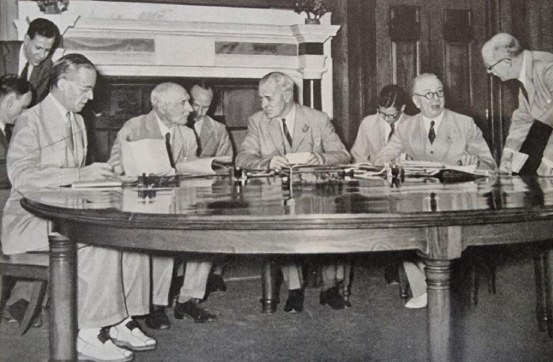
Cabinet Mission meeting from 1946, when the discussion of power transfer to India took place
Motilal Nehru’s wealth, legal reputation, and political leverage provided a political launchpad for Jawaharlal Nehru. His leadership of the Non-Cooperation Movement in Pratapgarh district of UP in 1920, and selection for going to the Brussels International Conference in 1927, were the result of his father’s influence. Mahatma Gandhi frequently stayed at the historic Anand Bhawan during his visits to the city, which made it the planning centre for India’s freedom struggle. His significant debut in 1929 also resulted from the influence of Motilal Nehru.
About the Author
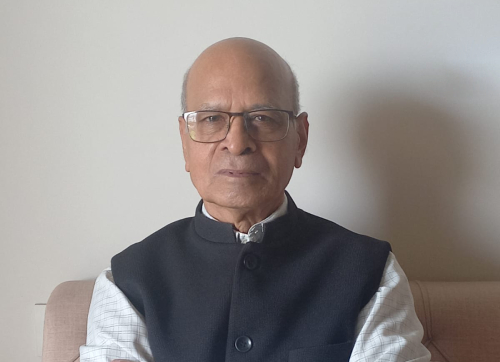
Dr Mahavir Prasad Jain is a well-known Indian historian, author, and educationist recognised for his extensive academic career and writings on Indian history.
FAQs Frequently Asked QuestionsQ1 – Why was the 1946 Congress Presidency important? A1 – Because the Congress President was expected to lead the Interim Government during the transfer of power. Q2 – How many PCCs supported Patel? A2 – According to the article, twelve of the fifteen Provincial Congress Committees nominated Sardar Patel. Q3 – Why did Gandhi support Nehru? A3 – The article cites several reasons, including Nehru’s international profile, British education, and perceived suitability for negotiations with the British. Q4 – Which historical works are referenced? A4 – The article refers to works by Rajmohan Gandhi, Subhas Chandra Bose, archival newspapers, and British archival records. |
 No one will be spared in the Shriram Temple theft case: Param Pujya Swami Govinddev Giri
 CCTV footage captures 70 incidents of donation theft at Shri Ram Temple !
 Allahabad High Court seeks response from Union Govt and ASI in Tejo Mahalay case
 Gujarat High Court upholds death sentence of 38 jihadi terrorists and life imprisonment of 11 others
 Jagadguru Sant Tukaram Maharaj’s Palakhi departs from Dehu amid devotional fervour
 “As long as I remain a Minister, the RSS must obtain permission for its route marches”: K’taka HM Priyank Kharge