

In Part 1 of this Article, we read about the origin of Manache Shloka and the types of principles contained in them. In Part 2, we understood how addressing the mind is an important feature of Manache Shloka, and how we must be able to observe thoughts without being carried away by them. Now, the concluding Part.

C1. What is the dopamine loop ? : According to neuroscience, greed arises because of the dopamine loop. Dopamine is a neurochemical produced in the brain. The more the amount, the better one feels. Thus, on seeing an object, one feels pleasure. Because of prior experiences associated with that object, some dopamine has already been generated in the brain. Even merely thinking of that object causes dopamine to be produced afresh. As a result, one begins to desire that object. If the object is not obtained, the expected rise in dopamine is obstructed, which increases discomfort. On the other hand, even the attempt to obtain it – or merely fantasising about it – can increase dopamine production. This becomes a kind of self-reinforcing cycle. This may be termed as the brain’s reward system. If greed towards external objects is not restrained, it causes harm to sadhana and ordinary life. The beneficial effect of Manache Shloka in this regard is far greater than what can be achieved merely by explaining the matter in plain prose.
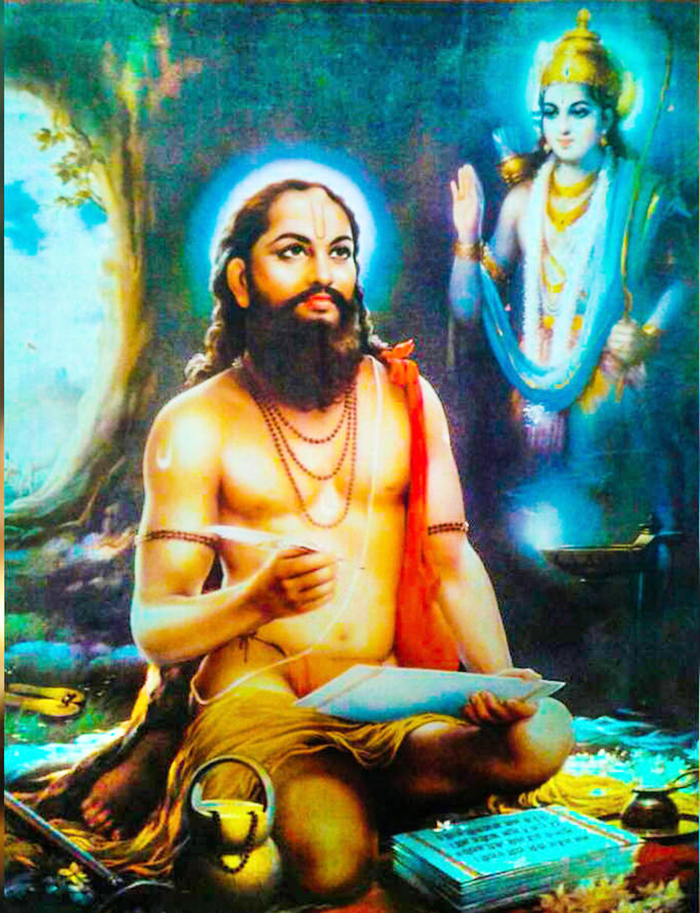
For example, the moment a thought such as greed for another person’s wealth arises, the brain’s activity begins moving in that direction. One may perhaps tell oneself in prose that taking another’s wealth is wrong for various reasons; however, this is not always easily accepted. One keeps finding loopholes. This has been expressed in Manache Shloka (9) as : ‘Nako re mana dravya te pudhilanche’ (O’ mind, do not desire another’s wealth).
Here, instead of merely reasoning with the intellect, an attempt is made to directly discipline the mind itself. This occurs comparatively more easily because, as explained earlier, a distance is created between the ‘I’ and the mind, enabling detached guidance. The mind then actively tries to remain aligned in the proper direction. Right at the very beginning, the Shloka instructs the mind : ‘It is wrong to desire another’s wealth’. This helps control the wrongly activated reward system in the brain.
D. Memorisation increases the brain’s plasticity (Neuroplasticity)
One is advised to memorise Manache Shloka. By doing so, the mind gradually becomes increasingly aligned with the thoughts in them. This is because repeatedly reciting Manache Shloka has a special effect on the brain. The neural connections through which brain cells exchange signals with one another begin to change, and through repeated memorisation they become stronger. This is termed neuroplasticity. As soon as the relevant thought or situation arises, the brain begins functioning automatically, without conscious effort, in a manner aligned with the thoughts given in the Shloka. The attempt to prevent the brain from moving towards incorrect actions then happens naturally and effortlessly. As a result, the tendency of the mind to become distracted from sadhana decreases.
E. Creating a safe space for fear instead of allowing the brain to be hijacked by it
When a situation generates fear, it generally affects the brain in such a way that all mental activity begins moving in that direction. This is called the brain being ‘hijacked’. If fear arises for some reason, the solution lies in creating a sense of safety within the mind. Usually, the mind is counselled externally through thoughts such as : ‘Why this fear is unfounded’ or ‘Even if it happens, a solution can be found.’ This means that an alternative thought is externally supplied. Even then, it remains a process in which the thought of fear and the accompanying emotion are countered through deliberate effort by a thought of safety. All this takes place at the level of intellect and logic. There is no immediate remedy at the very moment fear arises, nor is there an effective restraint upon the emotional energy that intensifies that fearful thought. Therefore, the fear still exerts some influence over the brain and produces harmful effects.
The technique of Manache Shloka handles this problem differently. At that very moment, the mind immediately receives the support of Raghav (Shriram). The mind experiences a sense of security, and the impact of fear diminishes. In psychology, this is known as attachment theory. When the mind is connected with a powerful and loving support (such as Shriram), the centres of fear in the brain become calm. The important message to note here is that it is not merely a matter of saying, give up fear. Rather, an alternative mental refuge is created for the brain to dispel fear.
Certain Shlokas conclude with principles such as :
• ‘Nupekshi kada Ramdasabhimani’ (Shriram never ignores the one who is devoted to Him with humility and surrender).
• ‘Nupekshi kada Dev bhaktabhimani’ (God never neglects the one who is devoted to Him).
• ‘Mana sajjana Raghavi vasti kije’ (O’ noble mind ! Let yourself dwell in Shriram).
F. Giving direction to the mind without distressing it
One of the most important characteristics of the Manache Shloka is that they do not agonise the mind by saying, ‘You are wrong, sinful, inferior, or rejectable.’ On the contrary, the mind is addressed lovingly in a manner that encourages and enables it to accept easily what is being said. In many places, the mind is addressed as ‘Mana sajjana’ (O’ Noble mind !). It is like a dialogue with an intimate friend. From the perspective of psychology, there are broadly two methods of guiding the mind.
F1. Punitive approach / Self-criticism : When we say to ourselves, ‘I am sinful,’ ‘I am wrong,’ or ‘I am useless,’ in psychology it is called the pathological critic, or causing oneself inappropriate distress. This has an adverse effect on us.
When we criticise ourselves, the amygdala (the centre of fear in the brain) becomes active. As a result, cortisol (the hormone associated with stress) increases in the body. This may create temporary fear, and the individual may perhaps stop behaving wrongly for the moment; however, it gives rise to inferiority complex, depression, and self-hatred. If this continues for a long time, the mind’s progress and development stops.
F2. Teaching with discrimination and love (Self-compassion & Cognitive Reappraisal) : The method in the Manache Shloka is based on self-compassion and discrimination. Addressing the mind as ‘Re mana’ or ‘He jiva’ is akin to a mother lovingly explaining something to her child, or a friend advising another friend.
When we acknowledge our mistakes and speak to ourselves with the intention of correcting them, the pre-frontal cortex (the reasoning part of the brain) becomes active. As a result, we are able to think calmly. There is no fear in this, but rather awareness. Thus, instead of hating himself, the individual becomes motivated to transform himself.
According to psychology, the method of teaching with discrimination and love (non-punitive approach) is the best. The reasons are mentioned ahead :
A. A psychological idea : When we call someone good, that individual (or one’s own mind) begins to make efforts to live up to that goodness. This is called the Pygmalion Effect.
In short, the Manache Shloka is not a manual that punishes the mind; rather, it is a science of well-being that helps the mind recognise its true nature. Modern psychology now says the same thing. Rather than harsh self-criticism, self-talk is the most effective path for transformation.
B. Strengthening the will to improve : One study found that people who keep considering themselves sinful or guilty and continue to trouble themselves tend to repeat the mistakes. On the other hand, those who forgive themselves and try to improve through discrimination have stronger willpower. Samartha Ramdas Swami does not declare the mind guilty; rather, He gives it spiritual guidance. It must be said that He knew precisely the difference between saying ‘You are doing this wrongly’ and ‘You are wrong.’
C. A method conducive to mental development : If we call the mind useless or sinful, the brain goes into a fixed mindset, meaning, (believing that) ‘I am like this only; I cannot change’; but when we engage in dialogue with discrimination, a growth mindset is developed. Every Shloka leads the mind towards progress (growth).
Research on certain modern psychological techniques and methods has been conducted abroad, and psychotherapists use those methods in treating patients. In this Article, some points that are parallel to these modern psychological techniques, and which are clearly evident in the Manache Shloka, have been explained. Even if someone may consider goals such as God-realisation to be incorrect, and may therefore find literature such as the Manache Shloka unnecessary, at least one thing should be understood – Life is meant for self-transformation in the right direction; if that is done, there is development in life. The Manache Shloka provide direction and bring about simple, achievable efforts.
4. Importance from the perspective of sadhana
The explanation of the Manache Shloka given in this series of Articles has been presented primarily with the focus on the common man. A seeker is one who is continuously making efforts for God-realisation, or is an inquisitive aspirant. A seeker expects to overcome his problems in accordance with his spiritual goal. He is more sensitive to problems than the common man. His goal is much advanced (than the common man).
The speciality of the Manache Shloka is that they are useful even for Ascetics who have renounced everything and set out solely for the attainment of knowledge. In fact, if one studies the origin of Manache Shloka, it becomes evident that they were first recited in society by such renunciates themselves. These Shlokas also fulfil the needs essential for their sadhana. Naturally, for this, a deeper study of these Shlokas is necessary.
If such a study is undertaken, one will realise that this is a simple literary composition meant for imbibing in actual practice the philosophical explanations given in many Scriptures. This legacy was given to the Marathi people by Samartha Ramdas Swami 350 years ago.
Even today, it stands true on the yardstick of global science. This shows that the direction given in it is in harmony with the basis of the entire Universe (Brahman) and with the system that governs the entire Universe (Dharma / God).
Many Saints have composed similar literary works addressed to the mind and the jiva (Embodied soul). A very recent example is the Marathi bhajan of Param Pujya Bhaktaraj Maharaj : ‘Ase ghor prarabdha purvantari che, tari bhoganya jiva ka na ruche (Such is the grave destiny carried over from previous births; then why does the jiva not wish to undergo its destined suffering ?).
Personally, whenever this bhajan falls on my ears, I cannot help but be reminded of the Manache Shloka !
– Dr Durgesh Samant (Age 65), M.D. (Medicine), Sanatan Ashram, Ramnathi, Goa. (24.3.2026)
 Nehruji’s Selection by Gandhiji for Congress Presidentship Again and Again
 Radiant Thoughts of Sachchidananda Parabrahman (Dr) Jayant Athavale
 We pay our obeisance a million times on the Birthday (as per Tithi) of
 Major win for Hindu unity : Maharashtra Government suspends the controversial ‘Devasthan Inam Abolition Draft Act’
 Amazon Insults Aryabhata : Hindu Janajagruti Samiti serves legal notice
 Murtis of Hindu Deities found in the basement of Jama Masjid in Bharuch (Gujarat)