
Nagpur (Maharashtra) – The Maharashtra Revenue Minister, Chandrashekhar Bawankule, announced a major decision in Nagpur regarding the suspension of the proposed ‘Maharashtra Devasthan Inam Abolition Draft Act 2026. This pro-temple move has been warmly welcomed by the Maharashtra Mandir Mahasangh, Ashtavinayak Temple Committee, Vishwa Hindu Parishad (VHP), and temple trustees across the State, who have hailed it as a significant victory of their organised and sustained campaign.
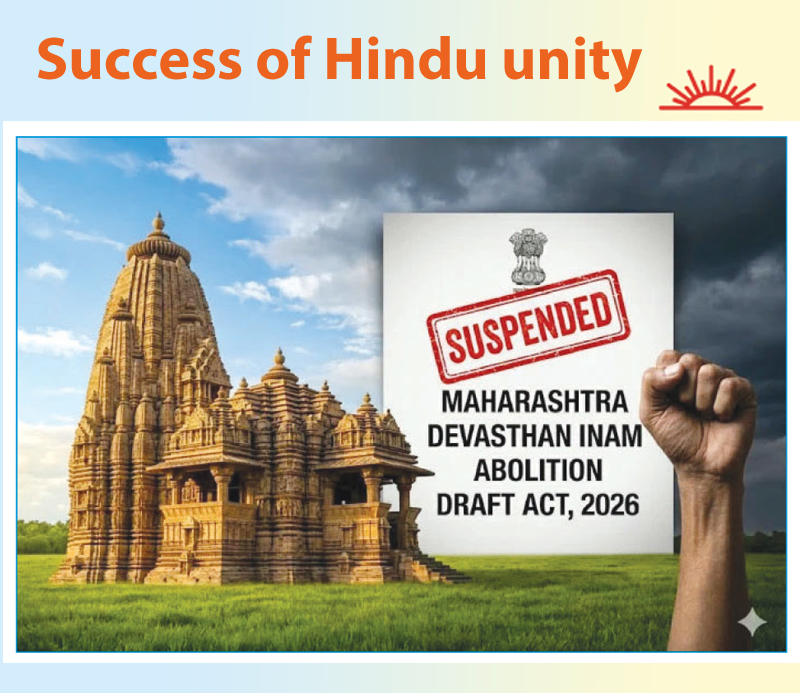
Before this decision, the Mandir Mahasangh and other Hindu organisations had mobilised nationwide opposition against the Draft Act through extensive trustee meetings, formal representations, public objections, press conferences, and ‘Devasthan Land Protection Conferences’, effectively steering the Government towards a positive resolution.
Speaking on the developments, Mr Sunil Ghanwat (Organiser of the Maharashtra Mandir Mahasangh), outlined the stance on the key points raised by the Revenue Minister.
“The decisions to restore inam lands to temples, remove encroachments with State assistance similar to the Waqf Board’s powers, seek counsel from top-tier lawyers for ongoing legal battles, and mandate alternative plots of ‘equal value’ nearby for 100-to-200-year-old tenancies without causing financial loss to temples, are highly commendable and in the best interest of our religious institutions,” he stated.
The Mahasangh also welcomed the Government’s decision to include temple representatives in the newly formed 15-member committee, headed by the Additional Chief Secretary (Revenue), which is tasked with overseeing the hearing process until 15 August 2026.
Future roadmap for temple welfare and protection
While acknowledging the Government’s pro-temple measures, the Mahasangh maintained that several crucial resolutions passed by temple trustees must be integrated into the new legal framework to ensure the comprehensive protection of Hindu temples. These include :
• Utilisation of funds :Donations must strictly be utilised for the promotion of Hindu Dharma, temple restoration, and the spiritual needs of the Hindu community. The Mahasangh strongly opposes allocating these funds to secular or Government-run schemes.
• End to political interference : The practice of diverting temple funds due to political affiliations must be halted immediately.
• Support for smaller temples : Surplus funds from wealthier shrines should be systematically channelled towards the reconstruction and upkeep of smaller, neglected temples in rural areas.
• Stipends for caretakers : A monthly subsistence allowance of £100 to £150 (equivalent to Rs 10,000 to
Rs 15,000) should be institutionalised for Guravs (Priests) and other staff who selflessly serve in remote village temples.
The Mahasangh has firmly demanded that these recommendations be incorporated into any future legislative processes.
 Leaders who drove me out of Bengal are now also portraying me as a supporter of BJP and RSS !
 Pakistan Army handed over bodies of soldiers killed in Kargil War to Hindus !
 Case where a Christian couple was burned alive in brick kiln!
 ‘I am a Muslim, but I will not implement Sharia law in the country !’ : President of Burkina Faso
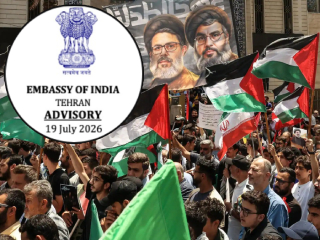 Indian nationals in Iran should return to India at the earliest ! – India
 United Nations expresses concern over crackdown on protesters in Pakistan-occupied Kashmir