
In the Vedic Dharma tradition, Yajnas are not merely religious rituals, but they are regarded as a Divine spiritual practice for the welfare of the samashti (Society). Through the Yajna culture, the Sages showed the path for the welfare of the world.
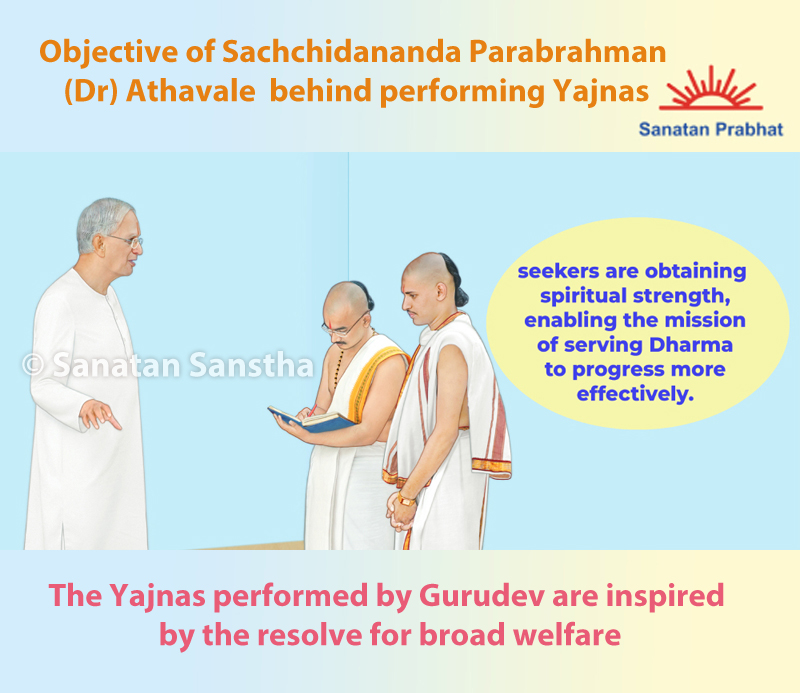
| Gurudev telling the Purohits – “If the inner portion of the Yajnakunda is white, it does not look good when it becomes black due to the flames. Therefore, that portion should be plastered with mud”. |
Carrying forward this tradition, Sachchidananda Parabrahman (Dr) Athavale (fondly addressed as ‘Gurudev’) has organised various Yajnas till date. Behind these Yajnas, there is not merely personal or local benefit, but the very broad and noble objective that seekers should obtain the spiritual strength necessary for their protection and for the establishing of the ‘Hindu Rashtra’.
1. Subtle guidance
The Yajna tradition is not based merely on Scriptures, it is a tradition developed through the live guidance of
Sages. Through Jeevanadipatti readings (Jeevanadi is a sacred form of Tamil Nadi astrology), various Yajnas were suggested from time to time, and the results achieved through those Yajnas also became evident through the subsequent experiences.
Receiving guidance for Sanatan Sanstha’s mission of serving Dharma through writings in the Nadipattis is an an invaluable and rare occurrence.
Due to this subtle guidance, the nature, methodology and objective of the Yajnas become clearer and more effective. Consequently, the Yajnas cease to remain merely rituals and become a spiritual practice that fulfils the Divine resolve.
2. Conclusion
Yajnas are not merely ritualistic processes, but an effective spiritual practice for upliftment of samashti, protection of seekers and preservation of Dharma.
The Yajnas performed by Gurudev are inspired by the resolve for broad welfare, as mentioned in the Nadipattis, and through them, seekers are obtaining spiritual strength, enabling the mission of serving Dharma to progress more effectively.
– Shri. Amar Joshi, Sanatan Veda Pathashala
Gurudev telling the Purohits – “If the inner portion of the Yajnakunda is white, it does not look good when it becomes black due to the flames. Therefore, that portion should be plastered with mud”.
 Special court acquits MLA T. Raja Singh
 Radiant Thoughts of Sachchidananda Parabrahman (Dr) Jayant Athavale
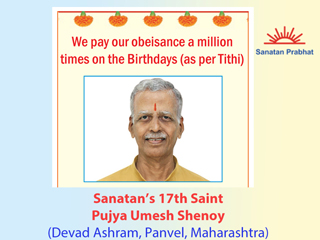 We pay our obeisance a million times on the Birthday (as per Tithi) of
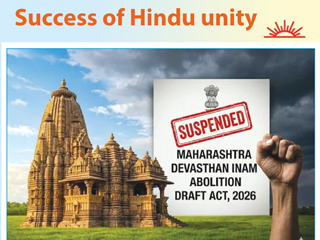 Major win for Hindu unity : Maharashtra Government suspends the controversial ‘Devasthan Inam Abolition Draft Act’
 Amazon Insults Aryabhata : Hindu Janajagruti Samiti serves legal notice
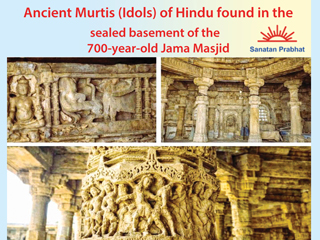 Murtis of Hindu Deities found in the basement of Jama Masjid in Bharuch (Gujarat)