
At present, war has ignited between Pakistan & Afghanistan, Iran & the USA, and likewise Russia & Ukraine. Conflicts are continuing in several other small and large countries as well. Looking at the overall situation, India too may have to enter this war any moment, or at the very least, may have to take up arms in self-defence.
Just as it cannot be said when exactly the World War 3 may begin, saying that it has already begun may also not prove to be an incorrect statement.
In such a war-like situation, there is no doubt that the Indian Government and the defence forces will perform their duties diligently. As citizens, it becomes necessary for us to stand firmly behind our Government and ensure that no additional burden falls upon the defence forces by observing certain important principles.
You may have read or heard somewhere about the Do’s and Don’ts for wartime. This Article is a revision of some of those guidelines.
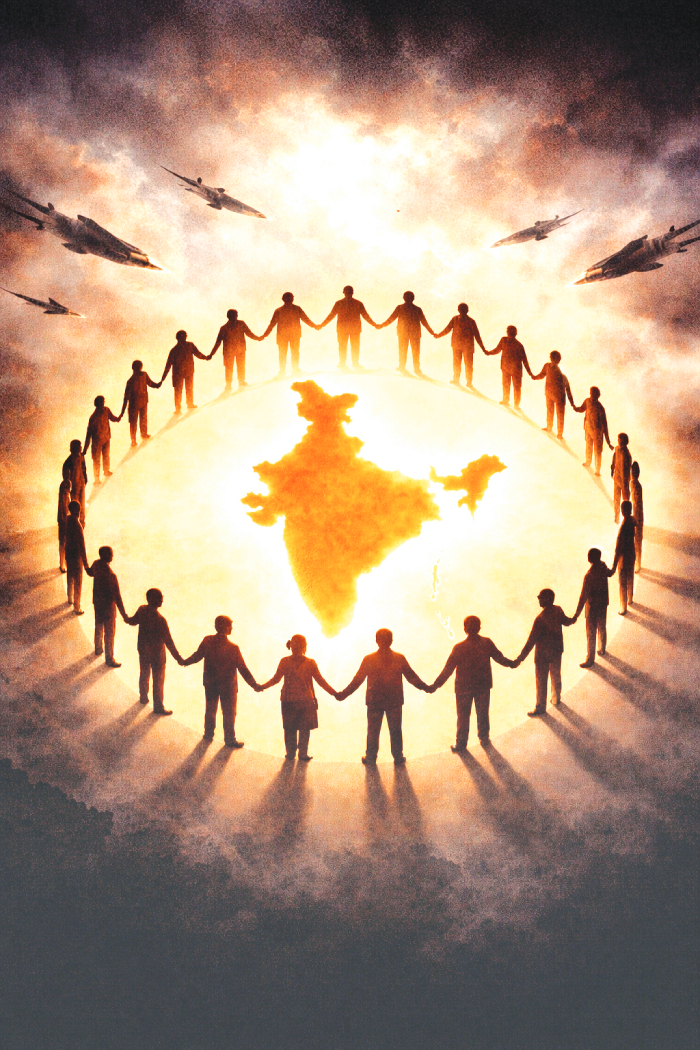
It is necessary to forget mutual disputes and face the enemy in a united manner

(Group Editor, Sanatan Prabhat Periodicals, 19.11.2024)
Hindu Scriptures have presented clear guidelines on how citizens should behave when the country faces crisis. During the period of the Mahabharat, when the Pandavs were in the forest, the Kauravs came to look for and humiliate them. At one place, while the Gandharvas were engaged in pleasure seeking, the Kauravs got into a dispute with them. At that time, Chitrasen Gandharva captured and tied the Kauravs.
In this grave situation, when the Kaurav army sought the help of Pandavs, Dharmaraj Yudhishthir sent Bheem and Arjun to fight the Gandharvas and rescue the Kauravs. While giving a perspective to Bheem and Arjun, Yudhishthir said, ‘वयम् पंचाधिकम् शतम् । (Vayam panchadhikam shatam)’ – ‘When there are disputes among ourselves, the 5 Pandavs and the 100 Kauravs are separate; but when an external enemy attacks, we are 105 together’. Accordingly, no matter how many internal disputes may exist among us today, it is beneficial not to allow the enemy to take advantage. From this perspective, citizens must set aside their domestic disputes and unite for the protection of the Nation.
When the enemy advances, the society should forget internal conflicts and stand united like a clenched fist. During wartime, citizens must not do anything that causes division in society. On the contrary, everyone should contribute collectively for the welfare of all. All of us should move together, speak with one voice, and maintain unity of thought. Therefore, during wartime, it is essential to forget caste and religion and come together as one Indian.
National interest should be given priority over personal interest
When the Nation faces a crisis, national interest is supreme over personal interest.Therefore, one should temporarily set aside minor personal demands, because such demands may place an additional burden on the Government. According to Hindu Darshan-shastra (Philosophy), the individual is only a small part of society. If society or the Nation itself are not secure, the individual’s self-interest can never be fulfilled. For example, if a boat has developed a hole, it is more important for the passenger to help plug that hole than to first save his own luggage. If the boat sinks, his luggage too will not be saved. Similarly, if the Nation is in crisis, the citizen’s wealth and comforts cannot remain secure.
In this context, the first thought should be : How will the Nation survive ? Protecting the Nation is more important than our personal comforts, conveniences, or fears; because if the Nation survives, we can always gather wealth for ourselves later or present our demands to the Government at a later time.
Everyone should reflect on what he can do for the country
Some may feel – ‘I am aged’ or ‘I am ill, ‘I do not have physical capacity, so what can I do for the country ?’ Such worry is futile. Praying constantly at the Holy feet of God and chanting His Name for the protection of the country’s armed forces, the Nation, its citizens, and its wealth, and for the soldiers to get strength for battle, is the greatest contribution of all.
Through our worship, the armed forces and the Nation obtain spiritual strength, and by God’s grace, they will be protected.Of course, for this, we need not wait for war to begin. This contribution can be started not just from today, but from this very moment. No matter how many measures are taken and however much one resolves to perform one’s duties, human efforts have their limitations. Protection can come only through God’s grace. Therefore, it is important to pray at His Holy feet.
It is necessary to maintain the morale of society
During wartime, when the country faces crisis, it is the Dharma (Duty) of every citizen to diligently perform the responsibility assigned to him, whether as a doctor, soldier, farmer, or ordinary citizen. At the time of crisis, without falling into confusion, one should work considering service to the Nation as one’s primary objective.
We all owe various debts to the society we live in. Society is our larger family. In times of crisis, if morale collapses, society loses courage and gets shaken. Therefore, we must remain stable ourselves and give courage to society. Every individual possesses some skill or the other. During wartime, such skills should be used selflessly for the Nation’s welfare.For example, if someone has the skill of nursing patients, he should help citizens injured in the war. Those who know how to drive vehicles should voluntarily take the initiative to transport citizens from one place to another.
Indian culture believes in ‘वसुधैव कुटुम्बकम् । (Vasudhaiva Kutumbakam)’ – ‘The Earth is my family’. This is its speciality. Likewise, there is a Marathi proverb that means – ‘Let us help one another and together walk the righteous path’. According to both these proverbs, all sections of society should help each other.
Vaidyas (Ayurveda practitioners), farmers, grain merchants, etc. have good knowledge of subjects related to their respective fields. Such people can use their knowledge to help those in need.For example, Vaidyas can guide people regarding the cultivation of medicinal plants, farmers can guide regarding the cultivation of fruits and vegetables, grain merchants can guide regarding proper storage of food grains.
The Nation’s assets must be protected
During wartime, protecting the Nation’s resources is not only the responsibility of the Government or the armed forces, but also of every citizen. Arya Chanakya gave the highest priority to the security of the Nation. According to him – ‘Citizens should sense the signs of danger even before a crisis befalls the Nation and remain alert. Every citizen should keep watch over the enemy’s secret movements. Under no circumstances should the country’s security be compromised’.
However, in the present situation, anti-National disruptive tendencies are found in every lane in India. Such elements can incite civil unrest during wartime. In such circumstances, Indian soldiers may come under double strain. Therefore, citizens too should, to the best of their ability, shoulder the responsibility of protecting the Nation’s property and its people.
Adharma must be renounced
During wartime, one should not store more goods than necessary, nor deprive others of their share of food or resources. This is the basic duty of every human being. Citizens should stock only essential items during wartime. In times of crisis, hoarding for selfish gains or creating artificial inflation is regarded as a sign of adharma (Unrighteousness). Therefore, it is extremely necessary for citizens to avoid such conduct and remain righteous during such times. During such periods, rumours are often spread on a large scale, causing needless insecurity in citizens. If one does not have correct information regarding the war or any other incident, one should refrain from passing it on to others and should also advise people not to do so.
One must understand what abiding by Dharma truly is
On one occasion, when a sultanate invasion took place, Nanasaheb Peshwa was engaged in his daily puja. At that time, his commander Malharrao Holkar requested him, in view of the demands of the times, to temporarily set aside his worship and take up the sword. At that moment, it was necessary for the Peshwa to take the lead in the campaign for the protection of the Maratha Empire.
Accordingly, when the situation ceases to be normal and a major crisis such as war arises, setting aside one’s daily routine and protecting the Nation and society becomes the highest duty.Taking firm decisions when necessary to save one’s own life and the lives of others is regarded as Dharma. When the Motherland is in danger, protecting Her becomes the greatest path of (abiding by) Dharma for every citizen.
This is precisely what has been stated in the Shrimadbhagawadgeeta as well. When Arjun was confused about fighting his own relatives, Bhagawan Shrikrushna firmly guided him to fight, stating that this was the duty of a Kshatriya.
What should be done in wartime ?
1. Be united as Indians.
2. Use water, seeds, and food carefully.
3. Donate blood, and provide food, medicines, and other assistance.
4. Strictly obey Government orders.
5. Sacrifice personal matters for the Nation’s interest.
What should not be done in wartime ?
1. Refrain from any act that may create a rift within society.
2. Do not spread rumours.
3. Do not engage in hoarding.
4. Do not gather unnecessarily during an emergency.
5. Do not commit an act of social betrayal by violating law.
– Mr Yogesh Jaltare (Editor-In-Chief, Sanatan Prabhat Media Group)
(For full article, visit : SanatanPrabhat.org/english/168619.html)
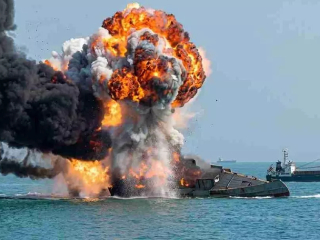 Iran attacks oil tankers in the Strait of Hormuz; Indian national killed
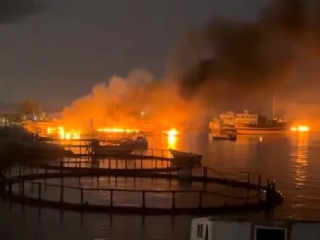 US attacks Iran’s Chabahar Port
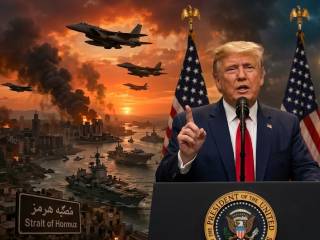 US ceasefire agreement with Iran ends !
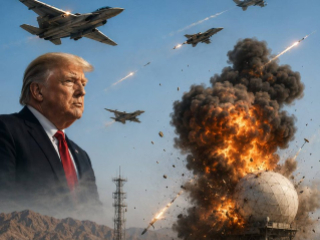 US attacks more than 80 Iranian military sites
 Nehruji’s Selection by Gandhiji for Congress Presidentship Again and Again
 Radiant Thoughts of Sachchidananda Parabrahman (Dr) Jayant Athavale