
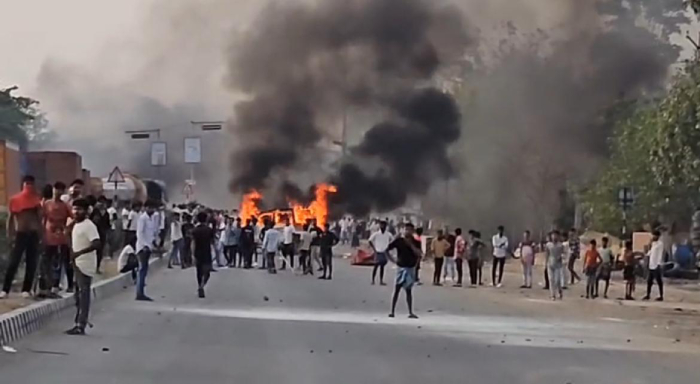
The film ‘The Bengal Files’ recently brought to light the gruesome truth of the 1946 Calcutta and Noakhali massacres. The riots that shook Murshidabad on 11th April 2025 were nothing but a grim replay of those very horrors after 79 years. A devout Hindu nationalist from Murshidabad narrated the ground reality of this bloodshed to ‘Sanatan Prabhat’. We are presenting this account in his own words. – Editor
Murshidabad (Bengal) – On April 11th, Murshidabad descended into unprecedented bloodshed. What began as protests against the Waqf Amendment Bill rapidly turned into organized riots. For hours, mobs looted, burned, and murdered while the State machinery stayed idle. The trail of devastation left behind exposed not merely communal anger, but the shocking failure and complicity of the Mamata Banerjee Government.
Entire neighborhoods were reduced to rubble. Police vehicles and private homes were set ablaze, shops were ransacked, and sacred idols were destroyed. Even a 200-year-old temple was desecrated, with its sanctity trampled upon and offerings scattered. This was not mere mob violence; it was targeted, deliberate, and enabled by administrative silence.
Blood on the streets
The murders of Chandan Das and his father Harigovind Das symbolized the horror. They were dragged from their home and killed in broad daylight. The bloodstains, shattered doors, and scattered debris outside their residence became evidence of a State that had abandoned its people.
Eyewitnesses confirmed that stone pelting continued for four hours unchecked. A Police station stood nearby, yet not a single officer appeared. This absence was no accident; it was the result of political calculation.
Mamata’s “Safe Passage” politics
The riots exposed what many in Bengal had long feared: that Mamata Banerjee’s governance provided safe passage to violent elements in the name of appeasement. By shielding sections of the minority community from accountability, her administration emboldened mobs to act with impunity.
Victims repeatedly accused the Government of deliberate inaction. As one resident said, “This was the failure of the administration, the Police, and the intelligence.” In reality, it was more than failure, it was betrayal. When Hindus were dragged out and murdered, the State ignored them. When temples were looted, the State remained silent. When shops were burned, the Government cut off the internet, not the violence.
Mamata’s politics of selective protection created a climate where rioters felt untouchable. The message was clear: so long as violence served a vote bank, the State machinery would remain paralyzed.
The human cost
Displaced families were herded into overcrowded relief camps like Paralampur High School, where hundreds shared suffocating rooms with just two fans. Open washrooms, scarce food, and uncertainty defined their daily lives. Survivors spoke of total ruin. One man, after losing everything to looters, said, “Everything went away… my life’s earnings are gone.”
This suffering was not the result of spontaneous anger, but of systemic neglect. While Hindus begged for safety, Mamata Banerjee remained indifferent. Instead of ensuring law and order, her administration protected those responsible for the chaos.
Dangerous rhetoric left unchecked
Amidst the riots, alarming statements went unpunished. One voice declared, “If someone speaks dirty about Islam, we will make Pakistan. If we make Bangladesh, then we will be able to live like this.”
Such separatist rhetoric, unchecked by the State, revealed the consequences of years of appeasement politics. By refusing to act against radical elements, Mamata Banerjee allowed dangerous voices to threaten India’s unity openly on Bengal’s soil.
Betrayed citizens
For the residents of Murshidabad, the demand was simple – ‘security’. They asked for President’s Rule and BSF camps, convinced that only central intervention could guarantee survival. Their demand itself was an indictment of the State Government, a declaration that they no longer trusted Mamata Banerjee to protect them.
The aftermath
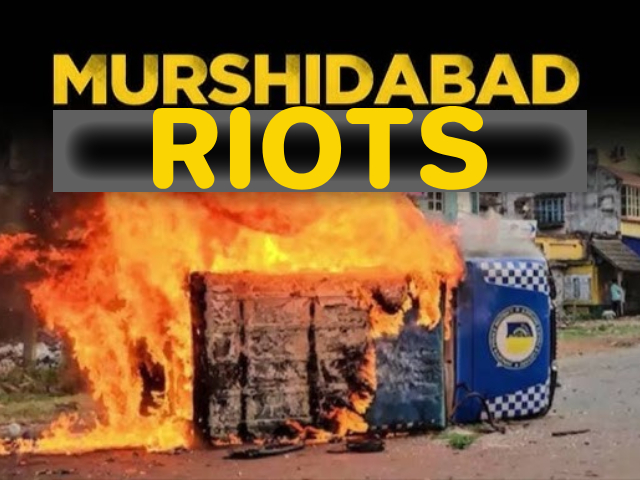
Months later, Murshidabad still carried the scars of April 11th. Families remained displaced, livelihoods destroyed, and the sense of vulnerability unhealed. The riots were not merely a law-and-order breakdown; they were the outcome of a political strategy that placed appeasement above justice.
Mamata Banerjee’s Government did not fail by accident, it failed by design. By giving safe passage to rioters, by silencing victims, and by cutting off information instead of violence, the Chief Minister turned her back on her constitutional duty.
Murshidabad’s tragedy now stands as a warning: when politics of appeasement is allowed to trump governance, the price is paid in blood, faith, and the shattered lives of ordinary citizens.
– A Devout Hindu, Bengal.
 The Ahmedabad Terror Verdict: A Strategic Milestone in the Evolution of the Indian State
 Muslims in Chhattisgarh will now require Waqf Board approval to marry non-Muslims
 Nehruji’s Selection by Gandhiji for Congress Presidentship Again and Again
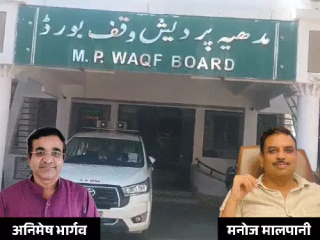 Historic first: Two Hindus appointed to the Waqf Board
 Hindutva leader Puneeth Kerehalli arrested from Hassan (Karnataka) !
 Apple’s Siri does not respond to ‘Jai Shri Ram’, but responds to ‘Salaam Alaikum’