
Madras High Court's observations on religious rituals in Tamil Nadu's Tamirabarani River
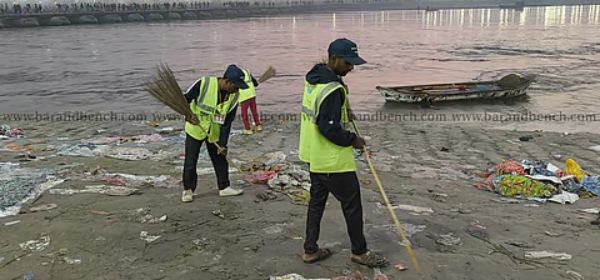
Chennai (Tamil Nadu): The Madurai Bench of the Madras High Court has observed that no one has the right to pollute water bodies in the name of religion. The Court expressed serious concern over the large quantities of clothes and other articles being thrown into the Tamirabarani River at Tirunelveli during funeral rites and post-funeral rituals.
Observing that these practices are destroying the river, the Court said that it had become necessary to intervene. However, it added that before passing any final order, all the concerned parties must be heard. The petitioners informed the Court that nearly one tonne of waste is collected from the river every day.
1. In their order, Justices G.R. Swaminathan and B. Pugalendhi observed that the right to freedom of religion guaranteed under Article 25 of the Constitution is subject to public health. Devotees may follow practices they consider spiritually beneficial only if such practices do not harm the environment or violate the rights of others.
2. The Court’s order referred to a booklet, according to which a river-cleaning drive conducted between 7th and 28th May removed 86 to 90 tonnes of clothing from the river. The waste collected also included 1,385 kg of plastic, 374 kg of sanitary napkins and diapers, 220 kg of glass bottles, and 115 kg of footwear.
3. The Court observed that polyester clothing is non-biodegradable and, once trapped in the riverbed, can become a breeding ground for bacteria. It further observed that the Indian Black Turtle and the Indian Flapshell Turtle can become entangled in the discarded clothing, leading to suffocation and death. The Court emphasised that the right to clean, pollution-free water is protected under Article 21 of the Constitution.
4. The Court has permitted religious organisations and activists to intervene in the matter and present their views. It has also directed the district administration to submit a proposal before the Court for arriving at a final solution to the issue.
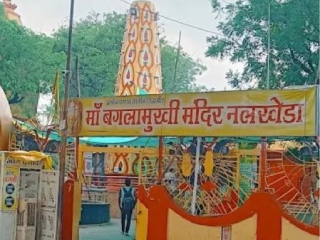 Devotees duped online in the name of havan and puja at Maa Baglamukhi Temple in Madhya Pradesh
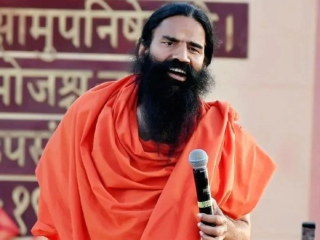 Muslims will face no threat in a Hindu Rashtra if they accept the traditions of their ancestors: Yogrishi Ramdev Baba
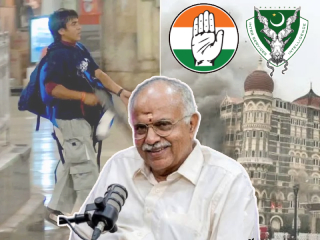 26/11 Mumbai attack was orchestrated jointly by the Congress and the ISI: RVS Mani
 A true Hindu treats everyone equally !
 Case registered against Azam for stalking and molesting a Hindu woman doctor
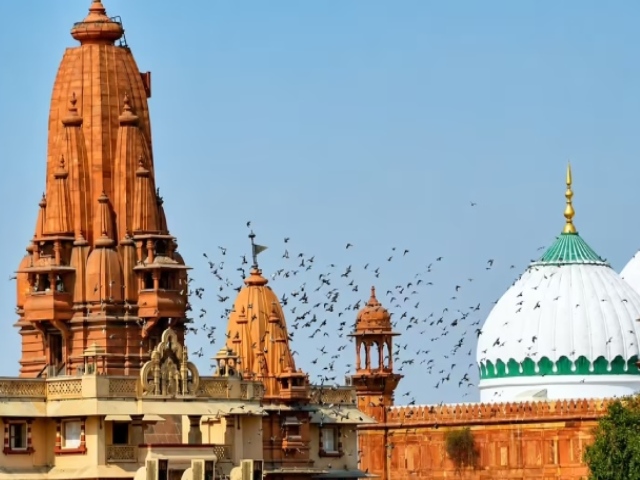 Kar seva to be held on 9th August for the liberation of Shrikrushna Janmabhoomi !