
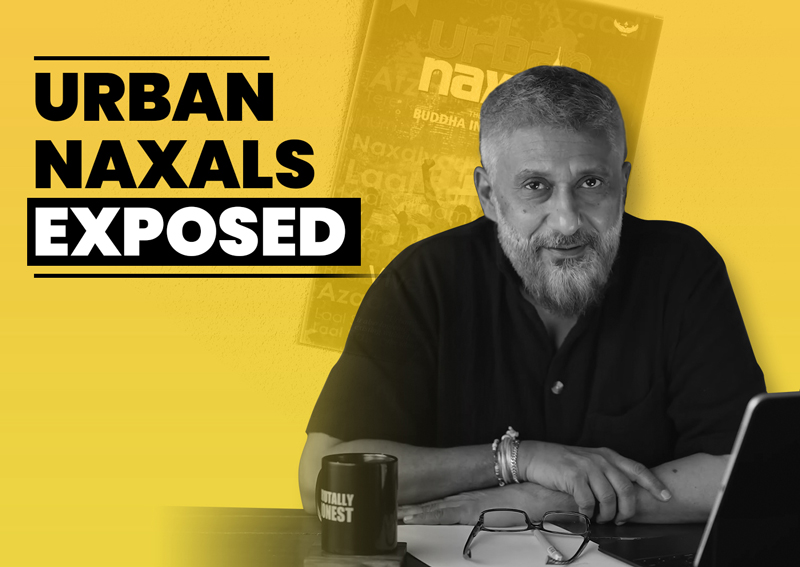
What is Urban Naxalism and How Does It Impact Modern India
Naxalism traces its roots to the late 1960s in the village of Naxalbari, West Bengal. Disillusioned with the Government’s failure to address issues of land reform and economic disparity, a group of communist rebels led by Charu Majumdar and Kanu Sanyal launched a violent uprising. The movement quickly spread across rural India, advocating overthrowing the state through armed struggle. Initially, Naxalism was concentrated in remote and tribal areas. Still, over the decades, its influence has permeated urban centers, leading to the emergence of Urban Naxalism.
As introduced by Vivek Ranjan Agnihotri in his book Urban Naxals : The Making of Buddha in a Traffic Jam, Urban Naxalism refers to the ideological and logistical support provided by armchair intellectuals to the Naxalite movement. These individuals, often embedded within academia, media, and civil society, are known for radicalizing youth, influencing public opinion, and creating unrest under the guise of social justice and human rights. Vivek Agnihotri’s book and subsequent film, Buddha in a Traffic Jam, dissect how these urban elements collaborate with rural insurgents.
Polarizing public discourse : Urban Naxalism has significantly divided public discourse in India. Proponents argue that these urban supporters of Naxalism pose a severe threat to national security by inciting violence and spreading propaganda. Conversely, critics claim that the term stifles legitimate dissent and activism, creating an atmosphere of fear and mistrust.
Changed perception of media & academia : The concept has brought considerable scrutiny to media and academia, with allegations that these institutions are the backyard of Urban Naxals. It often leads to a contentious debate over freedom of expression and the role of intellectuals in society. Vivek Ranjan Agnihotri’s work has been pivotal in bringing these issues to the forefront, often challenging the narratives presented by mainstream media and academic circles.
(For more : vivekagnihotri.com)
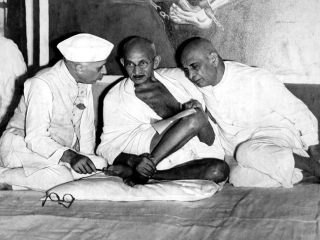 Nehruji’s Selection by Gandhiji for Congress Presidentship Again and Again
 Radiant Thoughts of Sachchidananda Parabrahman (Dr) Jayant Athavale
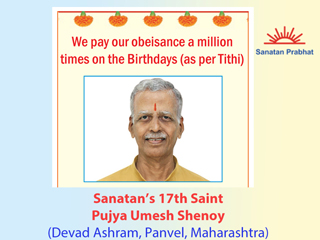 We pay our obeisance a million times on the Birthday (as per Tithi) of
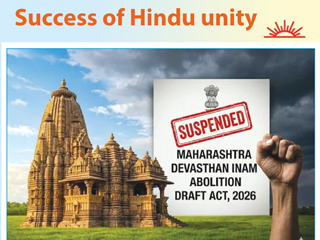 Major win for Hindu unity : Maharashtra Government suspends the controversial ‘Devasthan Inam Abolition Draft Act’
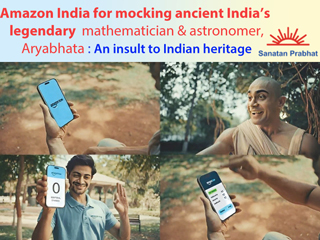 Amazon Insults Aryabhata : Hindu Janajagruti Samiti serves legal notice
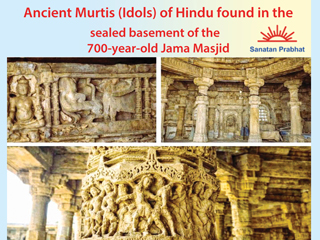 Murtis of Hindu Deities found in the basement of Jama Masjid in Bharuch (Gujarat)