
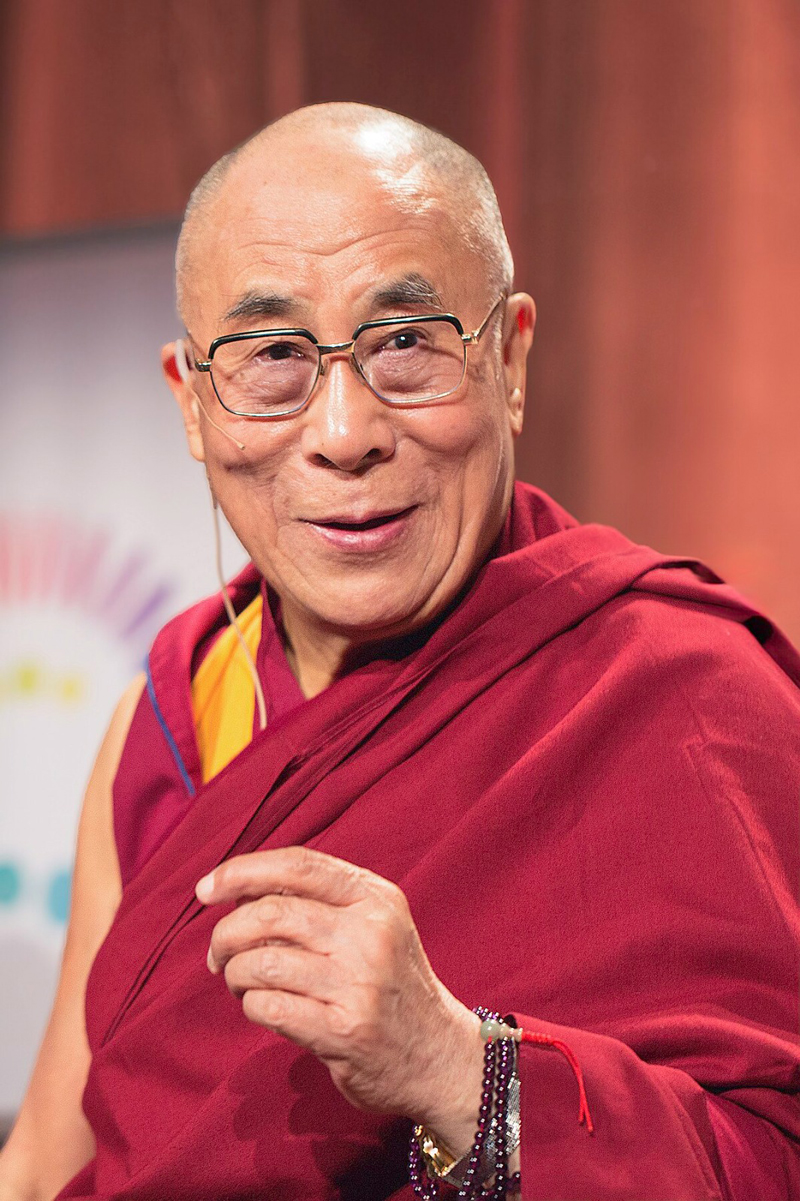
Statement Affirming the Continuation of the Institution of Dalai LamaOn 24 September 2011, at a meeting of the heads of Tibetan spiritual traditions, I made a statement to fellow Tibetans in and outside Tibet, followers of Tibetan Buddhism, and those who have a connection with Tibet and Tibetans, regarding whether the institution of the Dalai Lama should continue. I stated, “As far back as 1969, I made clear that concerned people should decide whether the Dalai Lama’s reincarnations should continue in the future.” I also said, “When I am about ninety I will consult the high Lamas of the Tibetan Buddhist traditions, the Tibetan public, and other concerned people who follow Tibetan Buddhism, to re-evaluate whether or not the institution of the Dalai Lama should continue.” Although I have had no public discussions on this issue, over the last 14 years, leaders of Tibet’s spiritual traditions, members of the Tibetan Parliament in Exile, participants in a Special General Body Meeting, members of the Central Tibetan Administration, NGOs, Buddhists from the Himalayan region, Mongolia, Buddhist republics of the Russian Federation and Buddhists in Asia including mainland China, have written to me with reasons, earnestly requesting that the institution of the Dalai Lama continue. In particular, I have received messages through various channels from Tibetans in Tibet making the same appeal. In accordance with all these requests, I am affirming that the institution of the Dalai Lama will continue. The process by which a future Dalai Lama is to be recognized has been clearly established in the 24 September 2011 statement which states that responsibility for doing so will rest exclusively with members of the Gaden Phodrang Trust, the Office of His Holiness the Dalai Lama. They should consult the various heads of the Tibetan Buddhist traditions and the reliable oath-bound Dharma Protectors who are linked inseparably to the lineage of the Dalai Lamas. They should accordingly carry out the procedures of search and recognition in accordance with past tradition. I hereby reiterate that the Gaden Phodrang Trust has sole authority to recognize the future reincarnation; no one else has any such authority to interfere in this matter. Dalai Lama, Dharamshala, 21.5.2025 |
The morning of July 6, 2025 was rainy and foggy in McLeod Ganj, Dharamshala, buzzing with an air of celebration. The small town was gearing up to honour the 90th birth anniversary of the Dalai Lama. Prime Minister Narendra Modi heartily congratulated the Dalai Lama, while senior Government officials were said to be part of the festivities.
This incident seems to have gotten under the skin of the Chinese, with their Foreign Ministry issuing a sharp rebuke to India, saying that India must stop ‘meddling’ in their internal affairs and acknowledge the ‘anti-China separatist’ nature of the Dalai Lama. But why should we ?

Buddhism’s roots in India date back 2,500 years – ancient spiritual and cultural ties that transcend borders and eras. Tibet’s embrace of these ideals created a relationship grounded in far more than mere geography. In 1959, when the 14th Dalai Lama fled Chinese annexation and walked into India through Tawang in Arunachal Pradesh, it wasn’t just a refugee crisis – it was a reaffirmation of this timeless bond.
Yes, Nehru’s decision to grant asylum was controversial, but wise. India framed it as a humanitarian act on its soil. As
C.V. Ranganathan, who welcomed the Dalai Lama, later said, “He has no support from the Indian Government in any political activity aimed against China.” Undoubtedly though, this did provide India a soft power anchor in the Himalayas.
Hosting the Dalai Lama empowers India to stand tall as a champion of religious freedom and cultural pluralism – two ancient pillars of the Indian ethos. This moral authority shores up our global reputation. In the tense lead-up to his 90th birthday, there were indications from foreign powers that highlighted this soft power. The US restored $6.8 million in Tibetan aid, emphasising international solidarity. The Bharat-Tibet Sahayog movement in Nagpur strongly rejected China’s attempt to ‘unilaterally decide’ the Dalai Lama’s successor. Far from being just ceremonial acts, these events declare : India stands for voice and choice, even while powerful neighbours press vocally against them.
Tibet also remains a strategic buffer between India and China. By supporting this historic bond, New Delhi retains leverage amid rocky diplomatic terrain. The Dalai Lama’s recent assertion that his foundation – not Beijing – will choose his successor is a direct challenge to Chinese claims. Kiren Rijiju’s endorsement drew a stinging response from Beijing : “Choose words carefully,” they warned. This riposte matters. It means India’s voice is being heard – and heard loudly.
Of course, the Dalai Lama’s flight to India accelerated a timeline by making the Chinese more paranoid of Indian intentions. Delhi is, of course, playing humanitarian host – but also displaying strategic depth.
Post-2020 border skirmishes in Galwan and Ladakh exposed China’s will to test India’s defences. In that context, supporting the Dalai Lama sends India’s border communities a powerful message : India won’t back down from symbolic or spiritual stakes near that frontier. The resurgence of Tibetan identity in Dharamshala – monasteries reopened, schools reorganised – is a cultural revival. But it has also become a geopolitical statement projected from India’s hill States.
And when Washington’s bipartisan delegation meets with the Dalai Lama in Dharamshala, that too echoes across Indian foreign policy.
There is the burning impending question : Who will follow the current Dalai Lama ? China has invoked the ‘Golden Urn’ – a Qing-era procedure – to claim legal authority. Yet, the Dalai Lama’s office has made it clear : traditional monks, not Beijing officials, will choose the next incarnation. India’s support of that position adds institutional weight. In case a Beijing-approved ‘false Dalai Lama’ emerges, India becomes the host and promoter of the genuine lineage in the eyes of many Buddhists and Nations alike. That religious legitimacy is a potent form of influence – far beyond conventional diplomacy.
India’s embrace of Tibetan culture boosts its Buddhist soft power. The Dalai Lama is a global icon of peace and mindfulness, and his presence anchors India within that narrative. Institutions like the Central University of Tibetan Studies in Varanasi, co-founded by Nehru and the Dalai Lama, advance academic and spiritual scholarship on Indo-Tibet traditions. Dharamshala continues to serve as a pilgrimage magnet, attracting students, historians, monks, and tourists – synergising cultural heritage with diplomatic outreach.
India is home to around 85,000 Tibetan exiles, across States such as Himachal Pradesh, Uttarakhand, Sikkim, and Karnataka. New Delhi’s consistent funding of refugee schools, legal status, and cultural preservation further cements friendship and loyalty among these communities. This integration breeds loyalty, not resentment. During a time when India prudently restricts Chinese influence across local supply chains and infrastructure projects, a Tibetan presence rooted in Indian soil acts as a perfect counterbalance.
Of course, critics are in their own way correct to say that India’s economic ties with China are vital. India cannot alienate Beijing while supporting the Dalai Lama. However, India’s policy does not reject business – it only seeks to safeguard sovereignty.
Not an exclusion, but a calibration, if one can think of it that way. China can be successfully countered in the Himalayas and in the Indian Ocean while trading with China at the same time. India’s playbook will naturally seek to blend strategic resilience with economic pragmatism – balancing soft power influence with trade realities.
India’s support for the Dalai Lama is far beyond any act of sentimentalism or nostalgia. It is also sophisticated statecraft. It preserves a civilisational legacy, strengthens moral leverage, secures Himalayan strategy, and signals to the world that India will not shrink from symbolic stakes.
Yes, Beijing pushes back. Yes, economic costs exist. However, India continues to choose principles backed by strategic calculus. It hosts the spiritual as a bulwark for the geopolitical. Each prayer in Dharamshala, while nurturing the Buddhist nucleus, also echoes across policy circles in New Delhi, Beijing, Tokyo, and Washington.
Support for the Dalai Lama affirms India’s commitment to values and its enduring resolve in geopolitics. This is not simply wishful idealism, but also a way of redrawing influence in the Himalayas.
(Courtesy : Article by Ms Monjorika Bose posted on voiceofindia.me; 12.7.2025)
(Ms Monjorika Bose is a freelance journalist and features writer based out of New Delhi.)
| Supporting the Dalai Lama sends a powerful message : India won’t back down from symbolic or spiritual stakes near the frontier ! |
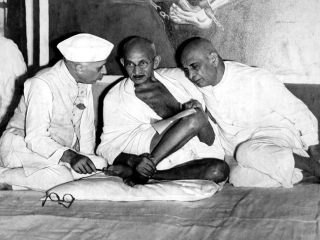 Nehruji’s Selection by Gandhiji for Congress Presidentship Again and Again
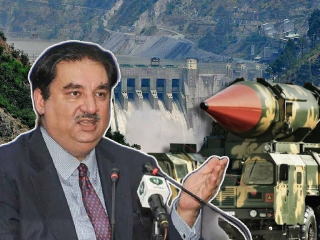 “If India stops our water, there will be a nuclear war” : Former Defence Minister of Pakistan
 Indian and Chinese armies hold more than 1,100 ground-level interactions every year !
 Radiant Thoughts of Sachchidananda Parabrahman (Dr) Jayant Athavale
 We pay our obeisance a million times on the Birthday (as per Tithi) of
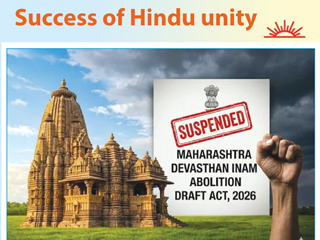 Major win for Hindu unity : Maharashtra Government suspends the controversial ‘Devasthan Inam Abolition Draft Act’