
Research conducted by Maharshi Adhyatma Vishwavidhyalay
On the auspicious conjunction of Jyeshtha month, the bright fortnight (Shukla Paksha), the tenth lunar day (Dashami Tithi), Tuesday, and Hasta constellation (Nakshatra), the Ganga descended from Heaven to Earth. In Heaven the Ganga is called Mandakini, on Earth she is known as Bhagirathi, and in the nether world she is called Bhogavati. It is the heartfelt wish of millions of Hindus to bathe in the Ganga at least once in their lifetime.
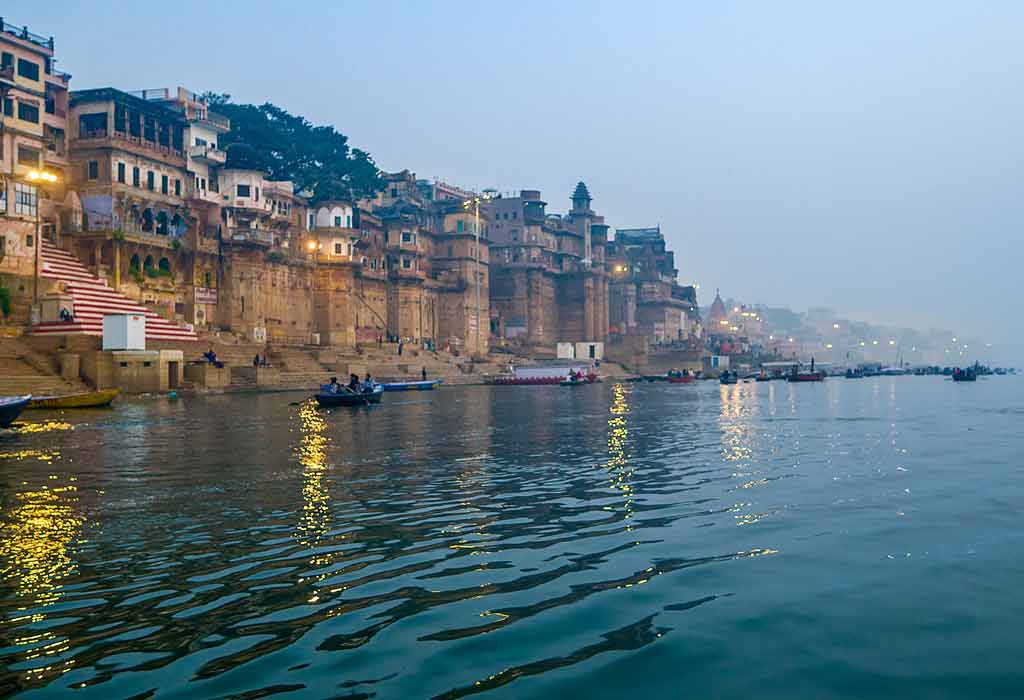
The banks of the Ganga have become sacred pilgrimage sites and are revered as Holy destinations for spiritual attainment for Hindus. Geographically, the Ganga is the lifeline of India ! Historically, from ancient times to the present, and from Gangotri (its origin) to Ganga Sagar (where it meets the ocean), the story of the Ganga is the immortal narrative of Hindu civilisation and culture. From a national perspective, despite differences in customs, dress, and lifestyles, River Ganga unites people and thus stands as a national symbol of Bharat. From a religious standpoint, River Ganga grants Final Liberation (Moksha) to devotees and is regarded as the supreme pilgrimage site in the world.

In the spiri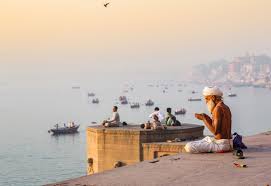 tual realm, the Bhagwadgeeta holds the highest position, similarly River Ganga holds the highest position among pilgrimage sites .’ [Reference, Sanatan’s Text – Ganga Mahatmya (including Spiritual Characteristics and Worship)]
In Hindu culture, River Ganga is revered as a Mother and holds the highest sacred status. The following research explains the spiritual significance of this supremely Holy river.
A scientific study was conducted to examine the influence of vibrations emitted by the water of River Ganga on the surrounding environment. For this study, the Polycontrast Interference Photography (P.I.P.) technique was employed. This technology enables the visualisation of an object’s coloured aura – subtle energy fields that are normally invisible to the naked eye. When integrated with a video-camera system, P.I.P. allows the detection of positive and negative vibrational fields around objects, structures, or individuals through distinct colour patterns. The analysis of the observations recorded in this study is given below.
1. Analysis of the observations in the study : In this experiment, a drinking glass (tumbler) was first placed on a platform and a P.I.P. (Polycontrast Interference Photography) image of the environment was captured. This served as the baseline reading. Thereafter, one by one, a glass filled with water from River Ganga and, for comparison, a glass filled with water from a common river were placed on the platform, and their P.I.P. images were taken. After a comparative study of these images, the effect of the vibrations emitted by the water of the Ganga on the surrounding environment was understood.
2. The overall proportion of positive and negative vibrations in the P.I.P. images (auras), and the percentage levels of certain significant positive vibrations
| ‘PIP’ Photographs | Amount of negative and positive vibrations of the ‘PIP’ photographs’ (percent) | Proportion of certain important colours in the ‘P.I.P.’ photographs that indicate positive vibrations (percent) | ||
| Total proportion of colours that indicate negative vibrations | Total proportion of colours that indicate positive vibrations | Yellow (Chaitanya or knowledge) | Bluish white (Purity or Sanctity) | |
| 1. After keeping the empty glass for study (baseline reading) | 34 | 66 | 27 | 0 |
| 2. After keeping the glass filled with river water from a common river | 41 | 59 | 36 | 2 |
In the analysis given ahead, comparison of the vibrations of the components in the study has been done with the ‘baseline reading’.
A. When an empty glass was placed for the study, the proportion of positive vibrations in the surroundings was 66%.
B. When a glass filled with common river water was placed, the proportion of positive vibrations in the environment was 59%, which means it decreased compared to the baseline reading.
C. When a glass filled with River Ganga water was placed, the proportion of positive vibrations in the environment was 84%, which means it increased significantly compared to the baseline reading.
3. Conclusion
Due to the effect of the water from the common river, the Sattvikta (spiritual purity) in the environment decreased to some extent. In contrast, the water from River Ganga significantly increased the Sattvikta in the environment. River Ganga is a supremely sacred river and has the ability to absorb Divine principles. High-level positive vibrations were emitted into the environment through the water of River Ganga. As a result, the environment became pure and sanctified. Through this spiritual research, we can understand ‘Why River Ganga is considered supremely sacred in the Hindu Dharma’.
4. Understand the Importance of River Ganga water !
‘Among the seven sacred rivers of Bharat, River Ganga is the most sacred. Even a single drop of Ganga water is as Holy as the entire river. Since the River Ganga is subtly charged with the principle of Deity Ganga, no matter how polluted the river may appear grossly it remains eternally pure.’ That is precisely why those who can perceive from the subtle realm and even scientists realise that compared to any water in the world, Ganga water is the most sacred. The water of the Ganga is inherently pure, and it has the ability to purify others as well. When Ganga water is sprinkled on any person, object, premises, or place, that person, object, premises, or place become purified.
5. Opinions of some Scientists regarding River Ganga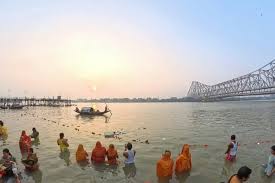
A. ‘Millions bathe in Ganga water contaminated with cholera germs, yet they do not get infected with cholera. This is a great miracle.’
— F. C. Harrison, Researcher, McGill University, Canada.
B. ‘The germ-destroying power found in the water of the Ganga has not been found in the waters of any other river in the world.’
— Kohiman, Water-science specialist (Conclusion drawn after his research on Ganga water in Varanasi in 1947)
6. The exceptional importance of River Ganga in the life of Hindus
While performing daily bathing rituals, Hindus remember the Ganga along with other sacred rivers. Pilgrims bring Ganga water from Holy places such as Haridwar and Prayag (formerly Allahabad) and worship it at home. They also invite relatives and offer them this sacred water as tirtha (Holy offering). Ganga water is used for purifying a premises. For water purification too, Ganga water is poured into newly dug wells. At the time of death, a few drops of Ganga water are placed in the mouth of the dying person so that they may attain a blessed afterlife. To ensure the liberation of ancestors, their Shraddha rituals are performed on the banks of the Ganga. In short, the Ganga holds an extraordinary and irreplaceable place in the life of Hindus.
(Reference for the text in points 4 to 6 : Sanatan’s Holy text — ‘Gangamahatmya (Including Spiritual Characteristics and Worship)’
7. It Is important to preserve the Spiritual legacy of the Ganga !
It is a fact that the present generation is largely unaware of River Ganga’s supernatural greatness and also its current tragic condition. Remembering the glory of the Ganga, the destroyer of all sins and the embodiment of all Holy places, we must remain vigilant about preserving Her purity. Polluting River Ganga is an act of sin. Keeping the Ganga clean and ensuring that Her flow remains uninterrupted is our human, social, national duty and our duty as per Dharma. To safeguard the spiritual heritage of the Ganga, it is imperative to maintain Her cleanliness, Her continuous flow, and Her sanctity.’
– Mrs. Madhura Dhananjay Karve, Research Department, Maharshi Adhyatma Vishwavidyalay, Goa (21.8.2024)
Address the Ganga by the name ‘Ganga’, not ‘Ganges’!
‘In Greek, English, and other European languages, the pronunciation of Ganga has been distorted to ‘Ganges’. Some Indians influenced by English also use this pronunciation. According to a principle of Spiritual Science, sound, touch, form, taste, smell, and the energies associated with them exist together. If one pronounces the word ‘Ganga’ incorrectly, how can one receive the spiritual benefit of remembering Her ? Therefore, even when speaking or writing in foreign languages, address Her only by the name ‘Ganga’!” — Reference : Sanatan’s Holy text — ‘Gangamahatmya (Including Spiritual Characteristics and Worship)’
 Nehruji’s Selection by Gandhiji for Congress Presidentship Again and Again
 Radiant Thoughts of Sachchidananda Parabrahman (Dr) Jayant Athavale
 We pay our obeisance a million times on the Birthday (as per Tithi) of
 Major win for Hindu unity : Maharashtra Government suspends the controversial ‘Devasthan Inam Abolition Draft Act’
 Amazon Insults Aryabhata : Hindu Janajagruti Samiti serves legal notice
 Murtis of Hindu Deities found in the basement of Jama Masjid in Bharuch (Gujarat)