
But-shikhan not but-farosh !
Monday. 18 October 1025.
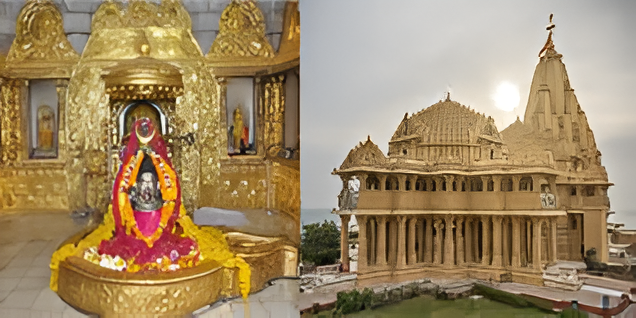
Mahmud of Ghazni knelt on the ground in prayer and asked the blessing of Allah ‘upon his arms’. Then he set out of his capital Ghazni, leading a massive army that included thirty thousand regular cavalry. Only the best would do for this dangerous adventure. His support cortège also comprised thirty thousand camels that carried water and provisions. Apart from this, each trooper had his own mini-retinue of two camels to supply water.
About three weeks later, Mahmud reached Multan, rested there for a while and on 26 November, began his expedition proper. His earlier experience of an unfruitful siege at Kalinjara had taught him a lesson he didn’t forget : The main portion of the Ganga–Jamuna belt was still fully under the control of powerful infidel kings and was, therefore, an unsafe route to take. And so, from Multan, Mahmud marched downwards towards the deadly Thar desert, which was ‘fiery as Jahannum itself ’.
It was sheer recklessness motivated by nothing but innate fanaticism, naked ambition and goaded by a kind of indomitable inner jubilation of a foregone victory : Of acquiring loot that would surpass everything he had acquired so far. The scorching Thar was overpowered by Mahmud’s inflamed grit.
Meanwhile at Anahilapataka, Bhima, the current ruler of the distinguished Gujarat Chalukya dynasty founded by Mularaja, was fast asleep at the wheel. Somanatha was the guardian Deity of Mularaja
When he emerged from the blazing desert after a gruelling journey, Mahmud stormed the Ludrava town near Jaisalmer and completely wasted it, slaughtering the citadel manned by a small body of soldiers who fought till the last breath but didn’t flee.
Next, he took the Chikudar hill, which was so high that the stars passed below it. Then it was the turn of Nahrwala, the capital itself. Which was when the thoroughly unprepared and complacent Bhima fled the scene in advance and sought refuge in the fort of Kanthkot.
By December 1025, in an astonishing span of just over two months, Mahmud was camping outside Patan itself. At this point, the strategist in him chose to take some much-deserved rest after the wearisome desert journey and all that fighting.
He replenished his provisions and water and marched towards Mundher or Modhera, home of the fabulous Sun Temple that stands even today as a tourist attraction. Here, he encountered solid resistance from the Hindu army, which he eventually crushed. Then he cut straight across the Kathiawar peninsula and arrived at the opulent town of Dewalwara, where he had to again face stiff resistance. His superior force easily overcame it by slaughtering soldiers and unarmed citizens alike. He smashed its temples and looted everything worth looting.
It was the final leg of his devastating campaign.
Thursday. 6 January 1026.
Mahmud of Ghazni finally stood outside the gates of the magnificent Somanatha and realised that it wouldn’t be easy to take it. The city by the seashore was strongly defended by a fortress with lakhs of devout Hindus inside, willing to do anything to save it.
However, by the time Mahmud had encamped there, these devout Hindus had been stricken by a belief that was as cocksure as it was fatal. This is how the historian D.C. Ganguly describes the eve before an epic tragedy of their own making.
The Hindus, who assembled on the rampart of the fort, were [sic] passing their time in merry-making, fondly believing that Somanatha had drawn the Muslims there only to annihilate them for the sins they had committed in demolishing Idols elsewhere. Their morale was high even though their leader had fled away in cowardice with his family to a neighbouring island.
Mahmud began his pounding the very next morning. The Hindus hit back with a ferocity and violence that stunned Mahmud and his armies, which quickly retreated for the day. The next day proved even worse for Mahmud.
The Hindu defence derived its strength and fury from desperation but it didn’t last because it was leaderless against Mahmud’s well-organised and superior army. The greater the pushback from the Hindu side, the more determined Mahmud became. As Mahmud’s soldiers finally scaled the walls of the fort and entered Somanatha, they found the desperate Hindus crowded in front of the gate of the grand Somanatha Temple.
(Courtesy : Excerpt from an Article by Sandeep Balakrishna posted on dharmadispatch.in; 11.1.2026. Must read the complete Article on this website.)
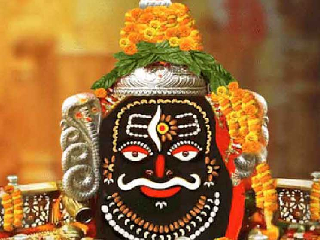 The Temple has fixed deposits worth ₹472 crore and gold and silver worth ₹300 crore !
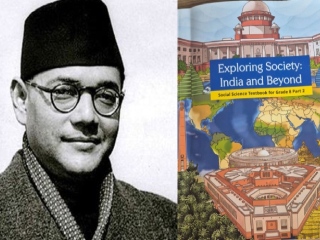 NCERT removes Hitler reference related to Subhas Chandra Bose from Class 8 textbook
 Hindutva leader Puneeth Kerehalli arrested from Hassan (Karnataka) !
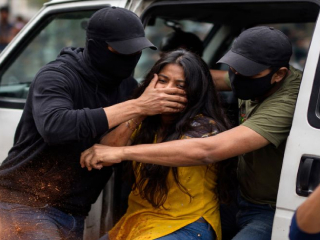 Kamruddin breaks into a house and abducts a Hindu girl in Boribhadak (Dist. Pune) !
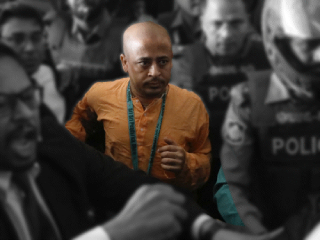 Bangladesh: ISKCON’s imprisoned Chinmay Krishna Das Prabhu faces a serious threat to his life !
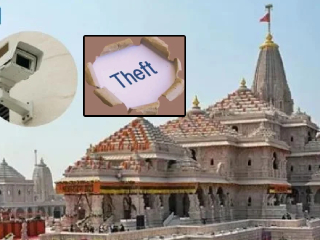 Five employees caught stealing bundles of currency notes and hiding them in their socks !