
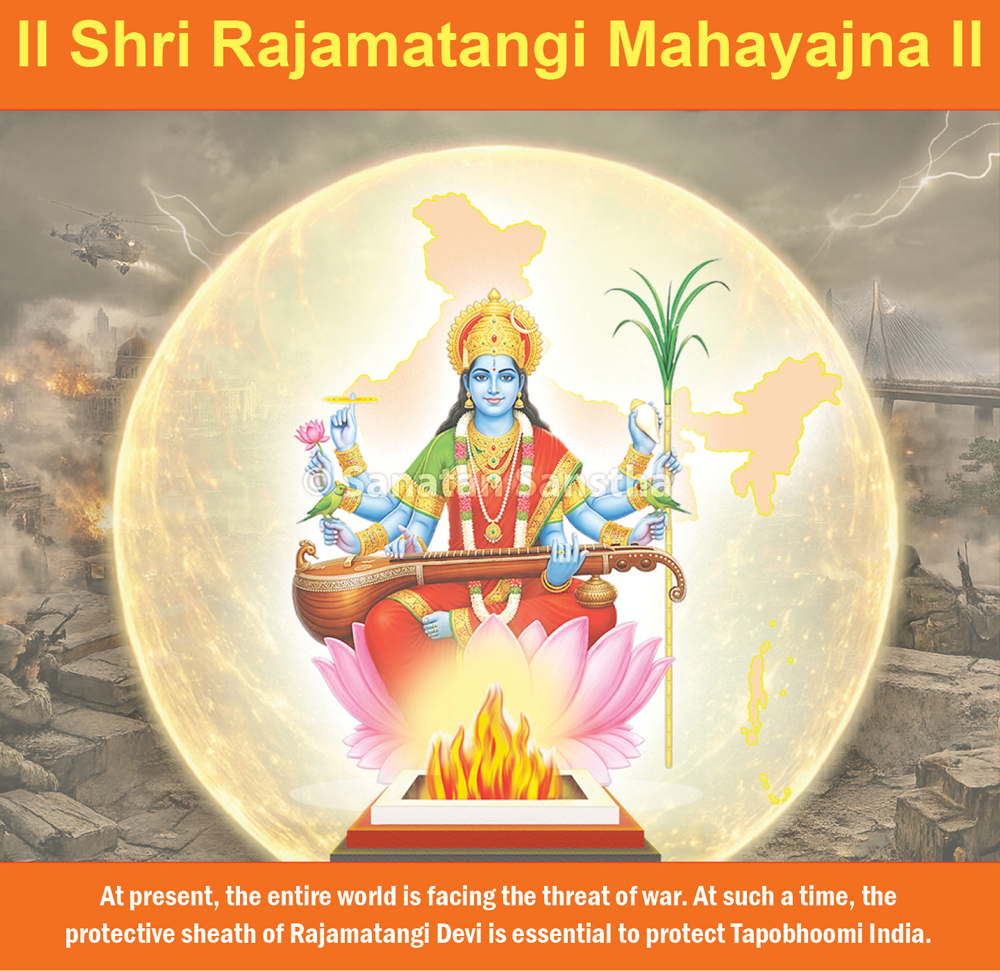
Importance of worshipping Rajamatangi Devi at vyashti level
For ordinary people like us, Vaikhari (Grossest level of speech – the speech of the physical tongue) mode of speech is important – that is, the words which emerge from our mouth. These very words lead to people coming together or drifting apart.
We too experience in daily life that due to the use of incorrect words or improper speech, many incidents occur which become causes of dissatisfaction and sorrow. Worship of Rajamatangi Devi is important for the purification of the Vaikhari speech. Through Her worship, sweetness develops in speech.
Let us surrender at Her Holy feet and pray – ‘O’ Adishakti Rajamatangi Devi ! We pray at Your Holy feet with an attitude of surrender – O’ Mother ! Let the Vishuddha-chakra (The fifth centre in the spiritual energy flow system) of seekers be purified. Let our speech always be used for chanting the Guru’s glory, spread of Dharma, serving Dharma and refuting wicked thoughts. O’ Mother ! May You reside in our speech. Let our Vaikhari speech be purified.’
Importance of worshipping Rajamatangi Devi at samashti level
We see the kind of events occurring at the samashti level. During the USA-Iran war, we read and saw that the President of USA was issuing warnings to Iran. Iran too was responding to USA. Closure of the Strait of Hormuz had a major impact on oil supply. If anyone intensified this war-like situation, it was through words ! Although not directly involved in the war, India too had to suffer its effects; however, India attempted to safeguard its interests by organising high-level meetings with other countries. In all these strategies too, words became important.
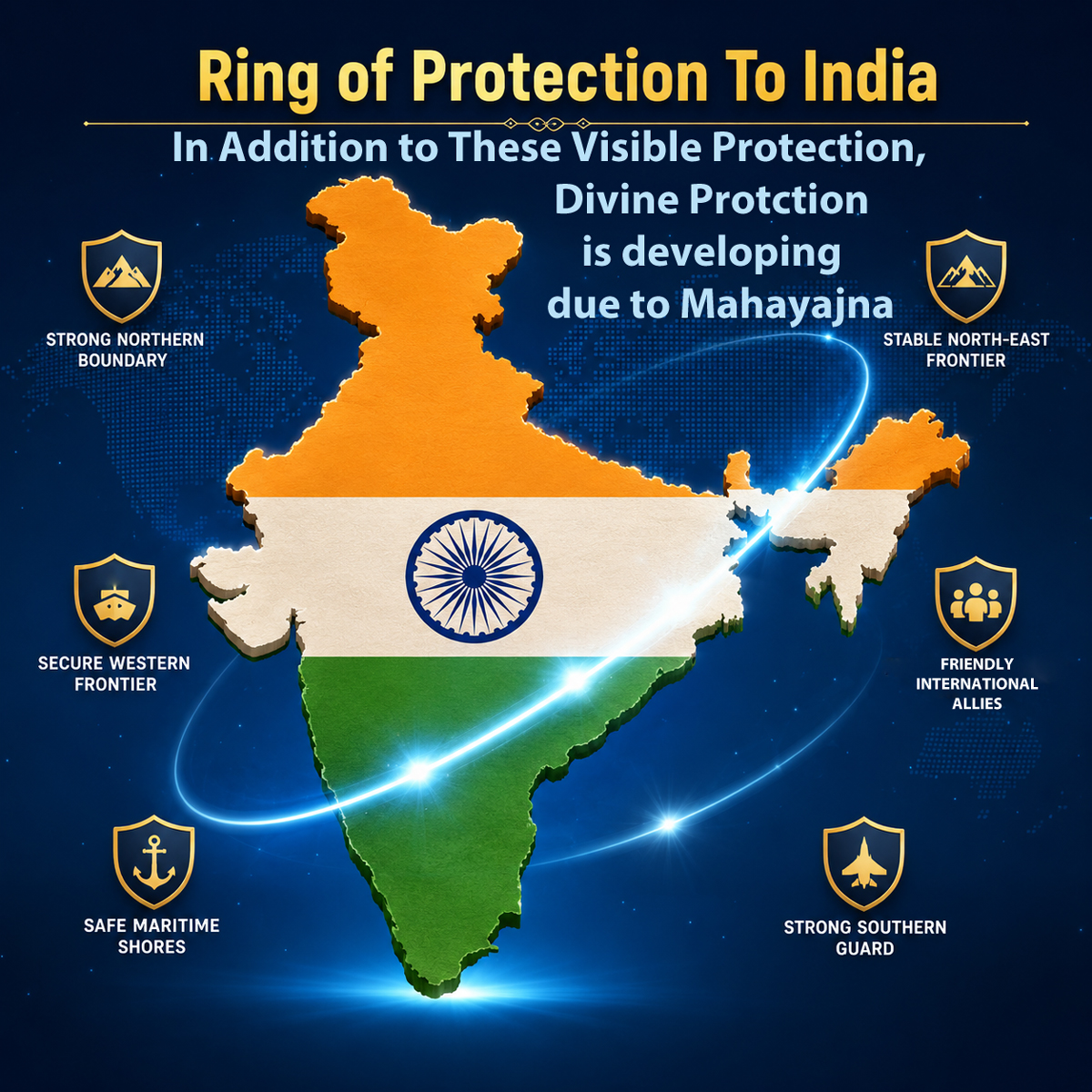
On this Rajamatangi Mahayajna, let us pray at Her Holy feet – ‘O’ Rajamatangi Devi, Mother of the Universe ! May Your grace remain on patriotic Indians who fight verbal battles to protect this most sacred land of Bharat. Let Your protective sheath be around this land of penance. O’ Bhagawati ! Give us the strength to intellectually and verbally refute those who speak against Dharma and the Nation. Let our speech obtain the fortune of glorifying this Sanatan Dharma and Sanatan Bharat.’
Since Devi Matangi is regarded as the Chief advisor of Adishakti, She is called Rajamatangi. She is the 9th Goddess among the Dashamahavidyas, is the Deity who purifies speech and imparts knowledge. Even during the ten Incarnations of Bhagawan Shri Vishnu, the Dashamahavidyas remain active. During the Incarnation of Shriram, the Principle of Rajamatangi was active; hence, to re-establish Ram Rajya today, we need to worship Her.
It is believed that Matangi is the consort of Matanga Shiva, who is famous as Matanga Bhairav. In the true sense, She is the Shakti of Matanga Shiva. She is Varadayini (One who grants boons), who immediately grants wealth and prosperity to devotees.
Rajamatangi Devi is the Incarnation of Adiparashakti Herself. When Narad asked Brahmadev about the origin of Matangi, He replied, ‘Sage Matanga performed severe penance for 10,000 years. Pleased with his penance, Adiparashakti manifested before him in the form of Matangi. Bhagawan Rudra worshipped this Matangi Devi and prayed to Her for the destruction of Tripurasur’.
– Mr Chetan Rajhans (National Spokesperson, Sanatan Sanstha, 7.5.2026)
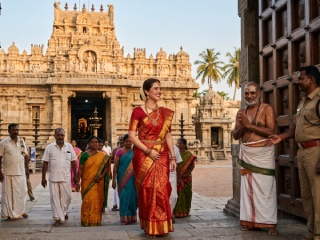 A person’s nationality or foreign name cannot determine their faith in Hindu Dharma !
 Radiant Thoughts of Sachchidananda Parabrahman (Dr) Jayant Athavale
 We pay our obeisance a million times on the Birthday (as per Tithi) of
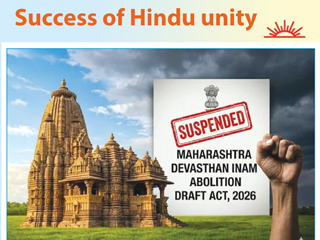 Major win for Hindu unity : Maharashtra Government suspends the controversial ‘Devasthan Inam Abolition Draft Act’
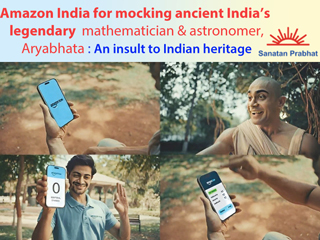 Amazon Insults Aryabhata : Hindu Janajagruti Samiti serves legal notice
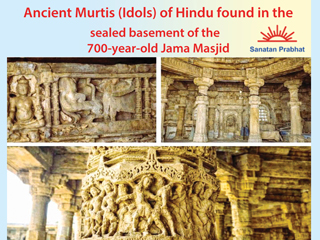 Murtis of Hindu Deities found in the basement of Jama Masjid in Bharuch (Gujarat)