
Facets realised by me …
Those who have faith in Sachchidananda Parabrahman (Dr) Athavale (fondly addressed as ‘Gurudev’) regard Him as an Incarnation. Seekers of Sanatan Sanstha revere Him as their Guru and have the bhav (Spiritual emotion) that they have never seen a Guru like Him. The reason for both these sentiments is in the spiritual practice according to Gurukrupayoga (Path of Guru’s grace) taught by Gurudev, and the immense opportunities for Guru-seva (Service unto the Guru) made available for seekers. With my limited intellect, I have attempted to present the importance of these two facets as I have realised.

1. Gurukrupayoga
Once, Param Pujya Bhaktaraj Maharaj, the Guru of Gurudev, asked, ‘Which is the most superior Yoga ?’ Instead of naming one among the commonly prevalent Paths such as Dhyanyoga, Jnanyoga, Karmayoga or Bhaktiyoga, Gurudev, who possessed the highest virtues of a disciple, answered, ‘Gurukrupayoga’. Hearing this, Param Pujya Bhaktaraj Maharaj immediately said, ‘Absolutely correct’.
From where did this Yoga arise ? Only a disciple like Gurudev, who had realised through direct spiritual experience that nothing is possible without the Guru’s grace, could have conceived such a Path. Therefore, whichever Yoga one follows, it will become fruitful only when practiced under the guidance of the Guru of that Path and when Guru’s grace is attained. Hence, Gurukrupayoga alone is supreme. Even Swami Vivekananda, while explaining India’s uniqueness to the world, had said that India’s distinguishing feature is its Guru-disciple tradition.
2. Mission expanded as per the principle –
‘There are as many temperaments as there are people and corresponding number of Paths of spiritual practice’
When one observes the spiritual mission of Gurudev, its vastness becomes evident. What initially began merely through discourses and weekly satsangs has today not only flourished into a mighty banyan tree, but its aerial roots too have spread deeply into the ground and taken firm hold. While explaining the uniqueness of Spirituality, Gurudev said, ‘There are as many temperaments as there are people and corresponding number of Paths of spiritual practice’. He did not stop merely at stating this principle. He also made available spiritual practice suited to the temperament of each seeker. According to one’s nature and skills, suitable Guru-seva became available to all. The foundation of His mission was the spreading of Spirituality and the nurturing of seekers.
Creation of Spiritual Texts : Many seekers are engaged in the satseva of creating Spiritual Texts on hundreds of subjects in various languages, and this satseva will continue for many years. These Texts explain Spirituality in scientific terminology, at an experimental level, and in simple language. They will guide society for centuries to come. Some have even described them as the ‘Vedas of Kaliyug’. The satseva involved includes classification of writings, compilation, formatting, illustrations, cover and back-cover design, printing, sales, and accounting.
Sadhana through the medium of Art : Gurudev guided seekers trained in Art to create spiritually pure pictures of Deities and Murti (Idol) of Shri Ganesh. Those skilled in rangoli Art were taught how to identify spiritually pure rangoli patterns and create designs capable of attracting Divine principles, which were then propagated in society. Through Name-strips of Deities and spiritually pure products (such as camphor, fragrance, and incense sticks) opportunities were created for seekers performing the satseva of spreading Spirituality to spread sattvikata in society through satseva.

Sanatan Prabhat Periodicals : Sanatan Prabhat Periodicals started by Gurudev are not merely a medium that consistently write about Spirituality, Nation and Dharma; they have become an ideological platform for devout Hindus working toward the establishing a ‘Hindu Rashtra’. For seekers, they became the messenger of Gurudev. This mission includes gathering daily news, proofreading, formatting, printing, distribution, and accounting.
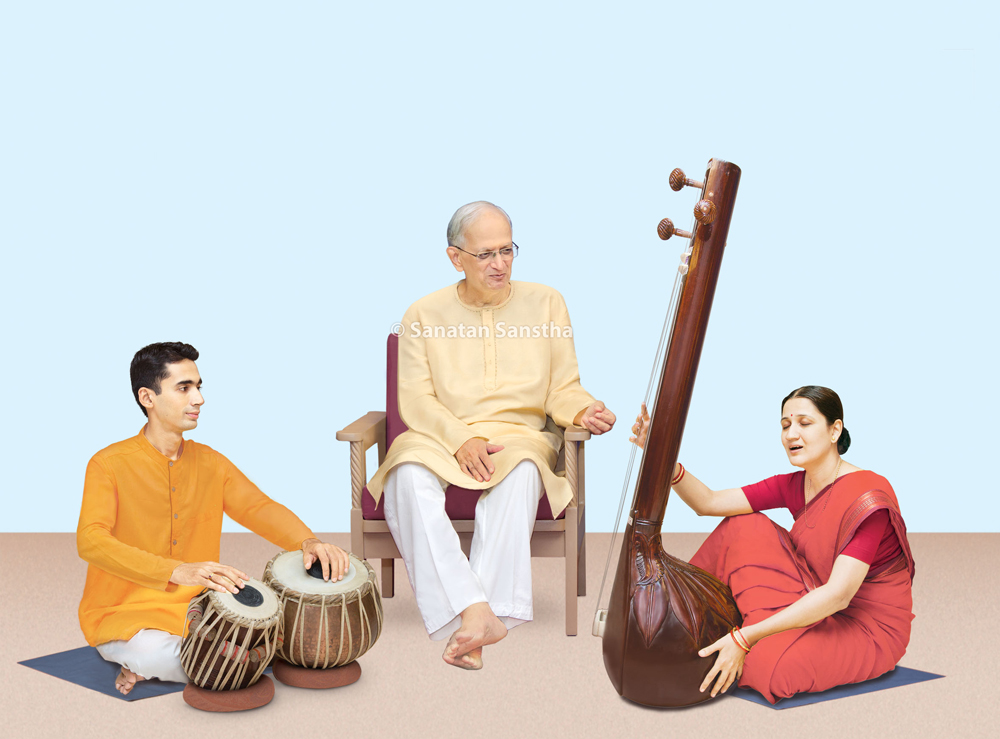
Music and Dance : For those trained in music and dance to attain God-realisation through these very Art-forms, Gurudev established the Maharshi Adhyatma Vishwavidyalay. Artists in society became associated with it and began sadhana.
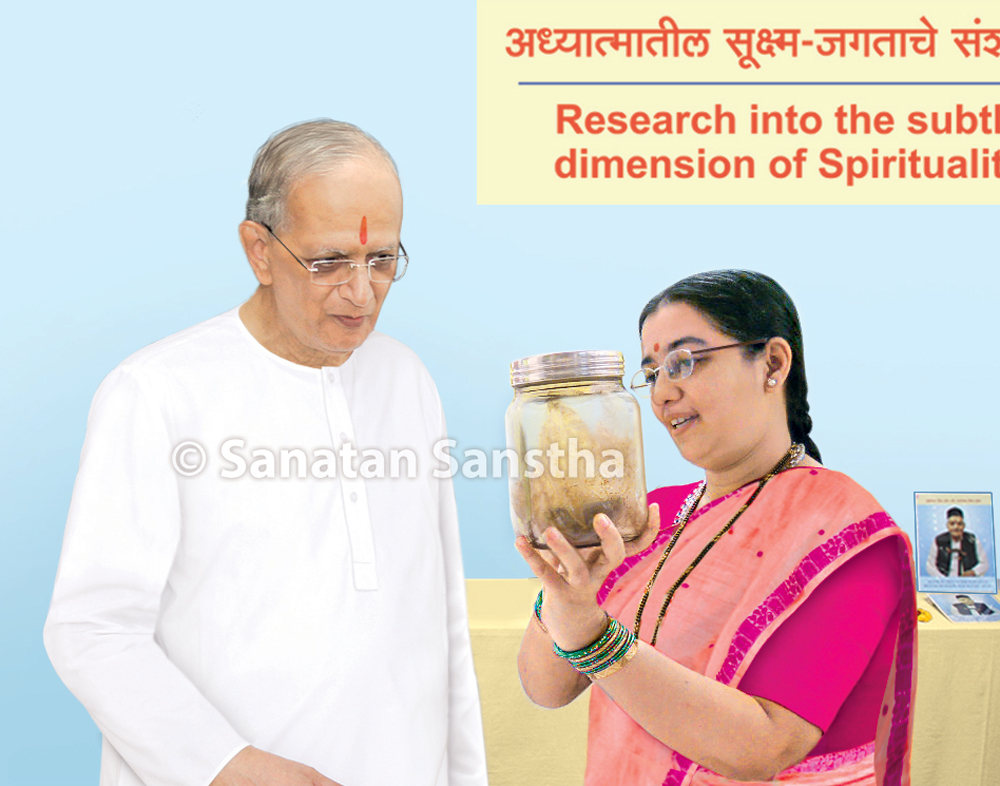
Spiritual Research : Highly educated seekers, along with seekers whose sixth sense has awakened through spiritual practice and Saints capable of subtle perception, are engaged in research on objects and premises using scientific instruments. Research is also conducted to scientifically demonstrate how many practices in Hindu Dharma help increase positivity within individuals.
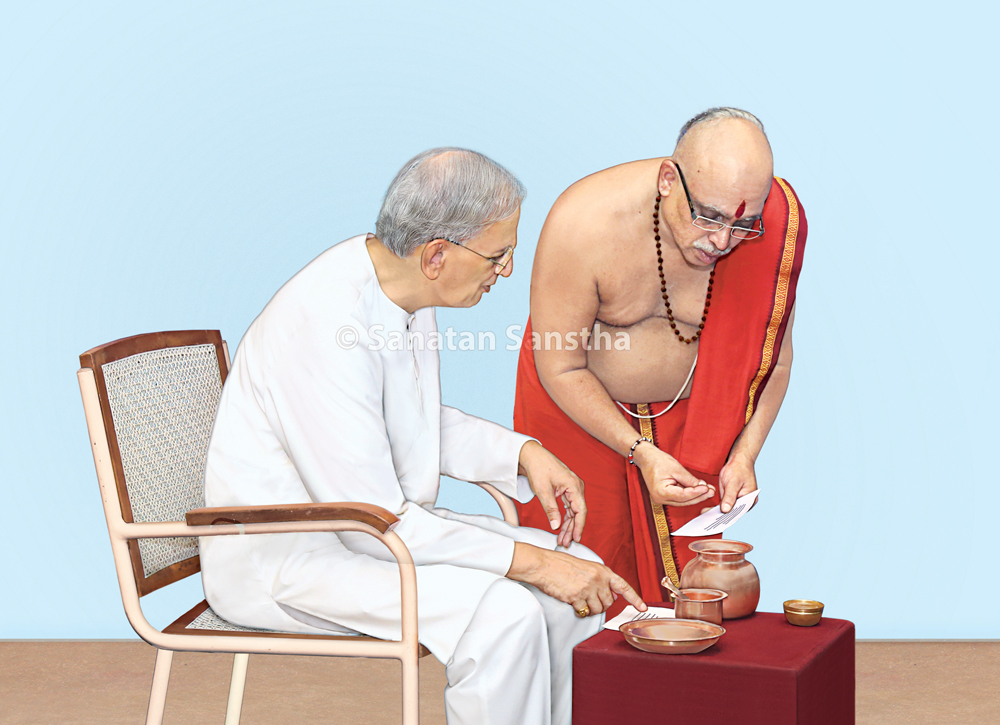
Priesthood and Astrology : Those knowledge-able in Astrology were given direction for satseva, enabling them to progress spiritually through it. Those interested in priesthood are guided in ritualistic services such as Yajnas and are trained to become seeker-priests.
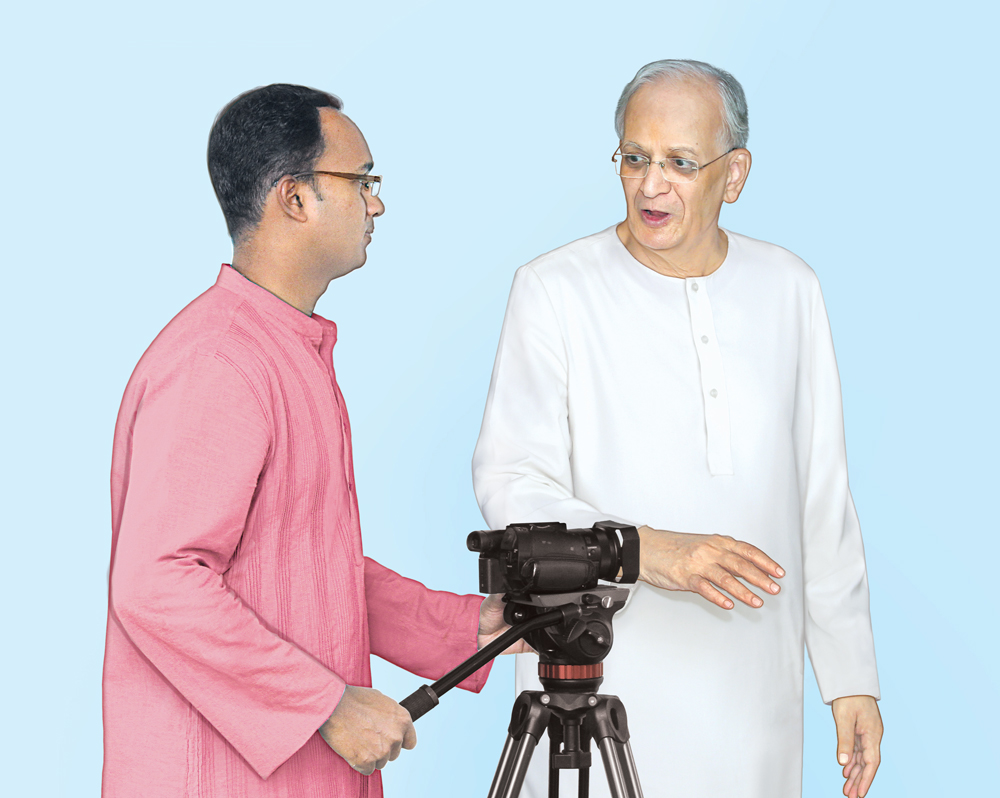
Audio-Visual and preservation of objects : Seekers perform sevas such as videography of programmes organised in Ashrams and outside, photography, archival compilation, creation of documentaries, preservation of rare objects, and organising exhibitions.
3. Satsevas that became a spiritual blessing for seekers

The purpose of mentioning these satsevas is simple. Through this, according to the principle ‘There are as many temperaments as there are people and corresponding number of Paths of spiritual practice’, seekers received opportunities for satseva that are suited to their liking; thus helping them in their spiritual practice. This immense mission established virtually from nothing by Gurudev exists solely for the fulfilment of the Marathi prayer by Param Pujya Bhaktaraj Maharaj, which means – ‘May the unhappy become spiritually inquisitive. May the inquisitive become mumukshu (A seeker who has intense desire for God-realisation). May the mumukshus become seekers. And may the seekers attain Moksha’.
Performing the satsevas assigned as spiritual practice, while simultaneously performing the eightfold spiritual practice according to Gurukrupayoga and obtaining Anand through it, became a true blessing for seekers. Many progressed spiritually through this. Some exhausted destiny accumulated over previous births, many became liberated from the cycles of birth-and-death, some attained Sainthood, while many others continue progressing toward it.
Gurudev’s Ashrams and Sevakendras are mediums for spiritual practice and rapid spiritual growth. Alongside skill-based satsevas, seekers engage daily in preparing breakfast and meals, planning services, maintaining cleanliness, preserving objects, and numerous other activities that amount to spiritual practice.
4. Entirely for the welfare of all living beings

In truth, the immense spiritual mission established by Gurudev was never created for worldwide fame, personal honour, or social recognition. Certainly, not even at the subtle level did such thoughts arise in Gurudev’s mind. This vast mission arose solely because of His intense inquisitiveness, His love for seekers, and His earnest desire for the welfare of all living beings. All these activities began under His guidance and continue accordingly, yet He Himself remains detached from personal credit. Gurudev’s mission resembles the spirit expressed by Sant Jnaneshwar Maharaj – ‘All this happened because of me; yet, I have done nothing’.
Gurudev provided opportunities for satseva; seekers themselves worked tirelessly to perfect them. He made seekers self-reliant while simultaneously guiding their spiritual progress.
Therefore, Gurudev is truly unique and an Incarnation. Serving at His Holy feet means responsibly carrying forward this mission, expanding it according to the needs of the time, dedicating oneself fully in satseva to His Nirgun (Non-materialised) Principle, and remaining detached from recognition just as He does. That alone would be true gratitude unto Him.
– Mr Virendra Marathe, Managing Trustee, Sanatan Sanstha (1.5.2026)
 Param Pujya (Dr) Athavale is an Incarnation ! : Jagadguru Shri Ramanandacharya Narendracharyaji
 Criminal case against 11 members of a Christian organisation who claimed that “Hindu is an abusive term, meaning thief, bandit and slave” will not be quashed !
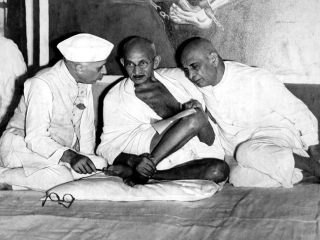 Nehruji’s Selection by Gandhiji for Congress Presidentship Again and Again
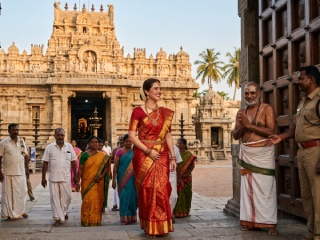 A person’s nationality or foreign name cannot determine their faith in Hindu Dharma !
 Radiant Thoughts of Sachchidananda Parabrahman (Dr) Jayant Athavale
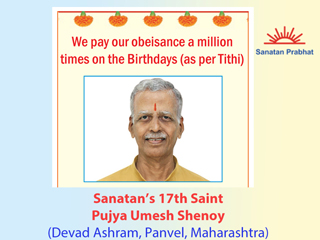 We pay our obeisance a million times on the Birthday (as per Tithi) of