
Some key decisions taken by the Bengal government
|
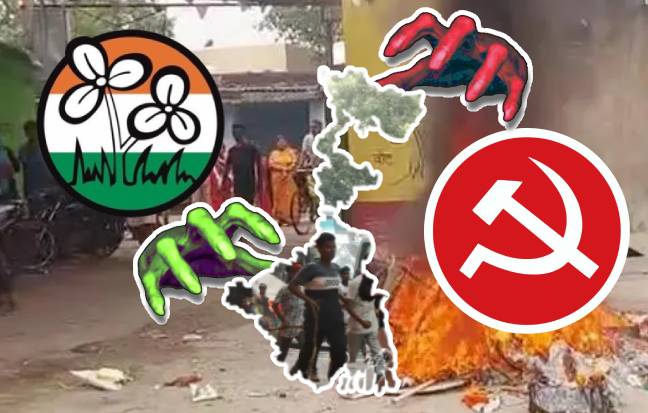
For nearly five decades, the oppression of the Left and TMC reduced the state of Bengal to a dilapidated condition. Whether one calls it a land slipping out of India’s hands or a region moving towards becoming another Bangladesh, this sacred land of Bengal is now finally beginning to witness prosperous days. As soon as the government led by the staunch Hindutva leader of the BJP, Suvendu Adhikari, came to power, a series of India-centric orders began to emerge in the state. Excluding Muslims from OBC reservations, banning Namaz on roads, recovering 200 per cent compensation from rioters, and imposing strict regulations on cow slaughter during Bakri Eid – if a committed Hindutva supporter says that these decisions are forcing even the Chief Ministers of many BJP-ruled states to introspect, there would be nothing inappropriate about such a statement.
Democratic, law-abiding decisions!
Now, it is not as though these directives are anti-democratic or unjust towards Muslims. Every order is backed by constitutional and legal provisions.
A. The Bengal government has issued regulations regarding cow slaughter under the West Bengal Animal Slaughter Act, 1950.
B. Similarly, the Supreme Court of India has underlined that the right to travel on safe, obstruction-free roads suitable for vehicular movement is an extension of the “Right to Life” under Article 21 of the Constitution. Someone would counter that the freedom of religion, as enshrined in the Constitution under Article 25, supersedes Article 21. However, this interpretation is contestable, as the Quran or any Islamic scripture does not validate performing Namaz on roads that would hinder society at large. As an illustration, a foundational maxim of Islamic law, derived from a well-authenticated saying (Hadith) of the Prophet Muhammad, states: “La darar wa la dirar” – “There should be neither harming nor reciprocating harm.” (Sunan Ibn Majah) Citing this, even from an Islamic perspective, the prohibition of performing Namaz on public roads is perfectly all right. So, this does not hinder Article 25 either.
C. One would argue that Muslims have been denied OBC reservations. But that too is not the case. In a landmark May 2024 judgment, the Calcutta High Court struck down Bengal government notifications issued between March 2010 and May 2012 that had granted Other Backwards Class (OBC) status and reservation quotas to 77 classes, primarily Muslim communities. Thanks to vote-bank politics, the TMC never implemented the court ruling. BJP has followed the court directives and implemented them without thinking of any political gains – truly a democratic stance. If the concerned Muslim communities think that it is unjust, the Indian judicial system gives them every right to approach the Supreme Court for justice.
In short, the decisions of the BJP government, although being portrayed as anti-Muslim or tied to religious triumphalism, are not the case at all.
Shelter for Bangladeshi Hindus!
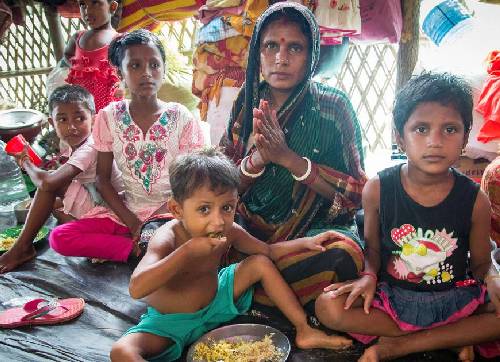
A Bangladeshi Hindu family seeking shelter
The greatest challenge before the BJP government in Bengal is that of Bangladeshi infiltrators (they do not include the Muslims from Bengal or elsewhere in India who are residing in Bengal today). The Gulshan Colony area of Kolkata has virtually become a haven for infiltrators. As reported during the Special Intensive Revision, of the nearly 200,000 residents in this crime-ridden locality, around 90 per cent are reportedly not Indian citizens. This horrifying reality officially came on record during the “Special Intensive Revision” conducted last November. Imagine this: thousands of infiltrators are roaming freely in Bengal’s capital itself. One can well imagine the condition of the rest of the state. It is perhaps better not even to think about Murshidabad, Malda, and North Dinajpur, where the Muslim population has risen to between 55 and 70 per cent.
To address this, the government has adopted a three-point programme named “Detect, Delete, and Deport.” The implementation of the Citizenship Amendment Act has begun in the state. Under this law, except for Hindus, Jains, Buddhists, Christians, and similar religious communities, all other Bangladeshi infiltrators will be immediately identified. Their names will be removed from the electoral rolls, and they will be handed over to the Border Security Force.
The Chief Minister has fixed 31 December 2024 as the cut-off date for determining the validity of those who entered India from Bangladesh. In effect, the Bengal government appears to have taken into consideration the atrocities committed against Hindus during the regime change in Bangladesh in August 2024. According to the Bangladesh Hindu Buddhist Christian Unity Council, more than 2,200 attacks, primarily against Hindus, took place between August and December 2024. During that period, many Hindus may have entered India illegally for self-protection. Thus, it would not be incorrect to say that the Bengal government has effectively granted official refuge to “persecuted” Bangladeshi Hindus.
The Bangladesh-India border has never been completely sealed with barbed fencing. The previous Mamata Banerjee government allegedly created several obstacles in this regard. The government led by Suvendu Adhikari has now handed over this border region to the Border Security Force. As a result, it will now become possible to seal the entire border and curb infiltration effectively.
The Strategic ‘Chicken Neck’
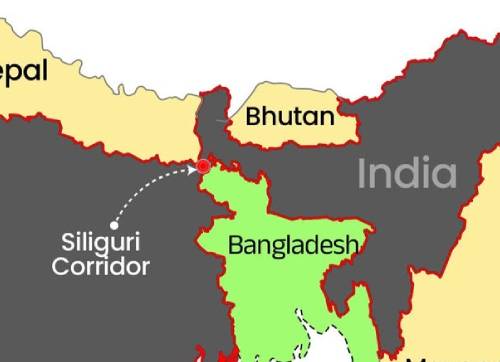
The Siliguri Corridor, or the ‘Chicken’s Neck’ in North Bengal
The establishment of the BJP rule in Bengal has also become significant for India’s geographical integrity. The “Chicken Neck” corridor in Siliguri district of North Bengal is extremely crucial for safeguarding the nation’s sovereignty. This narrow stretch connects the “Ashtalakshmi” states, i.e. the eight northeastern states, with mainland India. The borders of Bangladesh, Bhutan, and Nepal converge around this narrow land corridor. It is only 17 to 60 kilometres wide. The Doklam region of Tibet also lies close to this area. The Indian Army has long made extraordinary efforts to protect this corridor from Chinese aggression.
The government of Suvendu Adhikari has handed over a strategically vital 120-acre tract of land in this region to the Border Security Force and the Central Government. The Union Government had been requesting control over this land for many years. This decision will now enable rapid military mobilisation and smoother coordination during emergencies.
Will Madrasas Recite ‘Vande Mataram’?
‘Vande Mataram, ‘ the iconic call used by Indian revolutionaries, took birth in Bengal
The BJP government in Bengal has made the complete rendition of Vande Mataram compulsory during morning prayers in all schools across the state. Notably, even madrasas have not been exempted. The head of the Madrasa Board in Bengal issued the relevant order on 19 May. Opposition to this is unsurprising; however, one must not forget that Vande Mataram itself was born on the soil of Bengal.
At a time when the Government of India is celebrating the 150 years of this divine composition by Bankim Chandra Chattopadhyay, its praise should first resonate across Bengal itself. During the freedom struggle, countless revolutionaries from Bengal embraced martyrdom while chanting Vande Mataram. Most people know the names of Subhas Chandra Bose, Sri Aurobindo, Khudiram Bose, and Rash Behari Bose, but how many outside Bengal know of revolutionaries such as Bagha Jatin, Surya Sen, Pritilata Waddedar, Bina Das, and Matangini Hazra and their sacrifices?
All these revolutionaries offered themselves in the sacrificial fire of India’s freedom struggle while chanting Vande Mataram. Therefore, this decision of the BJP government is befitting the sacrifices of Bengal’s revolutionaries. Going forward, the government should also make efforts to bring Bengal’s “unsung heroes” onto the national stage. While all of India celebrates the trio of Bhagat Singh, Rajguru, and Sukhdev, hardly anyone outside Bengal speaks of the “Bengal Trio” – Vinay Basu, Badal Gupta, and Dinesh Gupta. It is expected that the BJP will also address this historical imbalance.
All in all, the administrative efficiency of the government has been maintained very well under the Suvendu Adhikari government. Cultural nationalism is also being practised to revive the Bengali ethos.
Overall, the bold decisions being taken in Bengal justify describing this phase as the “Hindu Renaissance of Bengal.” Not only Hindus, but patriotic and constitutional citizens should support these unapologetic yet democratic decisions of the newly elected BJP government. Joy (Jay) Shree Ram!
If Suvendu Adhikari can take such decisions in a state with a 30 per cent Muslim population, why can’t the other BJP-ruled governments follow suit?
FAQsQ1. What major decisions has the Bengal BJP government taken?The government has introduced policies related to reservations, border security, public order and cultural nationalism. Q2. Why is the Chicken Neck corridor important?It connects northeastern India with mainland India and holds major strategic importance. Q3. What is the controversy regarding Vande Mataram in schools?The government has made its full rendition compulsory during morning prayers in schools, including madrasas. |
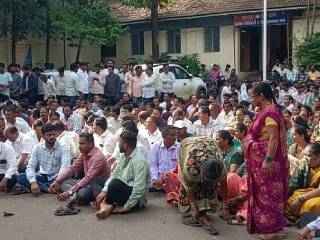 Villagers march to Kagal (Kolhapur district) Police Station in the ‘Love Jihad’ case and demand that the Hindu young woman be handed over to her parents !
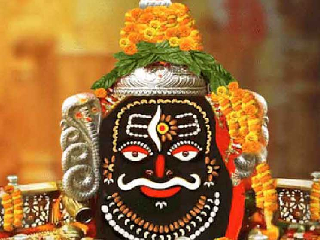 The Temple has fixed deposits worth ₹472 crore and gold and silver worth ₹300 crore !
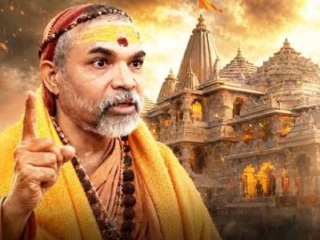 The Shri Ram Temple is an office of the BJP and the RSS; I will go for darshan when it truly becomes a Shri Ram Temple ! : Jyotish Peeth Shankaracharya Swami Avimukteshwaranand Saraswati
 Actor Aamir Khan is the ‘brand ambassador’ of ‘Love Jihad’; Boycott his films ! : Minister Nitesh Rane
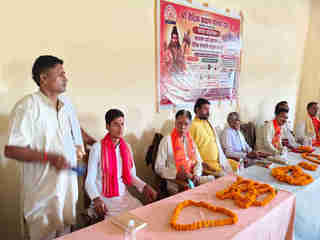 Jaunpur Hosts Seminar on Sanatan Dharma Awakening and Preservation of Vedic Culture
 Case registered against husband and wife for propagating Christianity at Sassoon General Hospital, Pune