
There is a stark distinction between India’s past foreign policy and its current foreign policy, evident even to the general public. Indians had little awareness of the function of foreign policy or of the Ministry of External Affairs. Indians have witnessed firsthand a glimpse of the efficacy of the nation’s foreign policy from the Government’s effective handling of various profound situations such as evacuating Indians amidst the war-tensions that erupted in the Gulf nations, responding Canada in kind by expelling Canada’s ambassador from India after Canada had expelled the Indian ambassador, building a consensus among all nations on the Joint Declaration on the very first day of the G20 Summit, securing the safe return of eight Indians from Qatar after getting their death sentences commuted, and navigating the ongoing tariff dispute with the United States, etc.
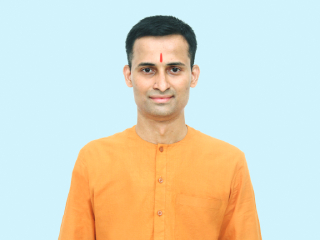
(The author, Mr Yadnesh Sawant, is an Associate Editor at Sanatan Prabhat)
1. The fusion of the strategies of Deity Hanuman and Shrikrushna
India’s External Affairs Minister, Dr S. Jaishankar, stated at an event in Pune that, ‘We are striving to shape the country’s foreign policy along the lines of Hindu scriptures, the ‘Ramayan’ and the ‘Mahabharat’. In other words, we are applying the strategy employed by Deity Hanuman against His adversaries in the ‘Ramayan’ as well as the diplomatic principles of Shrikrushna (Krushna-niti) utilised in the Mahabharat when formulating our foreign policy or making decisions. For the first time since India’s independence, following the Congress party’s era of self-serving and anti-national rule, India’s foreign policy is being grounded in the teachings of Hindu scriptures. Every Indian feels that India’s foreign policy should become even more resolute and dynamic.
2. A tougher stance should be taken on the Jammu and Kashmir issue!
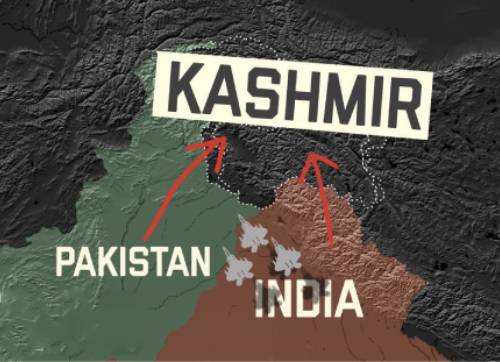
Pakistan consistently makes statements regarding Jammu and Kashmir at the United Nations. It primarily makes statements such as ‘Kashmiris should be granted the right to referendum’, ‘resolution of the Kashmir issue would alleviate tensions between India and Pakistan’ and ‘ Kashmiri people are facing atrocities’, etc.. On one hand, Pakistan raises the Kashmir issue at the United Nations, while on the other, it continues to carry out terrorist activities in Kashmir. Furthermore, Pakistan consistently projects to the world that ‘it is ready for dialogue with India, but India remains averse to it’. Therefore, alongside aggressively presenting India’s stance, taking direct action against Pakistan is also essential. It is essential for India to continuously highlight the atrocities committed by Pakistan against the people of Pakistan-occupied Kashmir, as well as the state of anarchy prevailing there. In other words, there is a need to be firmer and more aggressive on the Kashmir issue.
3. Compel the world to view India as a ‘global power’!
In the times of global conflict (e.g., Russia- Ukraine or the Gulf conflict), it is essential for India to articulate its clear and active role as a ‘messenger of peace’, and to compel the world to view it not merely as a market, but as a ‘responsible global power’. Even though India raised the issue of Palestine’s sovereignty during the Israel-Hamas conflict, why did India not strongly condemn Palestine harbouring the Hamas terrorists? India should support those countries that are taking strict and permanent action against terrorism. At such a juncture, merely maintaining a balanced, pacifist image on the global stage serves no purpose. India must demonstrate the courage to call out those committing wrongs!
4. Warn Bangladesh of direct and indirect action !
Incidents of atrocities against the Hindu minority in Bangladesh occur every day. Incidents such as the mass killing of Hindus, gang-rape of Hindu young and adult women, assassinations of Hindus over trivial reasons, etc., are taking place frequently in Bangladesh. As Hindus in Pakistan and Bangladesh are facing persecution, the Central Government has enacted laws to provide them shelter in India. However, merely enacting a law to settle those Hindus in India is not the solution; rather, it is essential to condemn every atrocity committed against Hindus in the strongest language, issue warnings of action, and even take concrete action if needed. While Bangladesh and the enemy country Pakistan, may not be particularly deterred by mere strong condemnation, the current approach of offering only bland, diplomatic responses has certainly eroded the confidence of the Hindu community. Even if it is currently not feasible to maintain a mindset of taking direct action against Bangladesh, India must consistently adopt a stance of issuing warnings regarding grave consequences and, when necessary, tightening their economic screws with diplomacy.
5. A response is needed to China’s claim over Arunachal Pradesh !
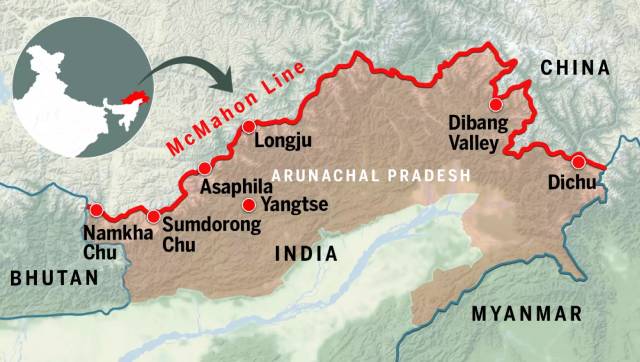
China becomes extremely irate and condemns when the Prime Minister of India visits Arunachal Pradesh, which is an integral part of India, or when the Central Government organises an event there. In fact, China has already encroached a total of more than 43,180 square kilometres of Indian territory of Aksai Chin and the Shaksgam Valley. Nevertheless, instead of addressing that issue, China is laying claim to India’s integral territory. India does nothing beyond merely issuing hollow protests. India, too, must now speak out regarding China’s sensitive regions of Tibet, Hong Kong, and Taiwan. India should begin to confront China on issues such as the autonomy of Tibetans, illegal Chinese control over Hong Kong, and Taiwan’s independence. Mount Kailash, an extremely sacred mountain to Indians and the abode of Deity Shiva, along with Lake Manasarovar, is located in Tibet. Therefore, India should raise its voice against China’s illegal control over Tibet.
6. Take steps to become a global leader!
India is classified as a developing country, which means that from the Western perspective, India is still developing, whereas Europe and America are developed regions. India is labelled as a ‘developing nation’ by pointing to issues such as poverty, unemployment, and slums; however, the governments that have ruled the country to date are the ones responsible for these domestic problems. The aspect of India that is rarely showcased consists of its immense spiritual wealth, vast reservoir of knowledge, values, cultural traditions, and ancient scriptures, etc., that no other nation possesses. By presenting this invaluable heritage of India on a global stage, we will have to tell the world that India is a nation rich in ancient glory and profound knowledge. No one in the world has the knowledge of science that India has. India is the very origin of all sciences and technologies. The supreme path to true human progress (spiritual progress) and the ideal lies with India alone. We must convince the world that ‘India alone holds the answer to global problems’. It is essential for India to further strengthen its global standing by consistently articulating the issues facing African, Latin American, and Asian nations on the global stage and by becoming the voice of these countries.
7. Keeping Sri Lanka in check
Sri Lanka, along with Pakistan, frequently arrests Indian fishermen for straying across the maritime boundary. Sri Lanka, which receives substantial aid from India, acts high-handedly towards Indian fishermen and the local Sinhalese Hindus. Sri Lanka permits Chinese surveillance vessels and submarines to dock in its ports; therefore, it is essential to keep Sri Lanka in check. Although the Government of India’s policy advocates for the independent existence of neighbouring nations and aims to maintain good relations with them, it becomes imperative to take firm measures, thereby demonstrating a glimpse of India’s power, whenever these neighbouring countries adopt an anti-India stance. A few years ago, an attempt was made to entrap India; however, demonstrating their intelligence and prowess, Indian operatives ventured into neighbouring countries, breached this strategic encirclement, and freed the nation. Therefore, the true responsibility of the Ministry of External Affairs is to ensure that India’s position among its neighbouring countries is firmly established as powerful.
8. Confront those who protect Khalistanis!
The previous government in Canada provided an open environment and facilities to foster the Khalistani movement. Khalistani terrorists, operating from Canada and currently from the United States, keep issuing threats such as ‘we will blow up an Indian commercial aircraft, carry out bomb blasts in Indian cities, and destroy India’, etc., and thereby keep Indian security agencies occupied. India should expose the countries harbouring Khalistani terrorist organisations. For this purpose, the platform of the United Nations should be utilised. The demand to hand over Khalistani terrorists in India’s custody must be made consistently. Treating the security of India and the Indian people as the paramount priority, India should engage the relevant nations wherever possible, on issues such as trade, defence and strategic cooperation.
9. India should demand a permanent seat in the United Nations Security Council!
The ‘United Nations Security Council’ has become a puppet in the hands of the United States. The United States makes the largest financial contribution towards this council. This council is proving ineffective amidst the ongoing conflicts in various countries, and India must expose the uselessness of this organisation. To bring about reforms within it, as well as to secure permanent membership for India, it is essential to resolve to pursue aggressive and sustained diplomacy. If India does not secure membership in the United Nations Security Council, it should take the initiative to form a new security council and make an appeal to the global powers to join it, and India can easily do it.
10. The Maldives must be given a stern warning !
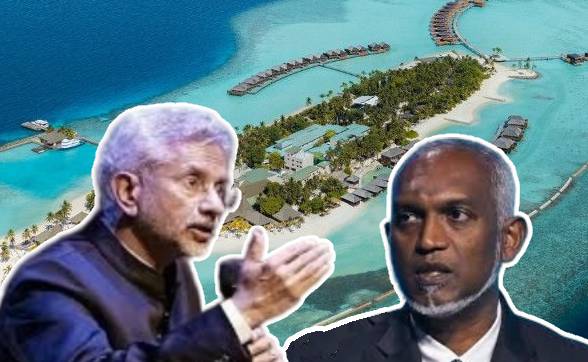
A tiny country like the Maldives, whose economy relies on Indian tourists, is hostile towards India and issues threats. It is not wrong if someone considers this a failure of India’s foreign policy. India should issue a stern warning to such small nations, cautioning them of impending action. If small nations begin to challenge India, the world views it as ‘India’s weakness’. Therefore, the Maldives should be issued a warning of direct military action, along with an economic boycott.
11. A warning should be issued to the ‘OIC’
The OIC (Organisation of Islamic Cooperation), an association comprising 57 Muslim nations, interferes with India whenever riots occur or situations regarding Kashmir take place. It dares to condemn India. Pakistan is attempting to establish an ‘Islamic NATO’ through this organisation. In addition to issuing a stern warning to the OIC, India must forcefully highlight the fact that this organisation remains silent regarding the overt atrocities committed against Uyghur Muslims in China and powerful nations like the United States launching direct military attacks on Iran and other Muslim countries. Along with this, it is essential to raise doubts globally regarding the ineffectiveness and very existence of this organisation.
Gudhi Padwa is the beginning of the Hindu New Year. Therefore, India should make a resolve to delve into her ancient past and awaken Divine energies to unite the world through her spiritual leadership and boost her diplomatic prowess across the globe!
 Porous Borders, Shadow Operatives: Unpacking the Geopolitical Rift in the US-India Intelligence Relations
 Offering gratitude unto the Holy feet of the Guru is true Gurudakshina !
 Sadguru (Dr) Mukul Gadgil’s analysis of the vibrations in the photos of Sachchidananda Parabrahman (Dr) Athavale, corresponding to His spiritual level at different times
 Guidelines from the Kurma Puran on the conduct of a Brahmachari (Disciple)
 O’ Seekers ! Intensify your sadhana by recognising the ploy of powerful negative energies, which are active in spreading doubts through the medium of Shabdashakti !
 Iran attacks oil tankers in the Strait of Hormuz; Indian national killed