
Special Strategic Analysis | Porous Borders, Shadow Operatives and the Emerging Rift in US–India Intelligence Relations
At a Glance• The article begins with the July 2026 arrest of a US national near the India-Nepal border.• It compares the incident with earlier cases involving foreign nationals.• Historical episodes such as the Purulia Arms Drop are revisited.• The article discusses the growing importance of counter-intelligence and border security.• It argues that strategic partnerships do not eliminate intelligence competition. |
The Sonauli Intercept as a Strategic Symptom
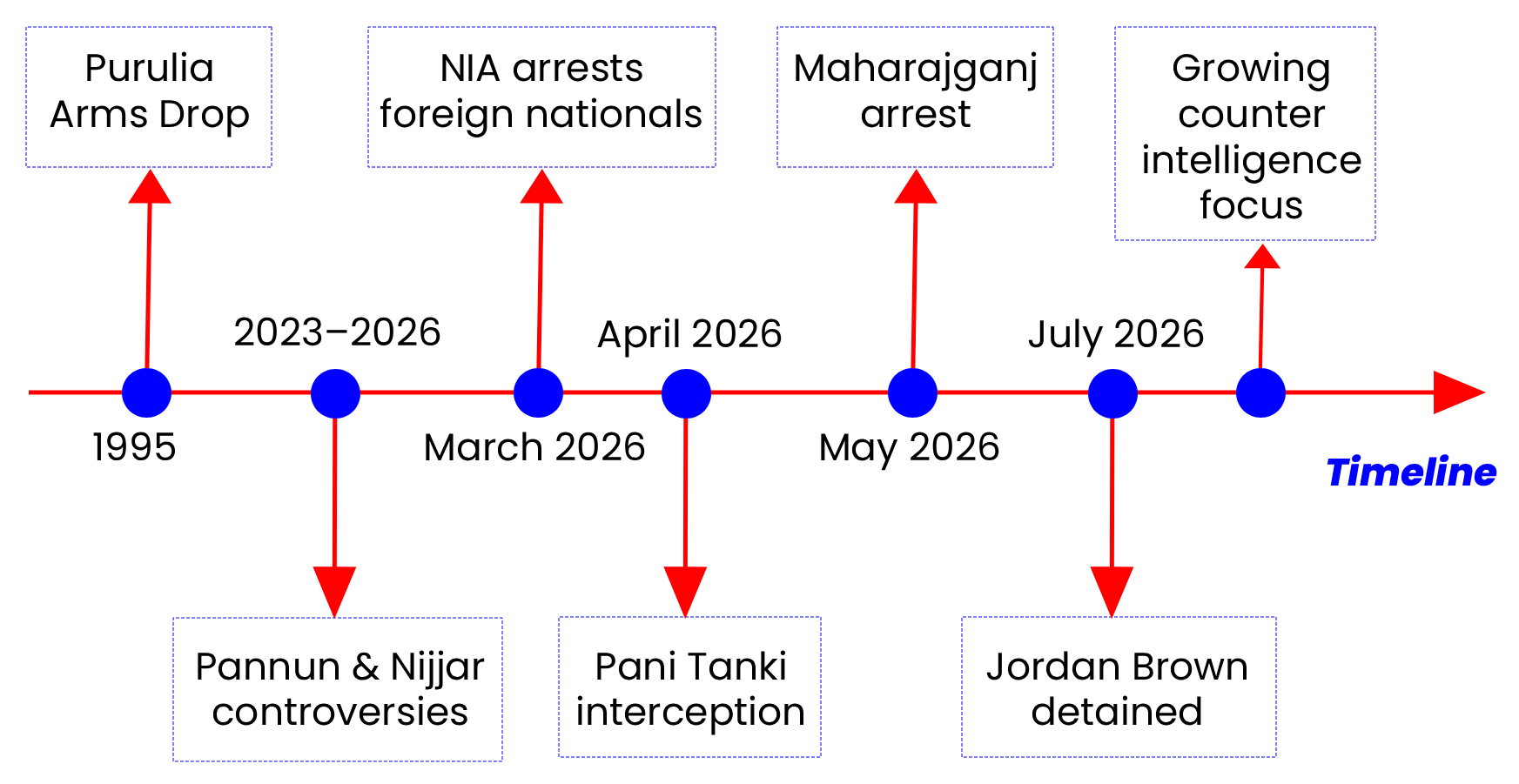
On 11 July 2026, personnel from the Sashastra Seema Bal (SSB) and local police apprehended US national Jordan Brown near Border Pillar 516 at the Sonauli crossing in Maharajganj, Uttar Pradesh. He was on an unauthorised foot trail. When signalled to halt, Brown attempted to break free and flee into Nepal, but was cornered by local villagers and border patrols. Two mobile phones and ₹31,460 in cash were recovered—but zero identification documents, passports, or valid visas.

Under multi-agency interrogation, Brown claimed to be a retired US Navy and Special Forces operative (Green Beret). He offered inconsistent accounts of his travel history: first claiming he lost his passport in Thailand (or Vietnam), then asserting he entered India illegally via a maritime route from Sri Lanka in November 2025 before hiding out in Goa. He is currently jailed under Sections 21 and 23 of the Foreigners Act.
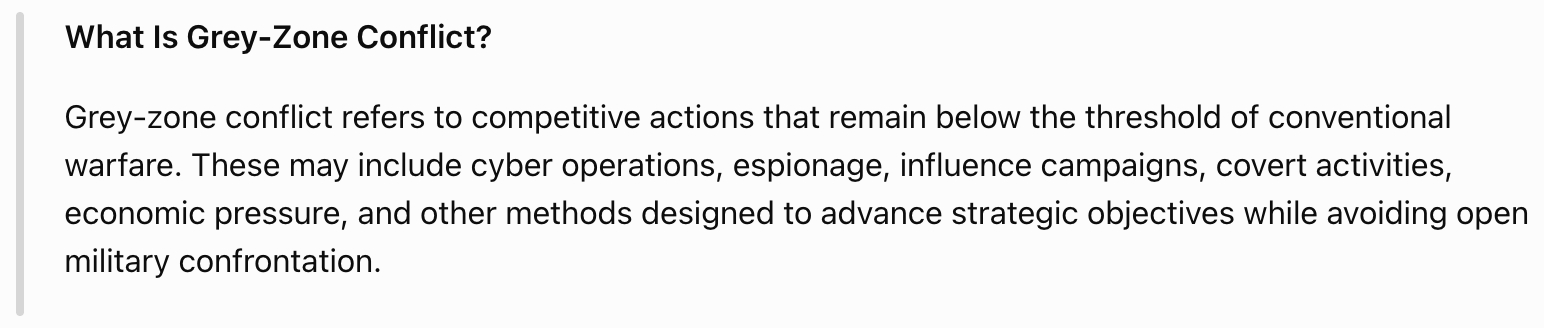
When analysed along with its historical antecedents and contextual correlations, the evaluation of this incident changes from isolated immigration fraud to institutionalised grey-zone infiltration.
A Systemic Pattern of Infiltration
Brown’s arrest is the latest in a concentrated operational pattern along India’s critical security corridors. On 30 May 2026, US national Phelan Travis Anthony was arrested at the Chhatri Bridge in Maharajganj while attempting to slip into Nepal after an extensive visa overstay. Earlier, on 24 April 2026, US national Binod Baraily was intercepted by the SSB at Pani Tanki in the Siliguri corridor, carrying USD 21,500 in undeclared foreign currency.
On 13 March 2026, the National Investigation Agency (NIA) synchronously arrested US national Matthew Aaron VanDyke at Kolkata Airport, and six Ukrainians at Delhi and Lucknow airports, under the Unlawful Activities Prevention Act (UAPA), for operating an illegal, cross-border weapons pipeline. Significantly, a long time gap was allowed between their activities and detention. The cell was not caught at the physical border but was intercepted at domestic transit hubs as they attempted standard exit flights. This was after they had successfully crossed back from Myanmar—where they allegedly trained the Kuki-Chin Army in drone warfare and operations—and had traversed through multiple Indian states. Indian agencies had kept a track. In its public stance, the US Embassy sidestepped the NIA’s specific charges.
Historical Baselines of Deep-State Distrust
For New Delhi, uncoordinated Western military veterans navigating international borders evokes deep historical friction. The distrust dates back to the 1995 Purulia Arms Drop Case, when an Antonov An-26 aircraft illegally entered Indian airspace and dropped four tonnes of military-grade weapons (including hundreds of AK-47 rifles and rocket launchers) over West Bengal. The primary operative, Kim Davy (Niels Christian Nielsen), was widely suspected of having deep-state backing from Western intelligence channels to orchestrate regional destabilisation.
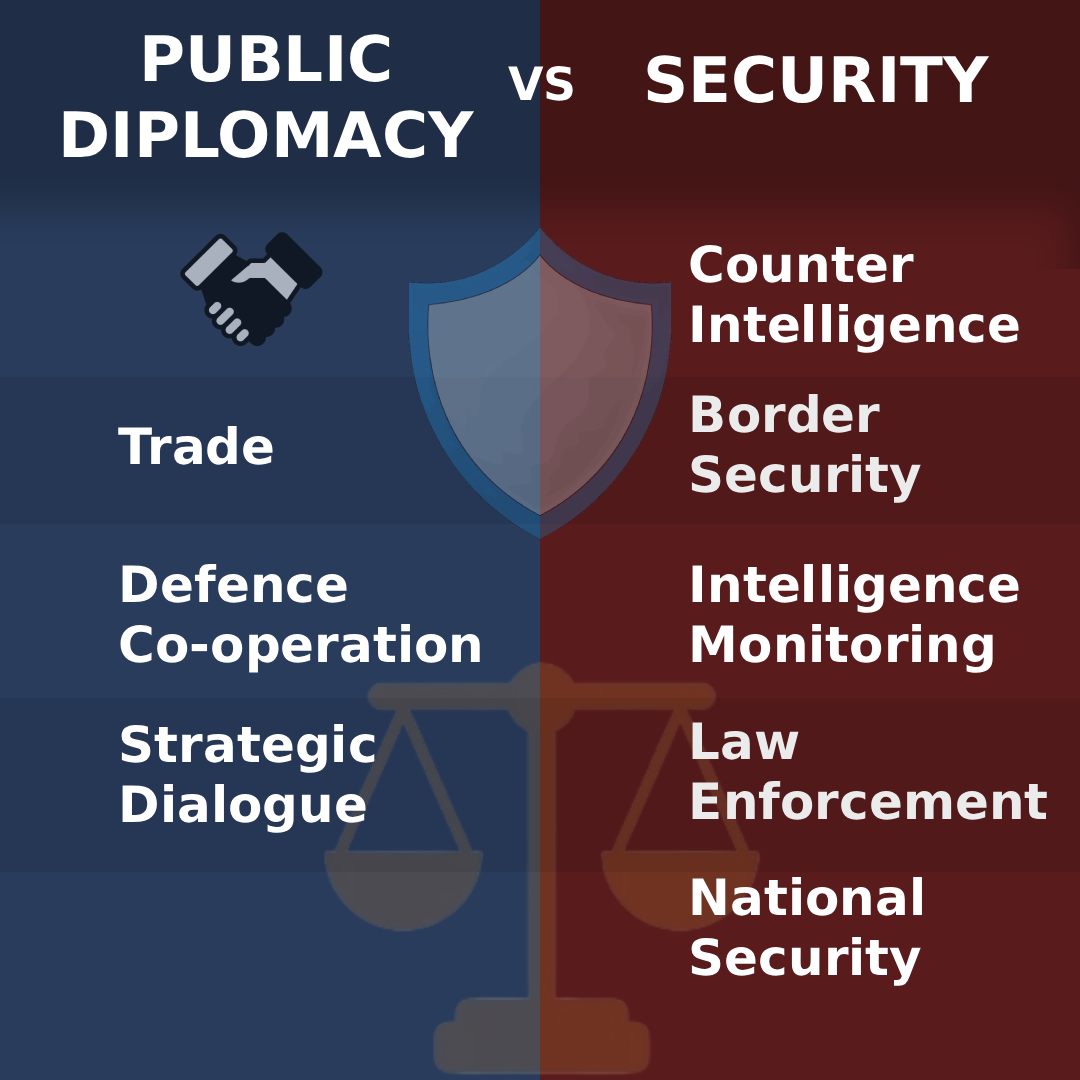
The pattern of public bilateral diplomacy vs. shadow intelligence reveals that while public channels focus on cooperation through various platforms and agreements, and lately also focus on trade and tariffs, the shadow realm is actively engaged in counter-espionage on sensitive borders, hard vetting of ex-US military assets, and the deliberate hardening of the Nepal corridor. The legacy of Purulia permanently altered India’s security architecture, embedding an institutional prerequisite that any unauthorised foreign tactical footprint on sovereign soil must be treated as an existential national security threat.
The Dhaka Mystery and the India-Russia Intelligence Firewall
Beyond the tariff frost, the strategic friction between Washington and New Delhi peaked with the geopolitical crisis of 31 August 2025, when Inspector General Terrence Arvelle Jackson of US Special Forces Command was found dead in Room 808 of The Westin Dhaka hotel in Bangladesh. Jackson had spent months travelling through sensitive Bangladeshi military installations under the cover of a civilian business trip.
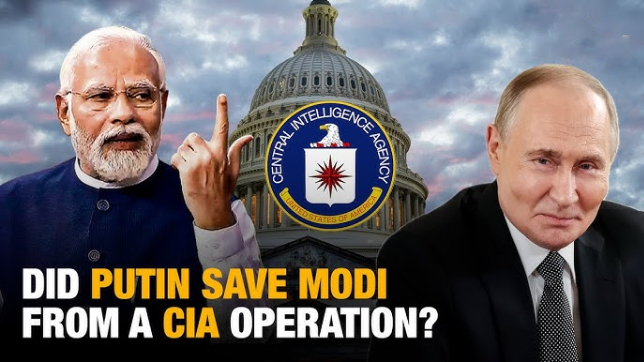
Jackson’s death coincided with Indian Prime Minister Narendra Modi’s attendance at the Shanghai Cooperation Organisation (SCO) Summit in Tianjin, China. The sinister correlation of the timeline of the two concurrent events raises a stark geopolitical implication. Some media platforms and geo-analysts alleged that a joint India-Russia intelligence sharing network had successfully intercepted and foiled a sophisticated (CIA?) assassination plot targeting Modi, resulting in the rapid neutralisation of the asset.
The diplomatic fallout was heavily managed; the US Embassy immediately intervened to accept Jackson’s body from local authorities, strongly bypassing standard operational protocols, avoiding a post-mortem. The rushed repatriation without forensic transparency deepened regional intelligence suspicions.
The happenings indicate that New Delhi maintains deep strategic contingencies separate from its Western alignments.
The Evolving Counter-Intelligence Landscape

The context of this shadow play is shaped by the Gurpatwant Singh Pannun Case, which underwent a monumental legal shift in February 2026, when Indian national Nikhil Gupta pleaded guilty in a New York federal court to murder-for-hire charges. This plea dramatically altered the bilateral equation, allowing the US Department of Justice to quietly de-escalate the public, state-level “murder-for-hire” allegations against top Indian officials by shifting the legal focus entirely onto a concluded criminal proceeding.
The Pannun case in the US, the preceding Nijjar row in Canada, the unyielding diplomatic stances of their respective governments, and the coordinated, adversarial statements issued by the Five Eyes alliance, collectively triggered a quiet but intense counter-intelligence pivot by New Delhi.
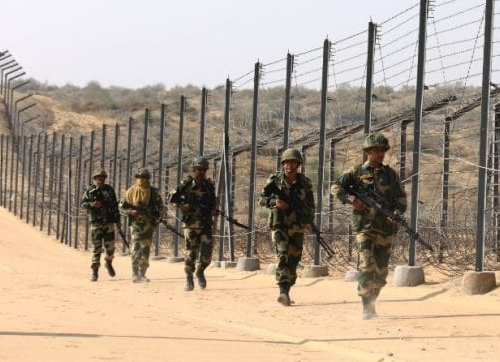
The 1,750 km India-Nepal border, historically treated as an open frontier under the 1950 Treaty of Peace and Friendship, is being rapidly hardened into an active intelligence firewall. The repeated detention of unmonitored Western nationals with elite tactical training near these boundaries changes the evaluation, from isolated immigration fraud to institutionalised grey-zone infiltration.

Strategic Lens

The strategic convergence between Washington and New Delhi is constrained by a hard geopolitical reality: public defence partnerships do not confer immunity from shadow war. As global intelligence networks realign, India’s security apparatus has made it clear that no amount of diplomatic goodwill can buy a free pass for uncoordinated foreign assets operating in its strategic periphery.
About the Author

The author, an Indian Army veteran and a strategic analyst, is a former Security Advisor, Ministry of Home Affairs, Government of India and a former Advisor, Government of Seychelles. The views expressed are personal.
Contact: @ [email protected]
Connect with the author at:


Frequently Asked QuestionsQ1 – What happened at the Sonauli border?A2 – The article discusses the detention of a US national near the India-Nepal border in July 2026.Q2 – What is grey-zone conflict?A2 – It generally refers to activities that fall between routine statecraft and open armed conflict, often involving intelligence operations, cyber activities, influence campaigns, or covert methods.Q3 – Why is the India-Nepal border strategically important?A3 – Its long, traditionally open nature makes it significant for trade, movement of people, and security monitoring.Q4 – What is the Purulia Arms Drop Case?A4 – A 1995 incident in which weapons were airdropped over West Bengal, leading to one of India’s most discussed national security investigations. |
 Trump withdraws 20% levy on vessels passing through the Strait of Hormuz
 Prime Minister Modi had prevented Putin from dropping an nuclear bomb on Ukraine in 2022 !
 Anti-Terrorism Squad (ATS) raids more than 23 locations in Pune and Pimpri-Chinchwad
 Iran attacks oil tankers in the Strait of Hormuz; Indian national killed
 If you want to do politics, take off your uniforms and participate in the elections : Maulana Fazlur Rehman
 Temple premises sold to Muslims in an auction in Britain