
Introduction
For Muslim appeasement, Bengal Chief Minister Mamata Banerjee opposed the film ‘The Bengal Files’ and made it an issue of prestige; however, the film was released in theaters except Bengal on September 5th. The film has brought to light real issues based on true events, such as the ‘fear of Hindus during riots, the appeasement of religious fanatics by the power-hungry rulers, the cruelty of fanatic Muslims in the past, the vindictiveness in the present and the monstrous plans for the future’, which have been suppressed by the Indian cinema industry till now. The film has also shown solutions to all these issues. Therefore, the film has succeeded in awakening patriotism in the minds of the common citizens by making a deep impact on them, as expected by director Vivek Agnihotri. I am offering the review of this film for the readers of ‘Sanatan Prabhat’ at the feet of Shri Guru’s feet.
Compiled by: Sagar Nimbalkar, Kolhapur (06.09.2025)
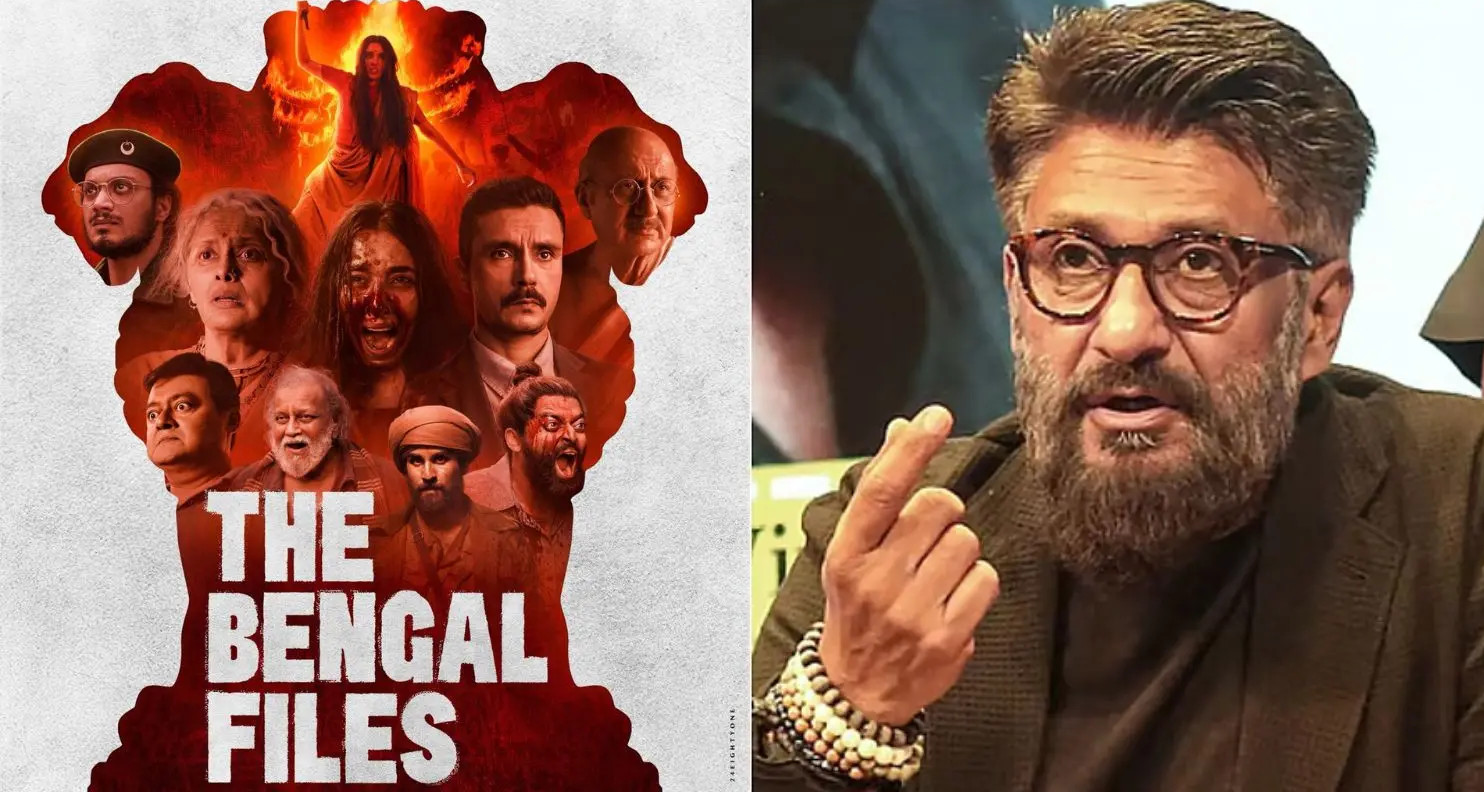
1. The story in brief, based on true events
Shiva Pandit, a Police officer of the Central Bureau of Investigation, goes to Bengal to solve the case of the kidnapping of Geeta Mandal, a backward class girl. While facing the rampant fanaticism of local politician Sardar Hussaini, he has to face the most disgusting treatment for justice. While understanding Bharati Banerjee, a suspected accused and the only witness in this case, Shiva uncovers her past. The film depicts the heartbreaking story of Bharati’s experience during the partition of India, the cowardice of national leaders, non-violence that harmed Hindus, anti-Hindu Gandhiism, Gandhi’s blunders, the cruelty of Bengal’s religious fanatics, the planned genocide of Hindus and the patriotism that Bharati preserved with her life despite all these storms.
2. Scenes that awaken the audience
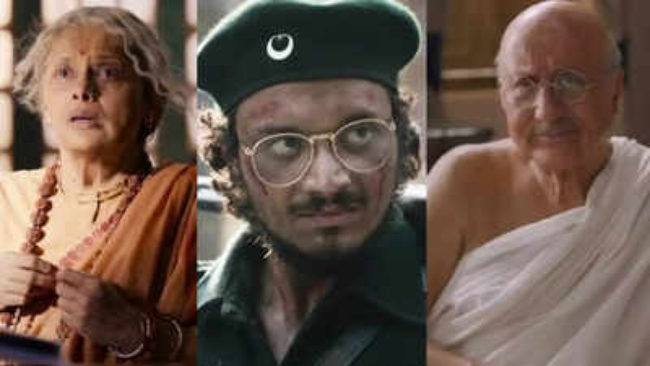
A. The then Chief Minister Huseyn Shaheed Suhrawardy announced ‘Direct Action Day’ on 16th August 1946 to bring Noakhali, Kolkata and the whole of Bengal to Pakistan. It was the 18th day of Ramadan, which marks the victory of Muhammad in the Battle of Badr. Suhrawardy deliberately chose this day. Suhrawardy had already ordered the Police not to take any action against the rioting Muslims. The fanatics were provided with all kinds of weapons including guns. The fanatic goons were also taken help from. To prevent any Hindu from escaping in a vehicle, the petrol pump operators were told to ‘give petrol only to those with coupons’, while the coupon givers were instructed to ‘not give coupons to any Hindu’. The monstrous fanatic Muslims were slaughtering Hindus with free hands; however, the divided Hindus could not stop them. The film depicts the resistance of organized Hindus under the leadership of Hindu leader Gopal Patha. Through this, the director has succeeded in creating a lasting impact suggesting the planning of the riots by fanatic Muslims, the deadly intensity of the riots, and the need for Hindus to unite and resist during the riots.

B. There are very few incidents related to Mohandas Gandhi and Barrister Jinnah in this film; but they are shown very effectively. Gandhi constantly refers to Jinnah as ‘Mere Bhai Jinnah’ (My brother Jinnah); but Jinnah does not yield before Gandhi, that is, before the Hindus. Jinnah makes Gandhi speechless by convincing him of the differences between Hindus and Muslims.
C. Instead of accepting the degree from a British officer, Bharati Banerjee kills him during the ceremony. Gandhi makes her accept non-violence by changing her mind; however, non-violence risks her life, and she has to take up arms again for self-defense. Through this futility of secularism and non-violence has been portrayed.
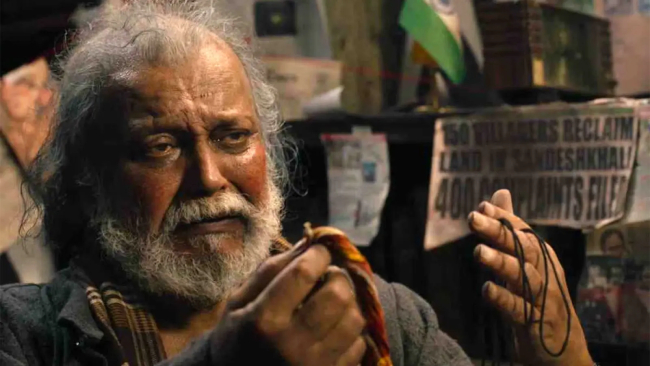
D. In this film, Mithun Chakraborty plays the role of a mentally disturbed person. This person was a fearless Police officer in his prime. The officer was collecting evidence to take action against the fanatic leaders; but when they realize this, they cut off his tongue and genitals. Due to this, his entire life is devastated. From this, the audience realizes the extreme level of cruelty of the fanatics.
E. The film depicts that along with the local Police, high-ranking officers of the Central Bureau of Investigation also became helpless before the fanatics’ preparedness during the riots. Those officers and the entire administrative system do not allow any honest Police officer to take action even if he wants to. This is a tight slap in the face of filmmakers who are presently misleading the public by making films like Singham, portraying fearless Police officers as heroes.
F. A fanatic Muslim leader spreads Islam among the people but does not keep his wife in the burqa. He makes her a businesswoman. He wears a skullcap and Muslim attire in public events but wears western clothing at home. He names his children after tyrants like Taimur, and he is also seen working systematically to make his children the Prime Minister of India by 2050. This reality warns the audience about the dangers of the future.
Some scenes that test the fearlessness of the audience
1. Sudden attacks on Hindus by fanatic Muslims during riots 2. A riot-affected Hindu child drinks his father’s sweat as water 3. Religious fanatics tie dried fodder to the body of a living Hindu and set it on fire 4. Hanging the bodies of Hindus on meat hooks in slaughterhouses 5. The remains of Hindu bodies lying around 6. Due to shortage of firewood for the funeral of deceased Hindus, they had to be cremated together 7. Beheading a Hindu in front of Goddess’s idol, killing Hindus in front of Goddess’s idol, cutting a Hindu into two vertical pieces, etc. 8. Religious fanatic leader stones a Hindu judge to death in public before religious fanatics, who had earlier granted bail to that same person 9. Desecration of a Hindu woman’s body by thousands of religious fanatics 10. Due to pressure from a senior Police officer, having to apologize in a highly humiliating manner, to a religious fanatic MLA – Sagar Nimbalkar |

Some of the most introspective dialogues in the film
1. Bharti Banerjee : ‘The Government that has crushed my country with the shoes of its dictatorship, when India is trembling with the cruel atrocities of this Government, should her daughter be silent ? I am the daughter of India, will die and kill for the country. 2. Jinnah : Hindus and Muslims can never be one. Our beliefs, heroes and villains are different. Your culture comes from Sanskrut, our comes from Arabic-Persian. You believe in soul and reincarnation, we don’t. You consider India your mother, we don’t. You believe in the Vedas, we believe in Quran. You believe in lakhs of Gods, we only believe in one Allah. ‘Hindu-Muslim unity’ is a lie. 3. Patha : Gandhi wants to create Ram Rajya. Go ask Gandhi, can Ram Rajya be made without killing Ravan ? Then what should be done now ? We must fight. We should destroy the enemy completely. All Hindus must join. 4. Gandhi : Hindu women should not think of themselves as helpless or weak. If any Ravan lays hands on even a hair of a woman, that woman should commit suicide. She can sacrifice her life by cutting her tongue or holding her breath. That is the real courage. – Sagar Nimbalkar |
3. Some strong points of the film
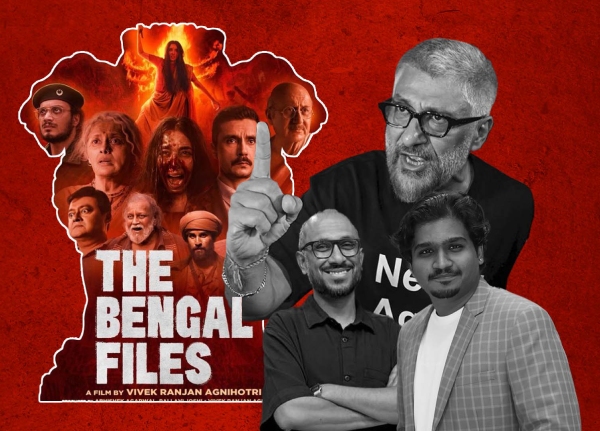
A. Vivek Agnihotri’s direction is the soul of this film. His storytelling style, the addition of flashbacks, his ability to present each event clearly and directly, etc., spellbind the audience through this 3-hour 24-minute film. The terrifying scenes at the end of the film make the audience think and instill in them the need for unity and nationalism.
B. Pallavi Joshi’s performance, who plays the role of 80-year-old Bharti Banerjee, is the film’s main strength. She doesn’t speak a single word in the first 30 minutes; but it feels like she is communicating with the audience through her eye movements and the tense expressions on her face. The audience can decipher these silent dialogues towards the end of the film. Her anguish in the final scenes is clearly felt through her trembling voice.
C. Actress Simrat Kaur, who plays the role of young Bharti Banerjee, has also shown great acting skills. She has done justice to various emotions of Bharti.
D. The role of Shiva Pandit has been brought to life by Darshan Kumar. The acting of Namashi Chakraborty and Shashwat Chatterjee, who play the roles of the cruel slave and Sardar Hussaini respectively, is commendable. Talented actors like Anupam Kher and Mithun Chakraborty have done justice to their roles. Saurav Das and Ankit Bisht have also played good roles.
E. This film shows an incident. Bharti, inspired by Gandhian ideas, tells Amar, who is resisting during the riots, “The fanatic Muslims killed. If we kill them in retaliation, everything will become a graveyard.” Amar shows her the surrounding situation and says, “So is this different from a graveyard now ?” Throughout the film, Amar makes Bharti realize at various points that, “Rather than losing your life by flaunting non-violence, it is essential to use a weapon for self-defense.”
Some points highlighted by the film1. Bengal has made an important contribution to India’s freedom struggle. 2. A country is not just a piece of land, but its culture, art, and traditions are also an integral part of the country. It is impossible to migrate these values. 3. After Pakistan was given to Muslims during the partition, the rest of India belonged to Hindus; that is, India was a ‘Hindu Rashtra’. 4. There is not a single word against Bengal Chief Minister Mamata Banerjee or the current Government of Bengal in this film. – Sagar Nimbalkar |
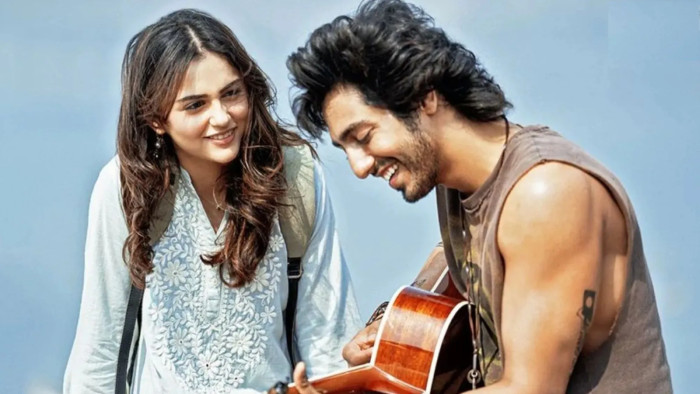
Those who fell unconscious watching ‘Saiyyara’, should not watch this film
“The Hindi film ‘Saiyyara’, which released a few months ago, became very popular among Indian youth. The film was about the personal sorrow of a couple. Some young people fell unconscious in the cinema hall after watching the film. Some people circulated reels on social media saying, ‘I cried after watching the film’. ‘The Bengal Files’ has made today’s youth aware of the immense sorrow of Hindu women who were tortured in the Bengal riots. Therefore, those who fell unconscious or felt scared watching the film ‘Saiyyara’ should not dare to watch this film. They should continue to dive into their own sorrow,” a nationalist expressed. – Sagar Nimbalkar |
4. Request and appeal to every Indian
This film is not a fictional story of one Bharati Banerjee or Geeta Mandal but represents the true story of thousands of Hindu women. In areas where Hindus are being killed in riots today or where Hindus have embraced escapism, this film is a must-watch to know their condition. The blunders in Indian history depicted in the film and its impact on the lives of Hindus are introspective. Therefore, this film should be watched by those interested in history, history scholars, nationalists and devout Hindus across India. Along with this, ordinary citizens should also watch this film to know the current situation of the country, the origins of the country’s issues, the solutions to them, etc. Through this article, I appeal to every Indian to work in a united manner for the nation and Dharma after watching this film. I dedicate my writing to the feet of Shri Guru.
 Women are sexually exploited at the madarasa; foreign funding is also received !
 Our DNA and India’s DNA are the same !
 Every graveyard in Kashmir contains the graves of Pakistani terrorists !
 NCERT removes Hitler reference related to Subhas Chandra Bose from Class 8 textbook
 ‘Pakistan will make every effort at every level in the Indus Waters Treaty matter !’ : Pak Army Chief Munir
 Nehruji’s Selection by Gandhiji for Congress Presidentship Again and Again