

Behind the rhetoric of religious freedom lies a discriminatory legal framework that targets Hindu institutions, reforms only Hindu laws, and enables unchecked proselytization—undermining the very civilization that gave India its pluralistic character.
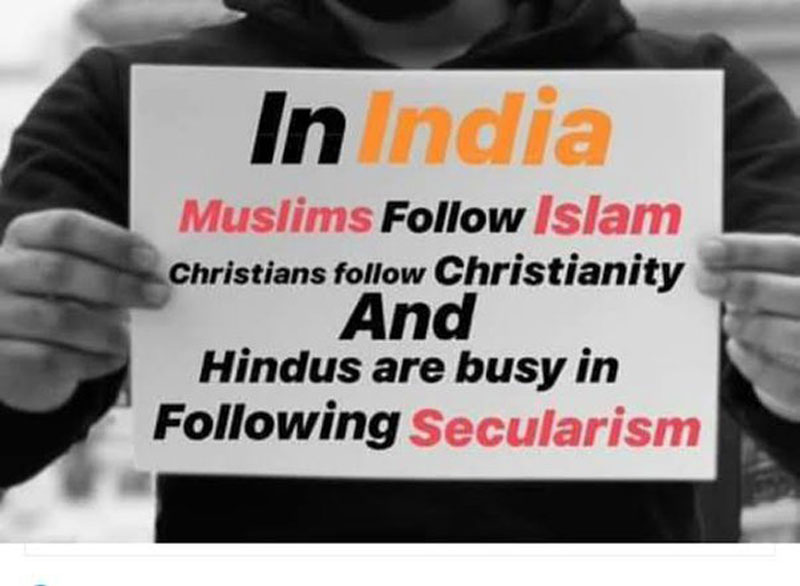
- Unlike Western liberal democracies, India’s identity is rooted in an ancient, pluralistic civilizational ethos shaped by Dharma, not by state-enforced secularism or monotheistic exclusivism.
- Religious harmony and diversity in India were not imposed by constitutional fiat but naturally evolved through millennia of coexistence between Sanatana Dharma, Jainism, Buddhism, and other native traditions.
- Post-Independence India imported a Western model of secularism that separates church and state but paradoxically allows the state to intrude into Hindu institutions while leaving minority religions autonomous.
- In the name of neutrality, the state regulates Hindu temples, censors Dharmic education, and reforms Hindu laws, while empowering Christian and Islamic institutions, creating structural discrimination.
Far from protecting all faiths equally, Indian secularism has shackled its civilizational core – Hindu society – through legal asymmetries, while privileging religious minorities under constitutional immunity.
India is a Hindu-majority Nation – nearly 80% of its population identifies as Hindu. One would, therefore, assume that Hindus would be culturally secure and institutionally empowered in their own Homeland. In the global imagination, carefully curated by Western academia and Indian secular elites, Hindus are cast as the dominant group, allegedly oppressing minorities, particularly Muslims and Christians.
Yet, India’s legal and constitutional framework tells a far grimmer tale : Not of dominance, but of slow, calculated strangulation of the very civilization it emerged from.
Post-Independence India, in its quest to appear secular, adopted a bizarre model : One where Hindu temples are controlled by the state, but mosques and churches are left autonomous; where minority schools can teach religion, but Hindu ones cannot; where Hindu personal law was reformed in the name of progress, but minority personal laws remain untouched for fear of ‘offending sentiments’. Even the right to religious propagation – innocuous on paper – has become a legal loophole exploited by well-funded missionary networks targeting the poorest and most vulnerable Hindus.
In this two-part series, we will examine a network of laws – some inherited from British colonial rule and others introduced after Independence – that have systematically undermined the rights, autonomy, and institutions of the Hindu majority. Rather than upholding equality, these legislative distortions have created a system in which Hindus, the civilizational core of India, are treated as a suspect community in their own country, all under the carefully curated façade of secularism.
Article 25 : Right to Propagate or License to Proselytize ?
Article 25(1) of the Indian Constitution grants every citizen the ‘freedom of conscience and the right freely to profess, practise and propagate religion’. On the surface, it’s a noble promise – an assurance of religious freedom in a pluralistic Nation. But hidden in that language is one word – ‘propagate’ – that has proven to be far more than just semantics.
In a country where large sections of the population live in poverty, lack access to education, and remain socially vulnerable, this single word has been used to justify widespread, systematic proselytization – especially by foreign-funded Christian missionaries and Islamic da’wah groups.
Interestingly, this concern isn’t new. As far back as 1948, during the Constituent Assembly Debates, some members warned that including the word ‘propagate’ in Article 25 could open the door to forced or deceptive conversions in the name of religious freedom. Others replied that propagation only meant sharing one’s faith – not the right to convert someone through fraud or pressure. But even then, few could have imagined how large and organized these conversion campaigns would become in the decades that followed.
The reality today is stark. Numerous Government records and investigative reports have pointed to the influx of foreign funding under the Foreign Contribution (Regulation) Act (FCRA), which has disproportionately gone to Christian NGOs engaged in missionary work. According to the Ministry of Home Affairs (Annual Report 2019-2020), more than 70% of foreign contributions to religious organizations were received by Christian-affiliated groups. These funds are often directed towards ‘social service’ activities in tribal belts, which frequently overlap with evangelistic objectives.
This has resulted in drastic demographic shifts in regions like Arunachal Pradesh, Nagaland, and parts of Chhattisgarh and Odisha. In Arunachal alone, Christians constituted just 0.7% of the population in 1951 – but by 2011, that number had surged to over 30%. This transformation was no accident. Jawaharlal Nehru, by refusing to fully integrate the Northeast and allowing foreign missionaries unregulated access, revealed the real intent behind the inclusion of ‘propagate’ in Article 25(1). Cloaked in the language of liberty, Nehru effectively enabled civilizational subversion, laying the groundwork for large-scale religious and cultural disruption in strategically vital regions.
Moreover, the state has been reluctant to act, citing secular neutrality. Yet, it is precisely this inaction that allows coercive proselytization to continue unchecked. Anti-conversion laws (often called Freedom of Religion Acts) exist in several States like Madhya Pradesh, Himachal Pradesh, and Uttarakhand, but enforcement remains uneven, and judicial scrutiny inconsistent. In Rev. Stainislaus v. State of Madhya Pradesh (1977), the Supreme Court upheld the constitutionality of anti-conversion laws, stating that the right to propagate does not include the right to convert another person.
Despite this legal clarity, there is little proactive governance to curb coercive proselytization. The conversion of economically disadvantaged Scheduled Tribes and Dalits through incentives like education, healthcare, and material support often leads to civilizational dislocation and social fragmentation.
Article 25 was supposedly meant to protect personal beliefs. But in reality, it has served the purpose its architects quietly intended : A legal cover for powerful, well-funded groups to exploit vulnerable communities and alter not just their religion but their entire cultural identity. Unless the state acts with courage and clarity, the future holds more than demographic shifts – it threatens civilizational collapse, village by village.
Articles 28 & 30 : Religious Texts Allowed in Classroom – Provided They Aren’t Hindu
Article 28(1) of the Indian Constitution declares : ‘No religious instruction shall be provided in any educational institution wholly maintained out of State funds’. This provision reflects the state’s commitment to religious neutrality in publicly funded education. However, when juxtaposed with Article 30(1) – which guarantees religious and linguistic minorities the right to ‘establish and administer educational institutions of their choice’ – a structural contradiction becomes evident.
In practice, Article 28 restricts Government schools and institutions funded entirely by the state from offering any form of religious or scriptural instruction, which disproportionately affects Hindu students. Hinduism, being the majority religion, is primarily practiced in Government schools by the bulk of the student population. As a result, generations of Hindu children grow up without structured or curricular exposure to foundational texts like the Bhagavad Gita, Upanishads, or even basic civilizational values derived from Dharma.
In stark contrast, Article 30 has been interpreted by courts and Governments to permit minority-run institutions – particularly Christian missionary and Islamic madrasa schools – to impart religious instruction even while receiving Government support. Christian schools such as those run by the Jesuits, Salesians, and other missionary orders often receive land grants, tax benefits, and access to public funds for infrastructure development, all while retaining their religious ethos. These schools often display crucifixes in classrooms, celebrate Christian holy days, and integrate Biblical teachings into the curriculum – all under the protection of Article 30.
The Supreme Court’s landmark judgment in T.M.A. Pai Foundation v. State of Karnataka (2002) further deepened this asymmetry. The Court ruled that minority institutions have the fundamental right under Article 30 to manage their own educational affairs, including the content of religious education. However, this ruling did not offer parallel protections to institutions run by the Hindu majority. Even subsequent clarifications in P.A. Inamdar v. State of Maharashtra (2005) – and Ashok Thakur v. Union of India (2008) – preserved this special status for minorities without addressing the imbalance it creates.
Moreover, the National Curriculum Framework (NCERT, 2005 & 2023 editions) has continued to exclude Hindu philosophical and civilizational content under the guise of secularism. In contrast, madrasa education in many States is directly subsidized by the Government under schemes such as the Scheme for Providing Quality Education in Madrasas (SPQEM), administered by the Ministry of Minority Affairs.
The net effect is an educational regime where Hindu culture is sidelined in Government schools, while minority communities are allowed – and even subsidized – to preserve and propagate their traditions. This has led to a systemic alienation of Hindu youth from their cultural roots and contributes to an inferiority complex regarding their own civiliz-ational identity.
The contradiction between Articles 28 and 30 is not merely legal – it strikes at the heart of cultural fairness and national identity. In a Democracy that claims to uphold diversity, the selective application of secularism has produced a deeply unequal system. A truly inclusive framework would ensure that all communities have equal access to cultural and religious education, without granting special privileges to some while denying others.
State Control of Hindu Temples – But Not Mosques or Churches
The continued state control of Hindu temples in India is one of the most egregious examples of institutionalized discrimination masquerading as secular governance. The Hindu Religious and Charitable Endowments (HRCE) Acts, enacted in States like Tamil Nadu, Andhra Pradesh, Karnataka, and Kerala, empower the Government to take over the administration of Hindu temples and their extensive endowments. This legal architecture, as documented by Stop Hindu Dvesha in their detailed historical analysis, is not a post-Independence innovation – it is a direct carryover from colonial British policy designed to undermine Hindu religious authority and seize temple wealth.
The British began state interference in Hindu temples under the pretext of reform and regulation, using mechanisms like the Madras Regulation VII of 1817. Independent India, instead of dismantling these colonial impositions, expanded them. The Madras HRCE Act of 1951 – became the model for similar laws in other States, effectively converting Hindu temples into Government-administered properties. Under these laws, the State appoints bureaucrats – often with no grounding in Hindu traditions – to control temple finances, appoint priests, and even regulate rituals and festivals. In many cases, these administrators may not even be practicing Hindus.
The consequences have been devastating. According to a 2015 Comptroller and Auditor General (CAG) report, over Rs 5,000 crore in temple revenues under Tamil Nadu’s HR&CE Department were either misused or left unaccounted for. Thousands of temples lack full-time priests, with many falling into disrepair due to diverted funds and administrative apathy. Sacred rituals are neglected, festivals are bureaucratized, and temple lands are often illegally leased or encroached upon, while the Hindu public remains powerless to intervene.
Meanwhile, no equivalent laws exist for other religions. Churches and mosques enjoy full autonomy, with Christian institutions managed by ecclesiastical bodies and Muslim religious assets governed by Waqf Boards, which operate under the Waqf Act of 1995. Not only are Waqf Boards immune to the kind of state interference Hindu temples face, they are empowered to declare and seize properties as Waqf, often without legal challenge.
This double standard blatantly violates Article 26 of the Indian Constitution, which guarantees every religious denomination the right to manage its own affairs. Yet in practice, only non-Hindu religious communities enjoy this protection. Hinduism – the very foundation of Indian civilization – is the only major faith in India whose sacred institutions are subject to direct State control.
Courts, too, have largely upheld this discriminatory regime. In Sundararaja Iyengar v. State of Madras (1955), the Madras High Court rationalized the HRCE Act by deeming temple administration a ‘secular’ activity, ignoring the deep integration of the sacred and the secular in Hindu practice. Though the Supreme Court in Adi Saiva Sivachariyargal Nala Sangam v. Government of Tamil Nadu (2015) acknowledged the rights of hereditary temple priests, it stopped short of challenging the State’s overarching control.
The message is clear : In India’s so-called secular Democracy, Hindu religious institutions are fair game for Government control, while minority institutions remain sacred and untouchable. What began as colonial control has been repackaged as postcolonial ‘reform’, but its true nature remains the same – a targeted dismantling of Hindu civilizational infrastructure under the guise of neutrality.
This Article is being re-published in Sanatan Prabhat with the explicit permission of the Editorial Team of StopHinduDvesha.org
(Courtesy : Excerpts from an Article written by Ms Aditi Joshi, available on Stop Hindu Dvesha website)
Original Article on : https://stophindudvesha.org/the-legal-assault-on-hindus-in-the-name-of-minority-rights-part-1/
| In the name of neutrality, the state regulates Hindu temples, censors Dharmic education, and reforms Hindu laws ! |
 Villagers march to Kagal (Kolhapur district) Police Station in the ‘Love Jihad’ case and demand that the Hindu young woman be handed over to her parents !
 Criminal case against 11 members of a Christian organisation who claimed that “Hindu is an abusive term, meaning thief, bandit and slave” will not be quashed !
 BJP-led Union Govt launches skill training initiative for minority youth in secular India
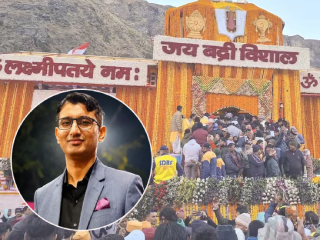 One individual booked in the Badrinath Dham donation theft case
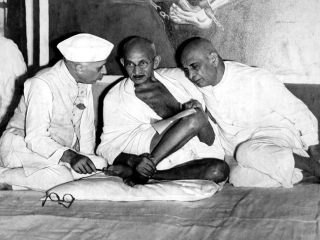 Nehruji’s Selection by Gandhiji for Congress Presidentship Again and Again
 A person’s nationality or foreign name cannot determine their faith in Hindu Dharma !