
Ayurveda for a healthy life- 78/2026 on 16.6.2026
4. Why is it often difficult to diagnose the exact cause of abdominal pain ?
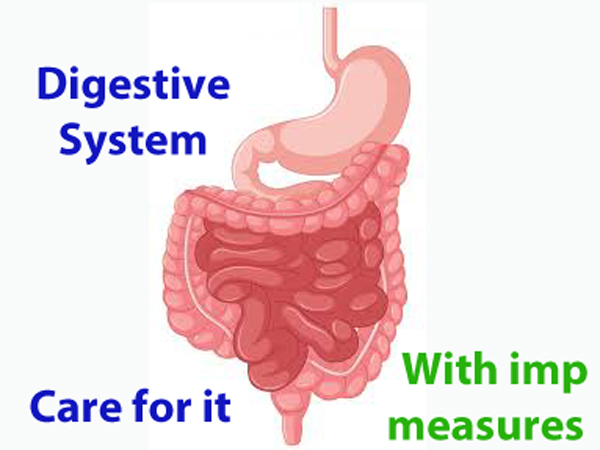
In the chest, there are only two organs namely the lungs and the heart. In the abdomen however, several organs are present which lie adjoining to one another or in front or behind one another – Liver, spleen, gallbladder, stomach, small and big intestine, urinary bladder, kidney, appendix, etc. Hence, it is difficult to pin point the exact organ which is affected thus, giving rise to pain. It is often difficult for patients to pinpoint the exact site of pain. Commonly, the pain is around the umbilicus. Pain in the flanks indicates that the kidneys are likely to be the cause. Pain in the right side of the upper abdomen indicates a liver ailment to be the likely cause of pain. Pain in the right side of the lower abdomen indicates an inflammed appendix to be the likely cause of pain. Pain caused by psychological factors is usually felt around the umbilicus.
Intermittent colicky pain indicates that the passages of the intestine, urinary tract or bile duct are likely to be affected.
If the pain subsides on pressing or massaging the abdomen, it indicates that the localised muscles are under severe contraction and hence, are fatigued. If the pain increases on pressing the abdomen it indicates inflammation of the underlying organ. If the pain is relieved by intake of milk or food, it indicates increased acidity or duodenal ulcer. If the pain is aggravated by intake of food, it indicates gastric ulcer that is ulcer of the stomach or indigestion.
If a child is allergic to a particular food item or drug, he may develop pain in the abdomen on eating it. Hence, the parents should keenly observe the food items given to their children so that they can give the history to the doctor for a better diagnosis. This will also avoid unnecessary confusion in a doctor over confirmation of a disease when most of the tests show negative results.
Some individuals tolerate ghee but suffer from pain if oil is used for frying food. This is individual susceptibility.
One of the common causes of pain in the abdomen in children is forced feeding by the mother. At the time of meals, the mother coaxes her 2 to 6-year-old child to eat. The child runs away to avoid eating it. The mother chases him and forces him to eat food by sometimes inducing fear that a policeman may catch him if he does not eat and at other times coaxing him to eat by telling him a story. Then one day due to overeating, the child develops pain in the abdomen. When the child complains of a stomachache, the mother stops forced feeding.
The child thus, learns the trick. He complains of stomachache to avoid forced feeding by the mother.
One child was having intractable pain in the abdomen for a year. All investigations were found to be normal. Later it was found that the pain was present only on Tuesday mornings. As the child was afraid of the stern physical training instructor who was violent as well. He complained of stomachache only on Tuesdays to avoid attending the physical training class scheduled particularly on that day of the week. The child was freed of the problem when a meeting was arranged for friendly relations between the child and instructor.
5. Ayurvedic approach to pain in the abdomen (shula)
Pain in the abdomen is termed as ‘shula’ which means colicky pain in the abdomen. Ayurveda classifies colicky pain in
the abdomen as – 1. Vataja, 2. Pittaja, 3. Kaphaja, 4. Sannipatik or tridoshaja and 5. Amaja.
5A. Vataja colic
5A 1. Causes : Increase in vata in the body gives rise to vataja shula. For example –
A. Eating in excess
B. Eating dry items in excess
C. Eating germinated grains
D. Eating leafy vegetables in excess
E. Drinking ice cold water.
F. Eating moog, pea, pigeon pea, dried leafy vegetables in excess
G. Eating bitter and astringent item in excess
H. Suppression of natural urges for passing stools, urine and flatus
I. Exertion (anything excess can cause exertion), exercise or indulging in sex in excess.
J. Fear and sorrow.
5A 2. Symptoms
A. Severe pain
B. Difficulty or pain while passing urine, stools or flatus.
C. Difficulty in breathing.
D. Stiffening of hands and feet during pain in the abdomen.
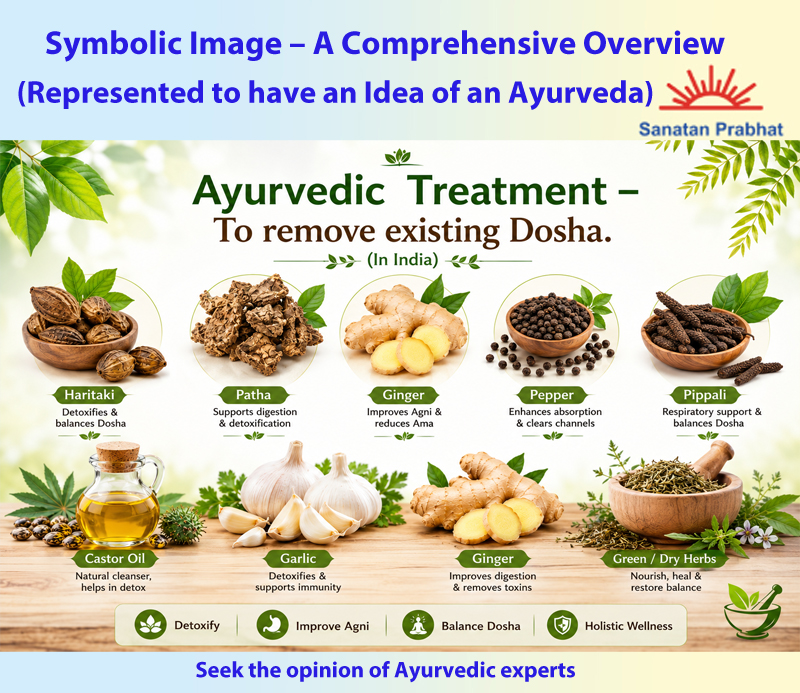
5A 3. Treatment of vataja shula (colic)
A. Powders of roots of mandar should be taken with hot water.
B. Powders of roots of sahadevi or gokarni should be taken with hot water.
C. Powders of roots of gokarni should be taken with hot water.
D. A mixture of powders of bala, punarnava, eranda (castor), gokshuraka, ringani and dorli should be taken with hot water.
E. A mixture of powders of ginger and erandamula (roots of castor) should be consumed.
F. A mixture of powders of indrayava, sauvarchala and asafoetida should be consumed.
G. A mixture of powders of skin of karanja, sauvarchala, asafoetida and ginger should be consumed.
H. Asafoetida, saindhav and castor oil should be taken with a decoction of dashamula.
I. Eranda oil
J. Khurasani, ajamoda (celery)
K. Powder of pippali should be taken with jaggery and ghee.
L. A mixure of powders of ajamoda (celery), haritaki, patha, ginger, pepper and pippali should be taken.
M. A mixture of powders of haritaki, ginger, pepper, pippali, saindhav and asafoetida should be taken.
N. A mixture of powders of haritaki, tankanakshara, ginger, pepper, asafoetida, chitrak, bidalavan and saindhav should be consumed.
O. A mixture of powders of vacha, ginger, cumin seeds, pepper, asafoetida, chitrak and cinnamon should be consumed with juice of bhrungaraja.
P. Powder of ginger, erandamula (roots of castor), dashamula, sajjikshar, jawkhar, asafoetida, saindhav sauvarchala, bidalavan, pushkarmula
Q. A mixture of powders of sauvarchala, asafoetida and ginger should be consumed.
R. Medicines which increase digestive power and vatashamak deepan (subdue vata)
Pippalimula, asafoetida, ginger, coriander, pepper, pippali, vacha, dashamula, chitrak, ajamoda, indrayava, ativisha, cumin seeds, erandamula (roots of castor), bala, roots of mandar tree, sahadevi, pushkaramula, vidanga, guduchi, fennel seeds and garlic.
 A person’s nationality or foreign name cannot determine their faith in Hindu Dharma !
 Maharashtra Clinical Establishments Act to be enacted : Health Minister Prakash Abitkar
 Illegal church in Solapur and misconduct by a municipal employee to be investigated
 Radiant Thoughts of Sachchidananda Parabrahman (Dr) Jayant Athavale
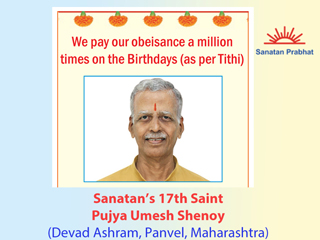 We pay our obeisance a million times on the Birthday (as per Tithi) of
 Major win for Hindu unity : Maharashtra Government suspends the controversial ‘Devasthan Inam Abolition Draft Act’