
Provision for fines of up to ₹5 lakh for violations
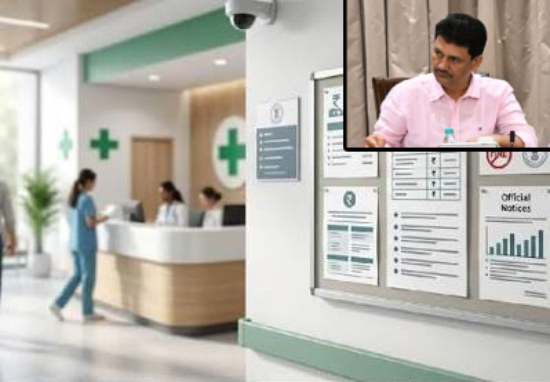
Mumbai – The Maharashtra Government has decided to enact the Maharashtra Clinical Establishments Act, which will ensure that patients in the State receive their legal rights. The proposed law will also make it mandatory for hospitals to provide primary treatment to patients admitted in emergency situations without demanding payment, and to display the rates for diagnostic tests and medical treatment. A Bill to this effect has been introduced in the Legislature. Health Minister Prakash Abitkar said that a State Clinical Establishments Council will be constituted to regulate the healthcare system in the State.
He said,
1. Under the proposed law, no clinic or hospital can be established without registration. Strict action will be taken against hospitals that refuse treatment to patients on the grounds that they do not have money.
2. The objective of the law is to bring transparency to private healthcare services, prevent the financial exploitation of patients, and maintain the quality of healthcare in medical institutions.
3. The Act will cover all private, charitable, and autonomous hospitals, nursing homes, clinics, day-care centres, diagnostic centres, pathology laboratories, and medical laboratories practising Allopathy, Ayurveda, Homoeopathy, Unani, Yoga, and Naturopathy. Military hospitals, psychiatric hospitals, and hospitals run by the Union and State Governments have been exempted.
4. The proposed law makes it mandatory for every hospital to display the charges for treatments, diagnostic tests, and services prominently at the entrance in Marathi, Hindi, and English, and also publish them on its website.
5. The Bill also provides for legal action against hospitals that charge more than the prescribed rates or fail to provide patients with detailed bills.
6. The law grants patients the legal right to receive information regarding the diagnosis of their illness, the proposed treatment plan, the estimated cost of treatment, copies of their case papers, details of the treatment provided, and to seek a second opinion from another qualified modern medicine practitioner.
7. A Registration Authority will be established to register hospitals, and there will be a separate registration mechanism for each district. The Authority will have the power to cancel or suspend registrations and impose financial penalties on hospitals.
8. No clinical establishment will be permitted to operate without registration. It has also been made mandatory to provide free treatment during the golden hour. The Bill further provides for the establishment of a State Clinical Establishments Council to regulate and oversee the healthcare system.
9. The Bill provides for fines of up to ₹5 lakh to curb illegal hospitals, pathology laboratories, and bogus modern medicine practitioners. Modern medicine practitioners and employees working in unauthorised hospitals may be fined up to ₹1 lakh. Hospitals that conceal information or furnish false information may be fined up to ₹5 lakh.
 Hindu Janajagruti Samiti demands strict action from the Chief Minister through a memorandum over Sharad Pawar’s remarks on ‘Vaikunthagaman’ !
 Loudspeaker complaints against mosques and action taken must be submitted within two weeks !
 Appoint Ivan D’Souza as a Minister to represent the Christian community !
 Uniform Civil Code likely to be implemented in Maharashtra soon !
 Kamruddin breaks into a house and abducts a Hindu girl in Boribhadak (Dist. Pune) !
 Embezzlement suspected to have been carried out in a more organised manner during the Maha Kumbha