
Today, Indian society is passing through a strange transitional phase. On one hand, science, technology, the Internet, Artificial Intelligence, globalisation and the digital revolution have opened the doors to numerous opportunities; on the other, a silent yet deep crisis is brewing within the inner world of humans. This crisis is not economic or political, but one related to self-identity, the fundamental meaning of life and mental stability. Children and adolescents, in particular, are at the centre of this crisis.

The incident concerns three sisters in Ghaziabad, Uttar Pradesh, who committed suicide after becoming excessively influenced by South Korean culture. These girls had become so obsessed with the Korean culture that they had adopted Korean names and began to prefer Korean culture and lifestyle over the Indian. In the land of Incarnation of Adi Shankaracharya, who imparted the knowledge of ‘अहं ब्रह्मास्मि’ (Aham Brahmasmi – I am Brahman) to the entire world at the raw age of 9, it is extremely unfortunate that society must face such a problem. The Ghaziabad incident is not an isolated tragedy, but a frightening reflection of a deeply rooted digital problem growing within Indian society.
The direction of Indian entertainment has changed rapidly over the past few years. Along with Western countries such as the USA, Britain and France, South Korean culture has also expanded significantly in India. Koreans films, short films, stories, games, dance, music, beauty standards and cuisine have captivated Indians. Adult Indians are evaluating themselves based on Korean beauty standards such as ‘glass skin’, while adolescents are engrossed in Korean entertainment. In recent years, almost every major city in India has restaurants selling Korean food, and sales of such food have reached record levels. The easy availability of the Internet has intensified children’s fascination with Korean trends. The Ghaziabad incident is a result of this very trend.
Hindu Dharma has solutions to many problems
If one looks at the lives of children superficially, they appear to have facilities, resources and entertainment. A smartphone in hand, Internet at home, and information from across the world available at the click of a button … and yet, amid all this external noise, an inner void is steadily growing within them. This void is meaning-related. Many children today do not receive answers to some fundamental questions, such as ‘Who am I ? What is the purpose of my life ? What does it mean that I am unhappy? How should I face failure, death and loneliness ?’, etc. When such answers are not obtained from oneself, the school or society one lives in, children begin searching for them on the Internet, in Online games, in the virtual world and in foreign cultures.
In the past, the termite-like spread of Communist ideology struck at the very roots of Hindu Dharma; therefore, the original Hindu philosophy has not reached people adequately even in today’s digital age. This gap has been easily filled by foreign influences.
The question here is not if digital media is good or bad; rather, how it is used, in what mental state it is used and what inner void it attempts to fill. Today, many children become absorbed in Online games involving concepts such as ‘mission’, ‘task’, ‘level’ and ‘commander’, because they obtain a sense of goal and identity there. What they do not obtain in real life, they begin to obtain in virtual life. Gradually, the real world starts appearing dull, difficult and meaningless, while the virtual world appears meaningful, attractive and controllable.
It is here that the importance of Indian culture and the teachings of Hindu Dharma become evident.
Hindu Dharma is not merely about worship, rituals or traditions. It is a profound, expansive philosophy that directly engages with life. Hindu philosophy teaches from childhood that life is not merely the accumulation of pleasures, but a natural journey of happiness and sorrow, success and failure, birth and death. When sorrow comes, it does not mean the end of life; rather, sorrow also teaches, matures and turns one inward, making one introspect. This is the perspective Hindu culture provides.
Today, many children are seen viewing death through a dramatic lens. At times, death is perceived as an ‘escape’, a ‘final solution’ or an ‘ultimate statement’. Behind this lies a distorted understanding of death prevalent in society, especially among youth. Hindu Dharma, however, does not consider death as a negative or terrifying end. If children understand from an early age concepts, such as death is a part of the cycle of life, the soul is immortal, one must experience the fruits of karma and every moment of life is precious, their very perspective towards death transforms.
Proper education on Dharma … The need of the hour
Today, mental health is widely discussed; however, the discussion often remains limited to medicines and treatment. Hindu Dharma and Indian culture, on the other hand, consider mental well-being a part of one’s lifestyle. Modern psychology has now begun presenting meditation, Pranayam, Yoga, chanting, satseva, Swadhyaya (Self-study), moun (A state of being quiet) and closeness to Nature as tools for stress management, emotional regulation and freedom from anxiety. Yet, these practices that developed out of life’s necessities have existed in our culture for thousands of years.
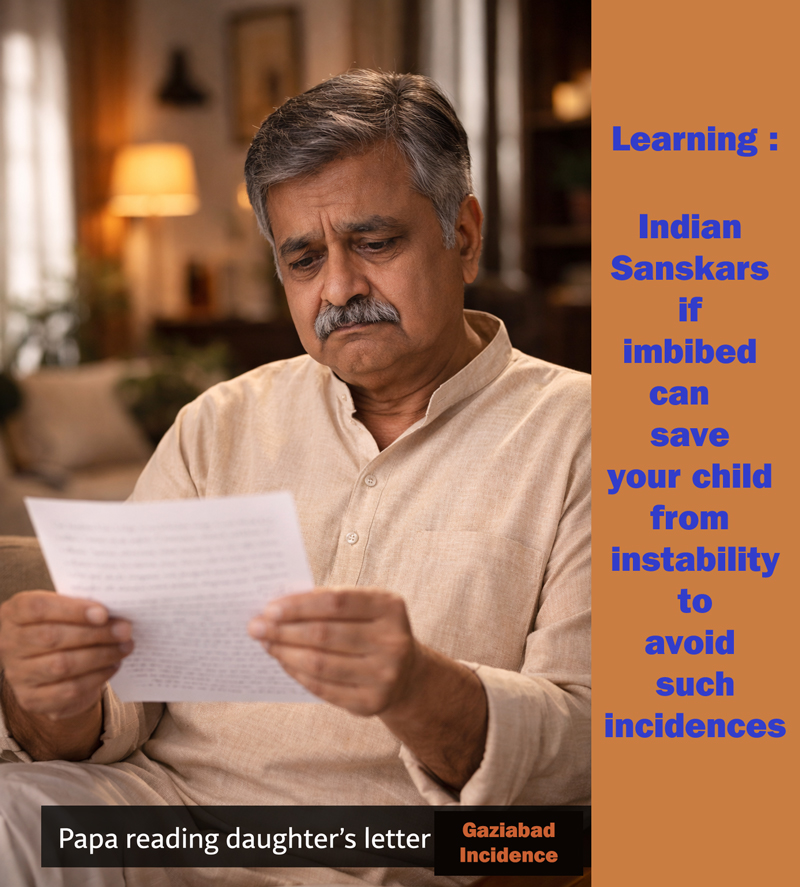
Today, some consider these practices to be superstition or symbols of backwardness, while others interpret Dharma as rules, fear, punishment and coercion. Simply said, both are misunderstandings, and for sure, harm children. If Dharma is imposed without dialogue, merely as something that ‘must be done’ without allowing breathing space for free dialogue with the intention of resolving the queries, children will run away from Dharma. At the same time, if Dharma is not taught at all, children will search for meaning elsewhere.
Therefore, proper education on Dharma is necessary. Education in Indian culture and Hindu Dharma means strengthening oneself internally to face the world. If the doctrine of karma is understood, one will not completely collapse in the face of failure. If Ramayan and Mahabharat are viewed not merely as stories but as examples of human nature, dilemmas, mistakes and decisions, one can approach life’s complexities with extended maturity.
In light of incidents such as Ghaziabad’s, the need has once again arisen for experts in Hindu Dharma to propagate it and create awareness with renewed vigour.
| Hindu Dharma is not merely about worship, rituals or traditions. It is a profound, expansive philosophy that engages with life! |
 Criminal case against 11 members of a Christian organisation who claimed that “Hindu is an abusive term, meaning thief, bandit and slave” will not be quashed !
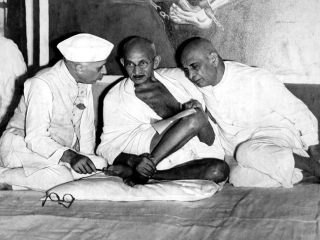 Nehruji’s Selection by Gandhiji for Congress Presidentship Again and Again
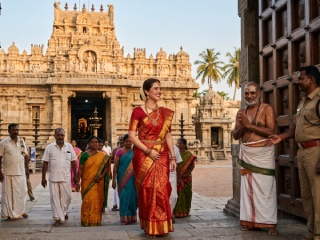 A person’s nationality or foreign name cannot determine their faith in Hindu Dharma !
 Radiant Thoughts of Sachchidananda Parabrahman (Dr) Jayant Athavale
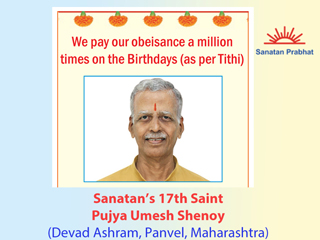 We pay our obeisance a million times on the Birthday (as per Tithi) of
 Major win for Hindu unity : Maharashtra Government suspends the controversial ‘Devasthan Inam Abolition Draft Act’