
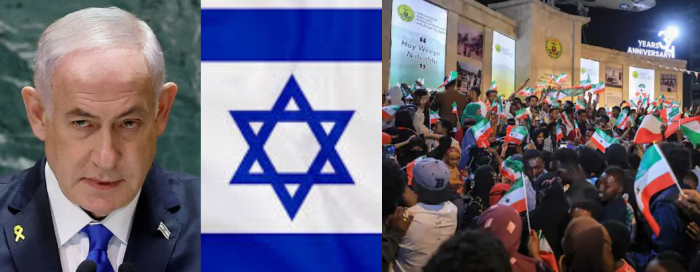
Israel has recognised Somaliland, which broke away from Somalia in the African Continent. Swift, sudden and astonishing operations that completely disorient the enemy are Israel’s hallmark. This approach is evident not only in matters of defence but also across diverse fields. Recognising Somaliland was, on the global stage, an issue that had virtually been shelved and forgotten. At a time when issues such as the Russia-Ukraine war, ongoing tensions between the USA and Venezuela, and Jihadi terrorist attacks in Australia were being widely discussed, Israel suddenly granted recognition to Somaliland.
Like Somalia, Somaliland too is Muslim-majority. Israel’s image in Islamic countries needs no elaboration; yet, the moment Israel’s Foreign Minister Gideon Saar announced that they will recognise Somaliland and establish political relations with it, people in Somaliland came onto the streets, celebrated joyously and burst firecrackers. Those who label Israel as anti-Muslim will have to acknowledge the victory of Israel’s diplomacy in bringing a Muslim-majority Somaliland onto its side.
The key question is why Israel suddenly chose to act on an issue that the world had shelved and forgotten. It has, in fact, been 30 years since Somaliland began the process of separation; however, not a single country of the United Nations has recognised it. Unlike Somalia, Somaliland does not suffer from anarchy. It has Democracy, its own military, and a comparatively well-functioning administrative system. Even so, the general assumption has been that recognising Somaliland would cause upheaval in global politics.
The African Union has its own concerns. It maintains that the borders of each country fixed during the colonial period should remain unchanged, and that recognising breakaway countries would fuel separatism across the African Continent. The European Union too does not agree with Israel’s stand. It believes that Israel’s move will aggravate internal conflicts within African countries and reignite border disputes. Islamic countries feel that an increased Israeli presence in Somaliland will affect the security of the Middle East and African countries. Israel, however, is unconcerned about who thinks what and has moved ahead decisively.

Israel’s advantage
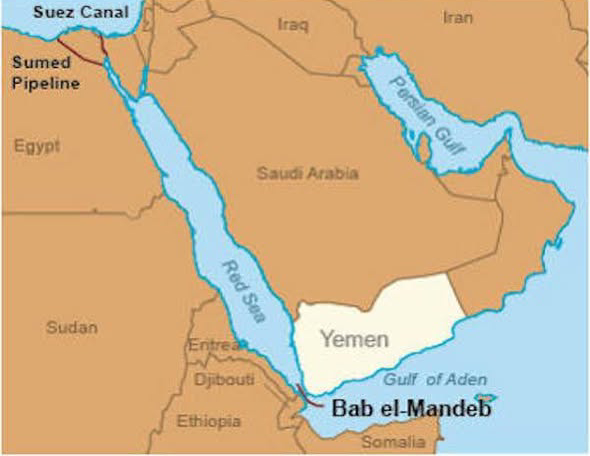
Somaliland is located near the Bab al-Mandeb Strait in the Horn of Africa. This Strait, which connects the Red Sea and the Gulf of Aden, holds immense commercial and strategic importance. Unlike many other Islamic countries, Somaliland is not a hardline Islamic State. It has opposed the terrorist organisation Al-Shabaab operating in Somalia. If Israel establishes a firm presence here, it will become easier to monitor the activities of Islamic countries in Africa and the terrorist organisations they nurture.
Hence, Israel plans to develop a port in Somaliland, create infrastructure there, and invest in agriculture and the cyber sector. Going a step further, Israel will attempt to create a situation where, if Islamic countries in the African Union raise their voice against Israel, Somaliland will act as a shield and support Israel. Observe the duplicity of these Islamic countries – All of them insist on an independent Kashmir; yet, they feel it is incorrect to recognise Muslim-majority Somaliland, which has separated from the Muslim-majority Somalia.
At present, the situation regarding Somaliland is that the entire world stands on one side and Israel on the other. Yet, Israel giving support to Somaliland is a foresighted move. In changing the course of world history, the first step taken by a country, whether deemed wrong or right, often proves decisive. Israel’s stand has the potential to alter the geopolitical equations of East Africa. Currently, Somaliland too stands with Israel. Hence, Israel, which has courageously adopted this position while bearing the displeasure of the entire world, deserves appreciation.
What is India waiting for ?
At present, China’s activities in Somalia are increasing, and Djibouti, which is a small country neighbouring Somalia and Somaliland has effectively become China’s puppet. Just as China has ensnared other countries by offering loans, Djibouti too has fallen into that trap. Taking advantage of this, China has established a naval base there. China is striving to expand its dominance in East African countries; hence, the USA’s activities in this region have also increased.
India has good relations with African countries such as Ethiopia, Kenya and Tanzania; however, it is even more important for India to strengthen its own presence on the Continent. From commercial as well as strategic perspectives, the Bab al-Mandeb Strait is important for India as well. If India recognises Somaliland, it will receive cooperation from that country, and India could also gain strategic advantages.
Michael Rubin (Director of the Policy Analysis Department at the Middle East Forum) has offered a sharp analysis of India. It is expected that policymakers study it and bring changes in India’s policies. He says, “India has the potential to become a superpower; yet, it does not utilise this potential effectively. Instead of planning in advance and taking initiative regarding many developments, India reacts only after events have already occurred”. Due to such delayed steps, India’s impact at the global level remains limited, and hence, the country’s interests also suffer.
Therefore, if India follows Israel’s example and recognises Somaliland, a clear message will go out to the world that India stands firmly with its friends and does not bow before China’s arbitrariness. Keeping this in mind, will India, at the very least, become the second country to recognise Somaliland ?
| If India follows Israel’s example and recognises Somaliland, a clear message will go out that India stands firmly with its friends ! |
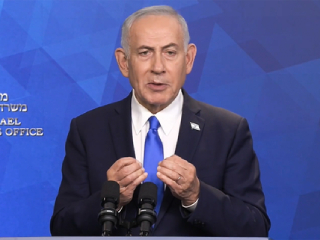 We receive tremendous support even from India, a nation of 1.4 billion people: Israeli Prime Minister Benjamin Netanyahu
 While the US celebrated its 250th anniversary, NYC Mayor Mamdani’s wife attended an Islamic programme in Spain
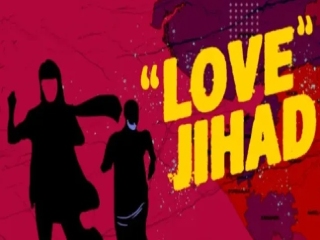 Muslim woman forcibly converts a Hindu young man to Islam !
 Radiant Thoughts of Sachchidananda Parabrahman (Dr) Jayant Athavale
 We pay our obeisance a million times on the Birthday (as per Tithi) of
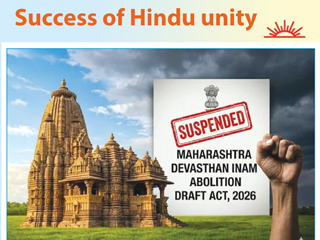 Major win for Hindu unity : Maharashtra Government suspends the controversial ‘Devasthan Inam Abolition Draft Act’