

1. Time for Shraddha
- According to the Daksha Smruti (2.22 & 2.23), Deity-related rituals (Agnihotra, Havirbhag [Offering to the sacred fire], etc.) should be performed in the morning; rituals related to humans (feeding guests, giving charity, etc.) should be performed at midday; rituals for ancestors (tarpan, Shraddha) should be performed carefully in the afternoon.
- According to the Vasishtha Smruti (11.33), in the eighth part of the day, the Sun’s radiance reduces, and this is called kutapakal. Performing Shraddha at this time gives eternal satisfaction to the ancestors.
- According to the Deval Smruti, Ekoddishta Shraddha should be performed at midday, and Vriddhi-Shraddha in the morning. Laghu Harita Smruti says that learned people perform Shraddha in the 8th muhurt (Kutapkal or Aparanhakal, meaning the afternoon). Prajapati Smruti says that if the Varshik Shraddha tithi spans two days, choose the one that falls in kutapkal as it is considered to be the best for Shraddha and Mahalaya. The day is divided into five equal parts from sunrise to sunset; the fourth part is afternoon.

2. Sacred places for Shraddha
A. According to Manusmruti (3.207), ancestors are pleased when Shraddha is performed in a naturally pure, quiet and sacred place, by a river bank or a lake.
B. According to Yajnavalkya Smruti (1.261), performing Shraddha at Gaya gives ancestors eternal satisfaction.
C. Some venues mentioned in the Shankha Smruti are :
- Performing Shraddha at Gaya (Bihar), Prabhas (Gujarat), Pushkar (Rajasthan), Prayaga and Naimisharanya (U.P.) gives eternal satisfaction. – 14.27
- Performing Shraddha on the banks of Rivers Ganga, Yamuna, Payoshni, Amarkantak, Narmada, and Gaya also gives eternal satisfaction.- 14.28
- Shraddha performed during Mahalaya Paksha at Varanasi (Uttar Pradesh), Kurukshetra (Haryana), Bhrigutunga (Himachal Pradesh), and on the banks of Sapta Veni and Rushikupa, imparts eternal merit. – 14.29
D. Additional information in the Prajapati Smruti :
- Shraddha can be performed at the meeting of river and sea, at wells, ponds, river banks, temples, in regions favourable for Shraddha and even at home. – Shloka 53
- Shraddha should be performed in the shade of sacred trees like bel, banyan, peepal, agastya, or other revered trees; in temples, mountains, or great forests.
– Shloka 53
The Vedic scholars have provided the above options for people who have an intense desire to perform Shraddha -paksha, but they do not have enough space in their house.
3. Foods to avoid and foods to offer in Shraddha cooking
Avoid : Buffalo milk, chickpeas, ash gourd, red pumpkin, lentils (masoor), onion, garlic, brinjal (eggplant), ajwain, snake gourd, asafoetida, carrots, coriander leaves, chironji seeds.
Preferred for ancestors : Kheer & curds made from cow’s milk, black gram (urad dal), green gram (moong), wheat, honey, fried items such as vada, puri, etc.
Scriptural rule :
If wheat, urad dal, moong dal, and fried foods are absent, then the Shraddha is as good as not performed.
Also avoid foul-smelling or hair-contaminated water, and stale water.
4. Rules for the Shraddha performer
- Avoid conjugal relations the day before and on the day of Shraddha.
- Do not eat a second meal that day.
- Avoid shaving, loud talking, laughing loudly, wearing garlands or ornaments.
- Do not sleep during the day.
- Do not serve food to guests before the Shraddha.
- Women should not cook or serve with hair loose; wear clean traditional attire.
- Avoid restaurant/caterer-made food. Home-cooked food is sattvik, contains affection, and is liked by the ancestors.
5. Greatness of the Sages
A unique feature of Sanatan Dharma is that more than 60 Smrutis (Sanskrit Texts) have been composed by Sages to guide us. They have given numerous options on the type, place, time, and food for Shraddha. Even those do not have space at home can choose from these options. A truly devout person will be satisfied with these guidelines, perform the Shraddha, and surely obtain the blessings of their forefathers.
– Vedamurti Bhushan Digambar Joshi, Vengurla, Sindhudurg, Maharashtra.
| During Pitrupaksha, one should express gratitude to the forefathers, please them, and obtain their blessings ! |
 SPECIAL EDITORIAL : The Constructive Spirit of American Youth!
 Committees to be constituted in Maharashtra to decide cases of passive euthanasia
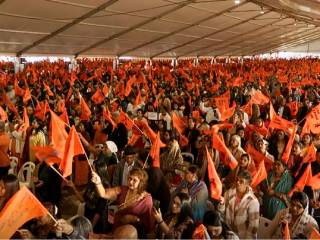 17,000 Hindus in South Africa gather to recite the Hanuman Chalisa !
 Actor Aamir Khan receives death threat from Lawrence Bishnoi gang over ‘Love Jihad’
 We pay our obeisance a million times on the Birthdays (as per Tithi) of
 Offering gratitude unto the Holy feet of the Guru is true Gurudakshina !