
"Technology is trapping humanity in a labyrinth of psychological disorders — and spiritual discipline may be the only lasting way out."
Opening InsightThis article uses a New York digital-detox festival as a starting point to examine a deeper question: can psychology alone free the mind from technology’s grip, or does lasting freedom require a spiritual foundation? The author argues that while Western movements like “Summer of Ludd” are a welcome first step, Hindu Dharma offers the more complete answer. |
A Tale of Two Youth Movements
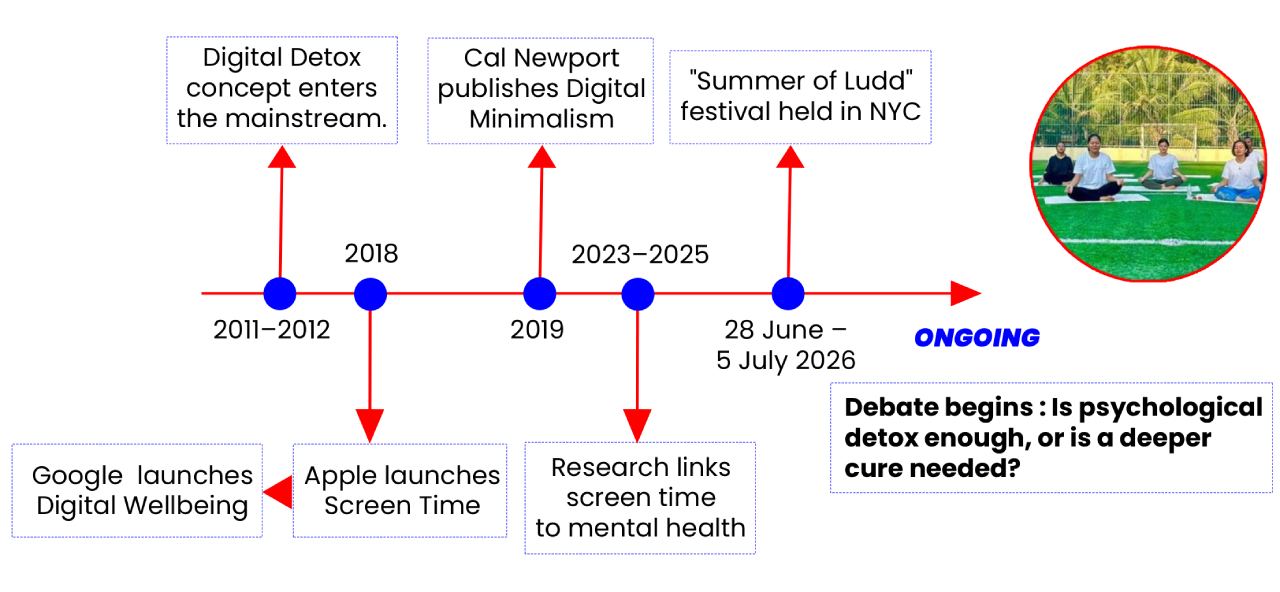
On one hand, in India, a few thousand “cockroaches” (youth), through the so-called “Cockroach Janata Party,” are blaming the established system for their unemployment. On the other hand, American youth are celebrating the “Summer of Ludd” festival to strengthen the very social order in which they live. While seeds of anarchy are being sown in India, constructive efforts are being undertaken in America to build a healthier society. Against the backdrop of India’s atmosphere of pressure politics driven by negative criticism, it has become even more important to understand the significance of this festival, which symbolises constructive action.
What is “Summer of Ludd!”

The “Summer of Ludd” festival was held in New York from June 28 to July 5. Its objective was to free society, especially the younger generation, from the toxic grip of social media. Young people, who have become so immersed in their digital lives that they are gradually losing their social well-being, were encouraged to reconnect with mainstream society. Human beings are increasingly becoming trapped in the web of technology of their own making, much like a spider caught in its own web. The optimism of encouraging people to step outside this trap and regain control over technology is commendable. It should be noted that this initiative was not anti-technology; rather, it emphasised the judicious and responsible use of technology.
Who Were the Luddites?
Early 19th-century English textile workers who destroyed machinery they believed threatened their livelihoods — today, “Luddite” loosely describes anyone resisting new technology.
Do the Disadvantages Outweigh the Benefits?
The advent of social media, followed by artificial intelligence, has transformed human life beyond recognition. Today, information on virtually any subject from any part of the world is literally at our fingertips through smartphones. Artificial intelligence now performs numerous tasks that were once done by humans. Three years ago, ChatGPT revolutionised the field of technology, and today Claude is emerging as its formidable competitor.
The world has become extraordinarily fast-paced. So much so that many people have developed psychological conditions such as FOMO (Fear of Missing Out), the anxiety of constantly staying updated with every development around the world, fearing that falling behind would make them socially irrelevant. Many believe that only by remaining perpetually updated can they converse confidently in society. This strange anxiety now affects a significant section of society. Another large group remains glued to their smartphones even while visiting friends or relatives, making them unable to emotionally connect with the people physically present before them. Almost all of us have experienced this phenomenon to varying degrees.
What Is FOMO?
“Fear of Missing Out” — the anxiety that others are having rewarding experiences one is absent from, intensified by constant social media exposure.
The Science Behind Screen-Time Anxiety
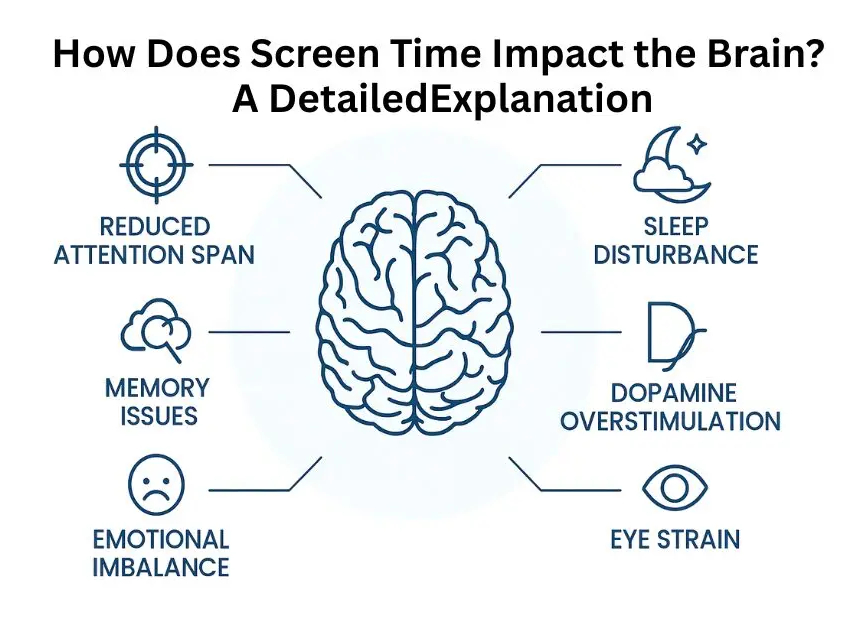
Modern technology is increasingly trapping humanity in a labyrinth of psychological disorders. The compulsive urge to check one’s phone the moment a notification arrives – a dopamine-driven reward loop along with sleep disturbances, declining self-confidence, stress, and mental fatigue- has become commonplace. Millennials, Generation Z, and increasingly even Generation Alpha have become deeply addicted to digital life.
The seriousness of this issue is reflected in the research paper “Risks of Uncontrolled Screen Time: Effects on Physical Health, Mental Health, and Overall Well-being,” published in the international journal SAGE. According to psychologists Jean Twenge, Thomas Joiner, and Gabrielle Martin, adolescents who spend more than five hours per day on screens are 70 per cent more likely to experience suicidal thoughts or engage in suicidal behaviour compared to those who spend less than an hour daily on screens.
From Digital Detox to Digital Minimalism
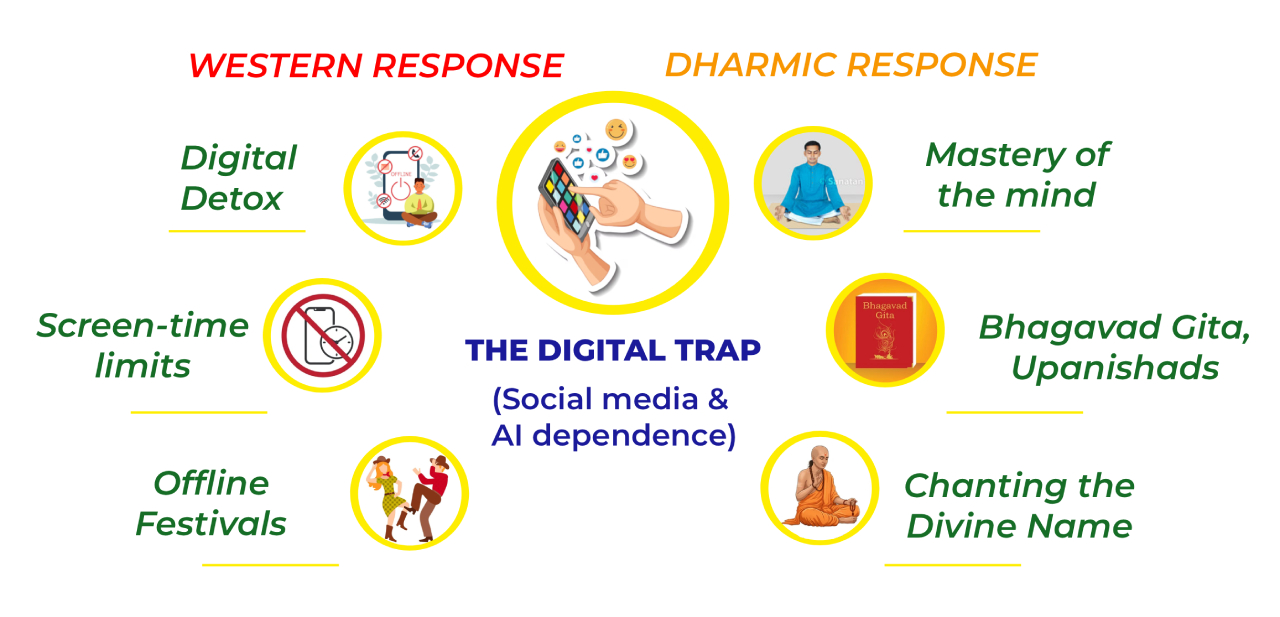
For over a decade, concepts such as Digital Detox have attempted to curb this destructive screen dependency and improve mental well-being. Apple introduced Screen Time, while Google launched Digital Wellbeing, acknowledging the seriousness of the problem. Cal Newport of Georgetown University, through his books Digital Minimalism and Deep Work, demonstrated that anyone wishing to produce meaningful and high-quality work must learn to use technology wisely and intentionally.
Such ideas have now evolved into a broader social movement, exemplified by the Summer of Ludd festival. Hundreds of participants engaged in activities throughout New York City, ranging from sewing workshops to open discussions on contemporary issues. Significantly, participants deliberately refrained from using smartphones. The festival itself was promoted without using any social media. Instead, organisers relied on posters, pamphlets, and printed literature, receiving an enthusiastic response from hundreds of people.
The festival derives its name from the Luddites, the nineteenth-century textile workers who protested against mechanisation.
One of the co-organisers, Damian Thomas, posed a thought-provoking question:
“Who controls how our society behaves—you, or Mark Zuckerberg?”
His message is equally relevant and inspiring for Indian (Hindu) youth.
A Message for Indian Youth
The festival conveys an important message: human beings must regain control over technology. Ultimately, this means regaining control over the mind itself. Today’s social media companies seek to capture and manipulate the minds of young people. Indian youth must become alert to this reality before it is too late. While the American initiative is praiseworthy, it primarily addresses the problem at a psychological level. Lasting mastery over the mind requires going much deeper. Therefore, although initiatives like Summer of Ludd deserve appreciation, they alone cannot produce permanent transformation. For that, it is necessary to revive the teachings of Hindu Dharma. The Amritabindu Upanishad, Katha Upanishad, and the Bhagavad Gita not only provide profound guidance on mastering the mind but also explain the transformative power of chanting the Divine Name of Bhagwan. By embracing these teachings, Hindu youth can free themselves from the labyrinth of social media far more effectively and permanently, through the Hindu way of life.
Technology is trapping humanity in a labyrinth of psychological disorders. Spiritual disciplines for mastering the mind alone can provide a lasting solution.
Technology is trapping humanity in a labyrinth of psychological disorders. Spiritual disciplines for mastering the mind alone can provide a lasting solution.
FAQs (Frequently Asked Questions)Q1 – What is the “Summer of Ludd” festival? A1 – A youth-led event held in New York from June 28–July 5, 2026, encouraging participants to disconnect from social media and reconnect with in-person community life. Q2 – Where does the name “Ludd” come from? A2 – It references the Luddites, 19th-century textile workers who protested the mechanisation of their industry. Q3 – What does research say about screen time and mental health? A3 – A study published in SAGE found that adolescents spending over five hours daily on screens were 70% more likely to report suicidal thoughts or behaviour than those spending under an hour. Q4 – What solution does the article propose beyond digital detox? A4 – It argues that texts like the Bhagavad Gita, Katha Upanishad, and Amritabindu Upanishad, along with chanting practices, offer a deeper and more lasting path to mastering the mind than psychology-based digital wellness alone. |
 Punjab farmers postpone march to be taken out in Delhi
 Bangladesh army conducts joint military exercise with U.S. troops near the India–Bangladesh border !
 Dhruv Rathee’s video claiming Hindu Deities ate meat and drank alcohol must be removed within 24 hours !
 Indian nationals in Iran should return to India at the earliest ! – India
 United States to deport 18,000 Indian nationals
 Committees to be constituted in Maharashtra to decide cases of passive euthanasia