
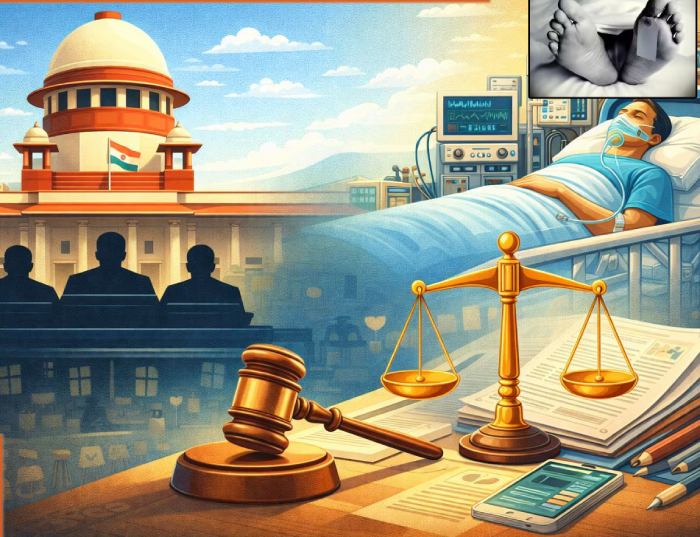
Mumbai – Over the past few years, the number of applications seeking passive euthanasia has increased significantly in Maharashtra as well as across India. To decide such cases, the Maharashtra Government has taken the important decision to constitute committees in all Government hospitals in the State. While granting permission for passive euthanasia in the Harish Rana case, the Supreme Court had directed that committees be established to decide such matters. The Maharashtra Government has taken this step in accordance with those directions.
A Primary Medical Committee will be constituted in Government hospitals under the chairmanship of the Additional District Surgeon, while a Secondary Medical Committee will function under the chairmanship of the District Surgeon. The State Government has also directed private hospitals to constitute similar committees under the chairmanship of their respective administrators and directors. The Public Health Department issued a Government Resolution regarding this on 17th July.
What is passive euthanasia ?
When a person suffers from an incurable and serious illness, he or she is often left in an unconscious condition. In such a critical state, the person is unable to make decisions. Therefore, while still mentally competent, a person may submit an application to the authorities expressing the wish that, should such a situation arise in the future, they would prefer death in a passive state rather than enduring prolonged, death-like suffering. In passive euthanasia, artificial life support, including mechanical ventilation and other life-sustaining treatment being provided to the critically ill patient, is withdrawn, allowing the person to die naturally.
What is the Harish Rana case?
In 2013, Harish Rana, a young man from Punjab, suffered a fall from the fourth floor of a building, resulting in severe brain injury. From then onwards, he remained unconscious but alive. Doctors stated that there was no possibility of any improvement in his condition. Considering his persistent vegetative state, his family approached the Delhi High Court in 2024 seeking permission for passive euthanasia. However, the High Court rejected their plea. The family subsequently approached the Supreme Court in 2024. On 11th March 2026, the Supreme Court granted permission for Harish Rana’s passive euthanasia. He passed away on 24th March 2026 at the All India Institute of Medical Sciences (AIIMS) in Delhi.
As the issue of Harish Rana’s passive euthanasia went through the judicial process, several years were spent before a decision was reached. The Supreme Court therefore directed that a standard procedure be established for deciding similar cases in the future. Accordingly, such medical committees will now be constituted in Maharashtra.
What does Spiritual Science say about passive euthanasia?
According to Spiritual Science, the process of death is considered natural only when the body has become completely worn out and is no longer capable of performing any actions or spiritual practice. According to modern science, the beating of the heart signifies life; however, according to Spiritual Science, the existence of consciousness is of greater importance. When a patient is in a coma and survives solely with the support of machines, Dharmashastra (holy texts) considers it to be a state in which the life force (prana) remains trapped. Modern medical devices, such as ventilators, may sometimes interfere with the natural process, artificially prolonging the life of a person whose journey should have naturally come to an end. In such circumstances, withdrawing artificial life support is viewed not as an act of violence, but as an act of granting liberation in accordance with the person’s destined course of life.
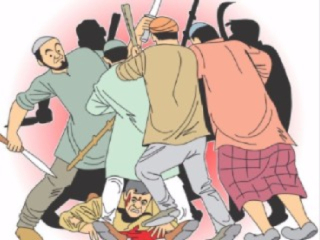 Teacher conducting SIR process assaulted by three religious fanatics !
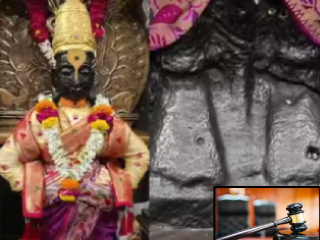 District Court Lifts Stay on Chemical Coating of the Shri Vitthal–Rukmini murti at Pandharpur !
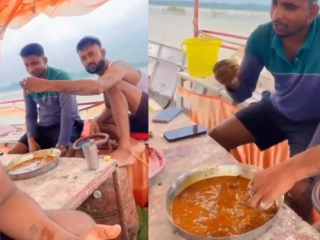 Three Hindus arrested for consuming mutton and alcohol on holy Saryu in Ayodhya
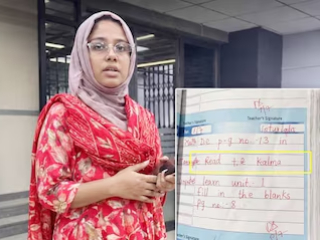 Teacher dismissed by school in Bhagyanagar (Telangana) for asking a Hindu student to memorise the ‘Kalma’ as homework !
 Karnataka to ban the sale of pizza-burger near schools
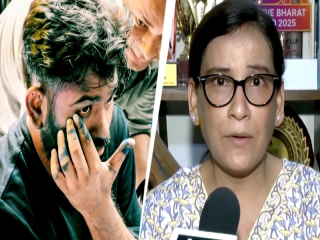 I threw ink at urban Naxal Abhijeet Dipke for insulting Shriram