
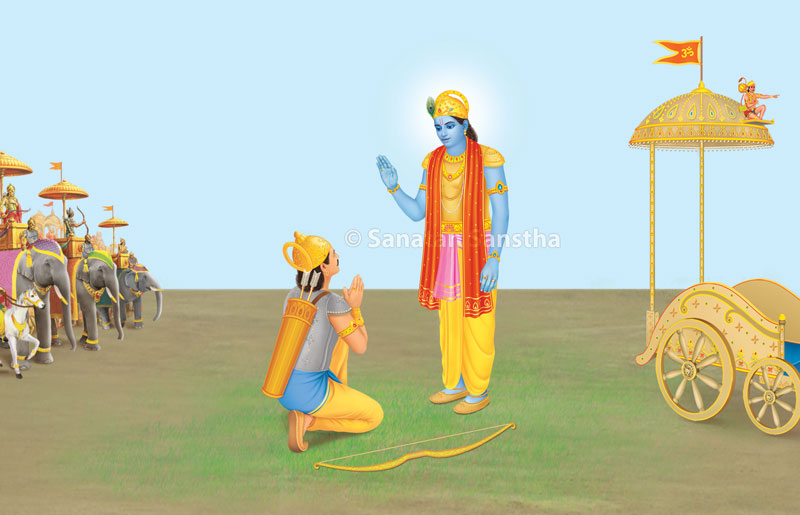
1. The Mahabharat is the most important part of Shrikrushna’s life.
Written by Sage Vyas, it is a prominent historical text. Bhishmacharya was the Guru of the Kouravs in the Mahabharat. Before Bhishma’s birth, His mother Ganga had abandoned His seven elder brothers in the River Ganga. Shrikrushna was the Guru of the Pandavs. Kansa had slain Shrikrushna’s seven elder siblings.
2. At the time of the Mahabharat, Shrikrushna was about 83-years-old while Bhishma was more than 130-years-old.
3. Shrimadbhagawadgeeta mentions only the following four individuals.
| Individual | Representing which mode of speech ? | Characteristics |
| Dhritarashtra | Vaikhari | Blind |
| Sanjay | Madhyama | One bestowed with Divine vision |
| Arjun | Pashyanti | The soul |
| Shrikrushna | Para | Supreme God |
4. Shrikrushna narrated the Shrimad-bhagawadgeeta only to Arjun for the following reasons.
The confusion in Arjun’s mind was not due to emotions, it stemmed from the intellect.
Arjun was Gudakesha, that is, the one who could comprehend the implied meaning (Gudha means secret) in Keshav’s (Shrikrushna’s) speech. At the beginning of the Shrimadbhagawadgeeta Arjun says to Shrikrushna, ‘Senayorubha-yormadhye ratham sthapaya me chyut (सेनयोरुभयोर्मध्ये रथं स्थापय मेऽच्युत |)’ (Shrimadbhagawadgeeta 1:21, meaning – O’ Achyut ! Place my chariot in the midst of both the armies’. Here, of the several Names of Shrikrushna, Achyut is used because Arjun is referring to the Shrikrushna who does not shirk from His responsibilities, the one who is unflinching. ‘In the midst of both the armies’ implies between the good and the evil. Thus, He requests Shrikrushna to take him beyond all duality.
5. The Uddhavgeeta :
When Shrikrushna renounced His body, His great friend Uddhav was greatly bereaved. What Shrikrushna preached to him at that time is called the Uddhavgeeta.
6. Teachings of the Shrimad-bhagawadgeeta in brief :
In His philosophy, He has shown the appropriate blend of attachment and detachment. He has accepted Karmayoga (Path of Action) according to the Vedas (The most sacred Hindu Scriptures), Jnanyoga (Path of Knowledge) according to the Sankhya (One of the six schools of Bharatiya philosophy) philosophy, suppression of tendencies of the subconscious mind according to Yogamarg (Path of Yoga) and sanyas (Renunciation) according to Vedant; but He has opposed the view that each of these is the ultimate as proclaimed by their exponents.
Shrikrushna has balanced the appropriate significant part of each one harmoniously and created a new doctrine based on actions devoid of expectations or results. Shrimadbhagawadgeeta mainly preaches how man should perform his duties. The Scriptures decide our duties; but He has explained beautifully how to perform them in the best possible manner. In the Shrimadbhagawadgeeta, He has narrated how to convert attachment to detachment and vice-versa, and how man should execute his duties.
7. The Jnaneshwari (18:1684) says – ‘Consider the Shrimadbhagawadgeeta to be the Idol of the Lord embellished with words’.
8. Anugeeta :
When Shrikrushna realised that the effect of the Shrimad-bhagawadgeeta on Arjun’s mind was wearing out, He narrated it to him once again. This repetition is called the Anugeeta. Anu means later.
(Ref.: Sanatan’s Text – ‘Shrivishnu, Shriram and Shrikrushna’)
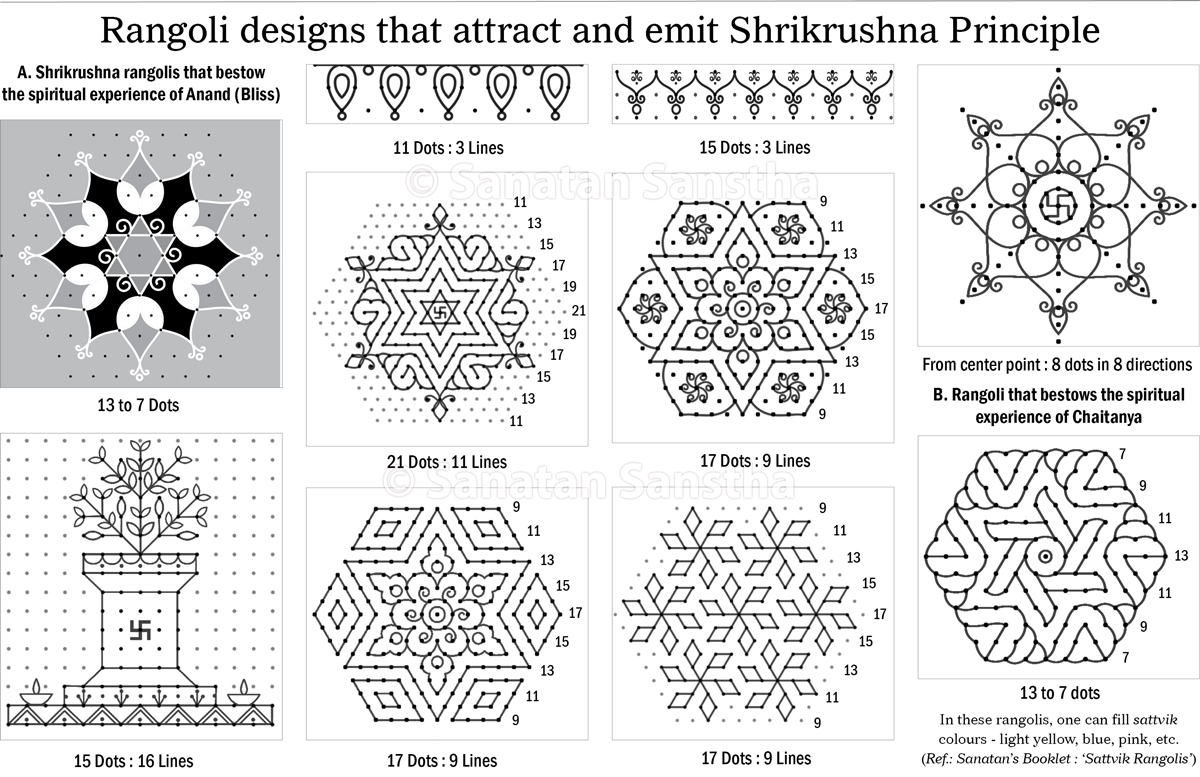
 Radiant Thoughts of Sachchidananda Parabrahman (Dr) Jayant Athavale
 We pay our obeisance a million times on the Birthday (as per Tithi) of
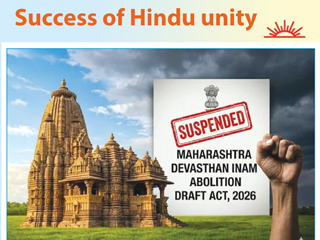 Major win for Hindu unity : Maharashtra Government suspends the controversial ‘Devasthan Inam Abolition Draft Act’
 Mumbai-based advocate Siddhavidya, who is trying to stop trafficking through surrogacy (artificial pregnancy) and animals, and animal killing
 Secularism and the ‘Hindu Rashtra’
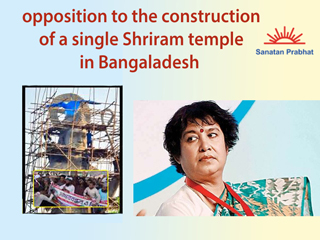 Construction of Sanatan Dharma Complex halted due to threats in Bangladesh