
Nurturing equal respect for all faiths is possible only in a ‘Hindu Rashtra’ !
The insertion of the word ‘Secular’ in the Constitution is unconstitutional
India must be declared a ‘Hindu Rashtra’ !
In Britain, religious leaders have the authority to make religious laws
Watch the interview of Sadguru (Dr) Charudatta Pingale on the OTT channel ‘Prachyam’ ! https://youtu.be/82-sVevgg9s
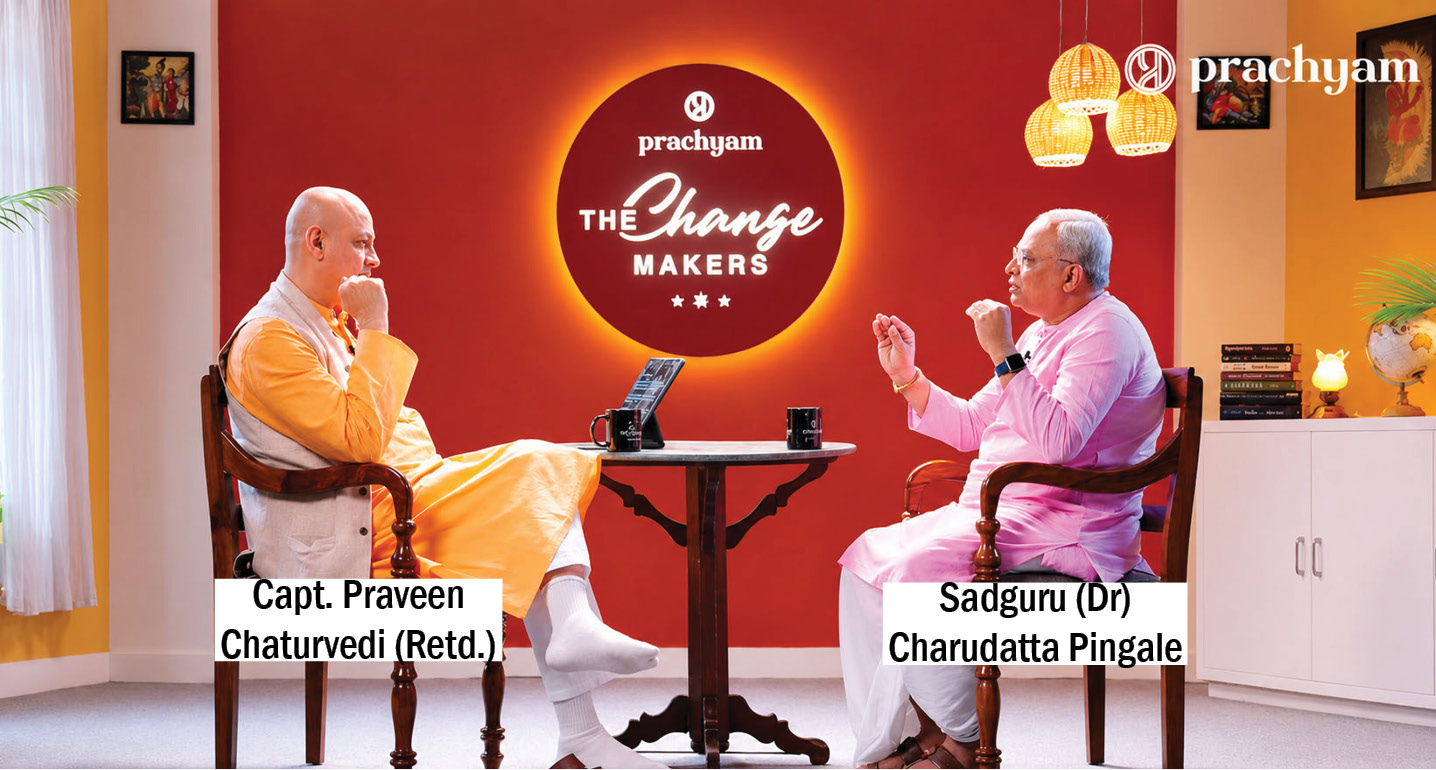
Throughout the history of India, numerous kings, organisations, Saints and individuals struggled to protect Hindu Dharma and culture. It is because of them that Hindu Dharma and culture survive even today. In this context, Capt. Praveen Chaturvedi (Retd), Founder and Chief Executive of the OTT platform ‘Prachyam’, interacted with Sadguru (Dr) Charudatta Pingale (National Guide of the Hindu Janajagruti Samiti) under the programme ‘Change Makers’. In this article, read the enlightening views of Sadguru (Dr) Charudatta Pingale on the so-called Secularism in India and the ‘Hindu Rashtra’.
1. What is Dharma ?
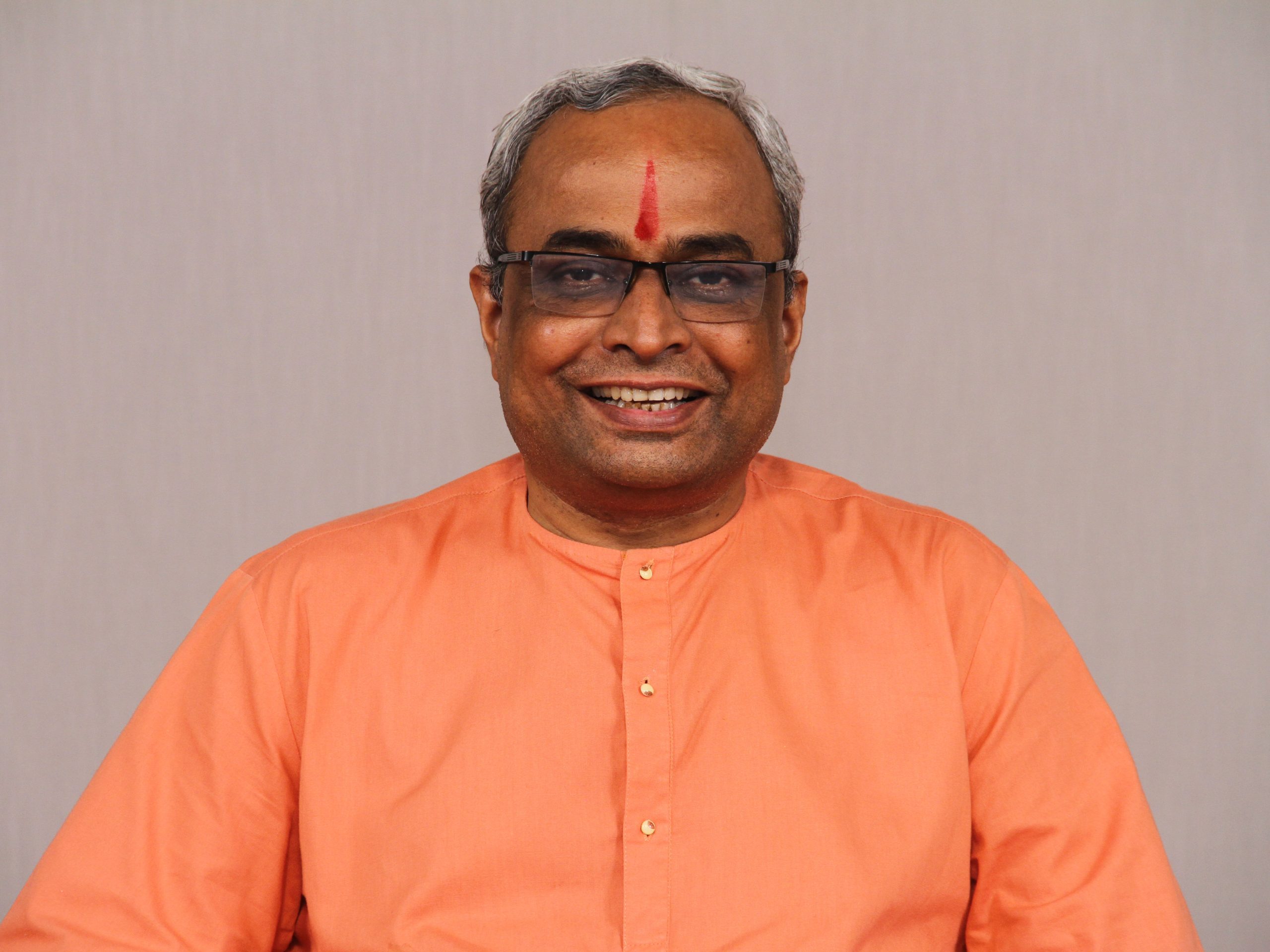
We have Dharma, religions and sects. Therefore, to understand the concept of the ‘Hindu Rashtra’, one must first understand what Hindu Dharma or Dharma actually means. Western languages follow different linguistic conventions. Compared to Hindi, Marathi and Sanskrut, which are rooted in Sanskrut, their vocabulary is very limited. Owing to the limitations of English language, the false narrative that religion means Dharma has been propagated for many years. This has caused the greatest damage not only to our language but also to the expression of our thoughts.
‘That which leads to worldly prosperity and spiritual liberation is Dharma’. This is the fundamental definition of Dharma. That which sustains society is Dharma. Adi Shankaracharya provided a comprehensive definition of Dharma. According to Him, ‘That which accomplishes the three tasks of bringing about worldly as well as spiritual progress of every living being, and keeping the social system in good condition is called Dharma’. There is no mention of any mode of worship in this concept of Dharma. It is concerned with an ideal social order and with the spiritual and material progress of the individual.
2. Who is a Hindu ?
The meaning of the word ‘Hindu’ is ‘हीनान् गुणान् दूषयति इति हिंदु: (Heenan gunan dushayati iti Hindu)’ – Anyone who constantly strives to eliminate his inferior qualities and progress spiritually is a Hindu (as mentioned in Text Merutantra). There is no reference to which Deity one worships or which mode of worship one follows. Inferior qualities refer to our negative tendencies, defects and ego, which in Spirituality are called Raja-Tama components. One should overcome these and become Sattva predominant (virtuous), and then progress beyond even Sattva. This requires a process of self-purification.
Therefore, the Text does not refer to any specific mode of worship. It emphasises eliminating selfish and hateful thoughts, cultivating a righteous attitude, loving everyone and striving for a good social order. This is the context of Dharma.
If we examine the meaning of the word Hindu in our Constitution, Dr BR Ambedkar said in the Parliament that all traditions such as Buddhism, Sikhism, Jainism and similar indigenous paths of worship that originated in the Indian subcontinent (excluding Abrahamic faiths) fall within the term Hindu. According to the example he provided, Christianity and Islam originated outside India. Therefore, all others are considered Hindu.
3. A brief concept of the ‘Hindu Rashtra’
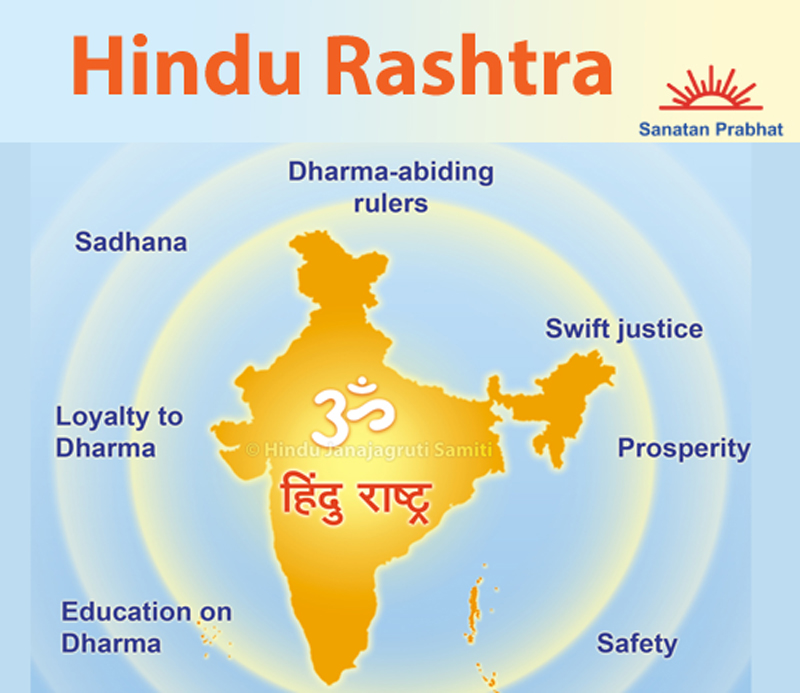
In this ‘Hindu Rashtra’, there will be love, respect and brotherhood, along with respect for each other’s faith. Everyone will be treated equally. There will be no appeasement and no special privileges for anyone. Whatever is true will be upheld through the justice system. Simultaneously, emphasis will be placed on maintaining law and order.
4. The charade of Secularism
The word Secularism has never been properly defined in India. If our Constitution promotes a scientific outlook, then science teaches that every term must first be clearly defined before it can be applied.
Now, the Parliament that inserted the word Secular through Article 76 introduced a term that did not even exist in 1950 and did not define it in the Constitution. It is a concept about which Parliament itself has no clear understanding and a definition about which even the judiciary has no clarity. Consequently, different people interpret it differently in different contexts. As a result, under the name of Secularism, nothing more than a charade is taking place in the Nation.
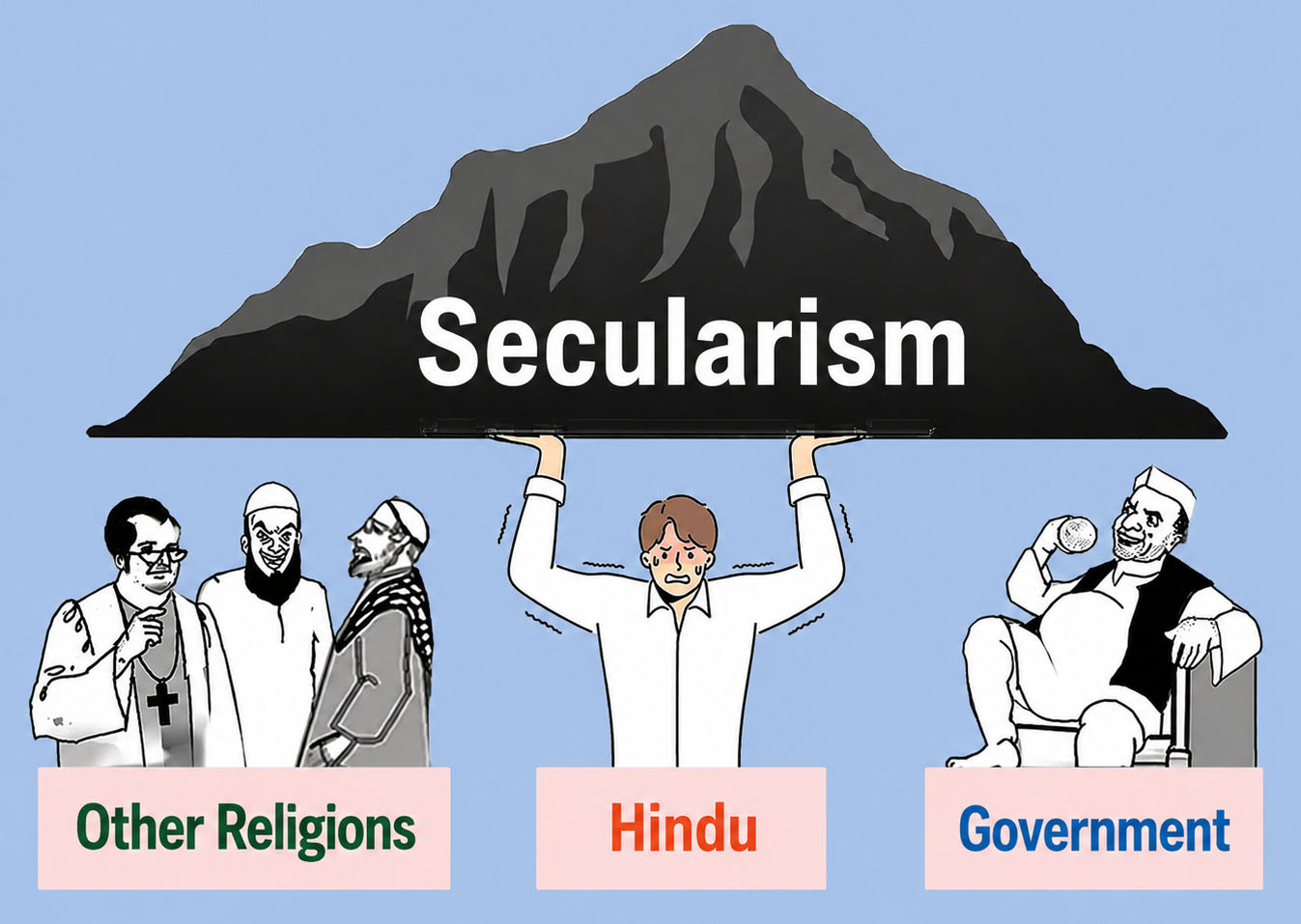
Secularism should either mean maintaining equal distance from all religions or granting equal rights to all religions. However, the present interpretation places the entire burden upon Hindus alone. The current understanding of Secularism has become anti-Hindu and pro-minority. As a result, Secularism in India has become highly biased.
Therefore, the word Secularism must first be defined. It should be clearly stated that until such a definition exists, neither the Government nor the Judiciary should make decisions based upon it. Simultaneously, there should be an analysis of whether decisions made in the name of Secularism are discriminatory.
At present, there is discrimination in the Nation’s bureaucracy and judicial system. If equality is a principle of the Constitution and there is to be no discrimination on the basis of caste, sect, language or religion, then all such decisions challenge our fundamental principles and values. It appears that, in their view, constitutional values hold no significance and that they can deliver whatever decisions they choose. In such a situation, it becomes the responsibility of the system to define Secularism so that the bureaucracy and judiciary can function in accordance with the Constitution.
5. The insertion of the word Secular in the Constitution is unconstitutional
It is often said that the Preamble and the basic structure of the Constitution cannot be altered. However, the Preamble which forms the basis of a one-page document, is founded on the discussions that took place in the Constituent Assembly. During the Constitution-making process, whenever the proposal to include the word Secular was raised, it was rejected. A conscious decision was taken not to include it.
Participation of experts on Dharma is essential when framing religious laws !
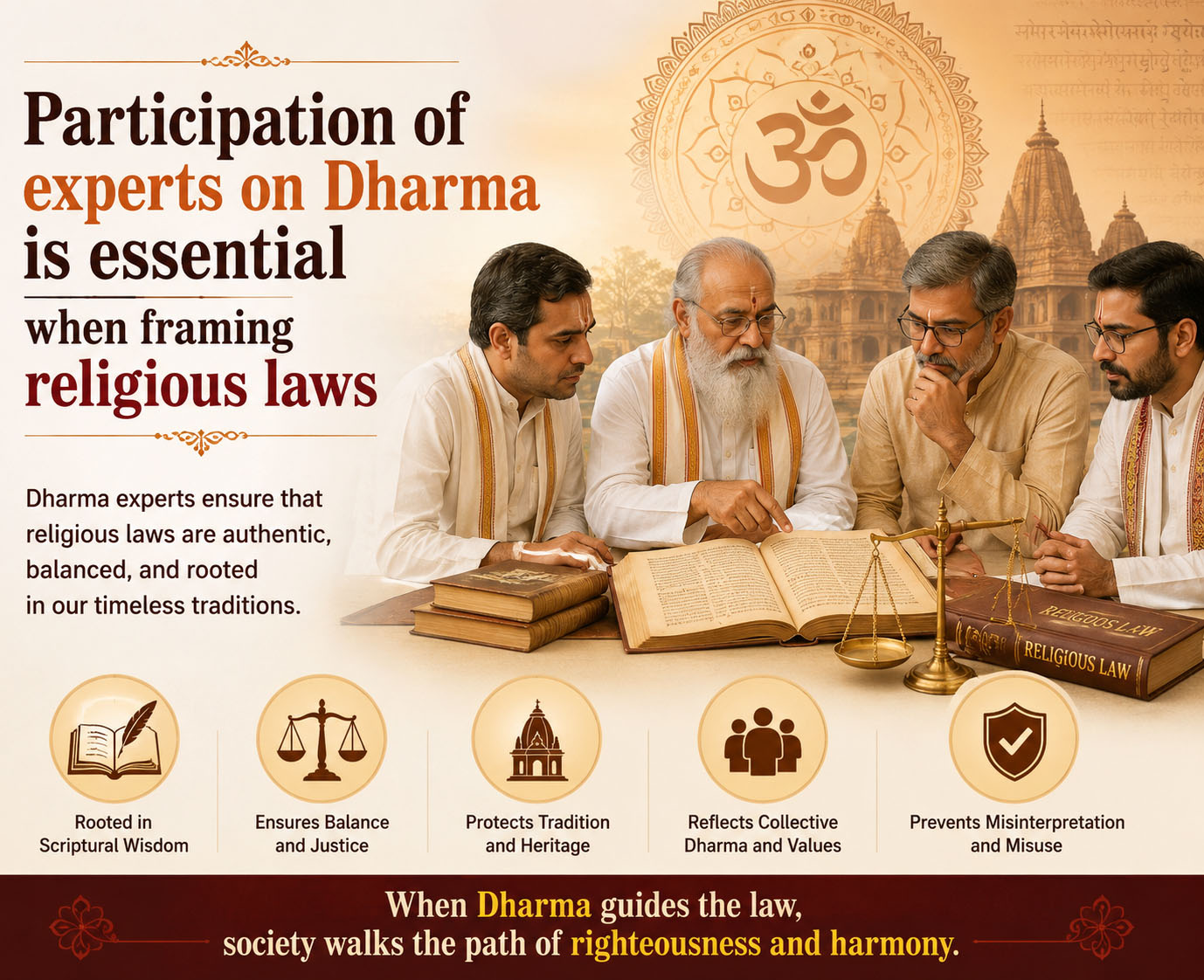
One of the problems in India’s judicial system is that experts in Hindu law may be Secular in outlook or even opposed to Hindu interests. When laws are framed in Parliament or interpreted in Courts, it cannot be assumed that elected representatives possess adequate knowledge of Dharma. Neither India nor the world objected to Pakistan becoming an Islamic Nation, nor to Bangladesh becoming an Islamic Nation. Therefore, Pakistan, Bangladesh and the rest of the world should have no objection to the establishing of a ‘Hindu Rashtra’.
-Sadguru (Dr) Pingale
The concern at that time was that minorities might face coercion or exploitation. Therefore, Articles 28, 29 and 30 were introduced to provide special protections for minorities.
This meant that it would be a State governed by Hindus alone. Therefore, the use of the word Secularism amounts to disregarding the intentions of the Constitution-makers, as well as undermining of the Constitution itself. Until we understand this, we cannot move forward. In reality, our fundamental rights were contrary to our own fundamental rights. In reality, India was not declared a ‘Hindu Rashtra’ in 1950; instead, the Congress Government effectively initiated an undeclared secularism.
Pandit Nehru reportedly advised against using the term Secular, and Dr Ambedkar also opposed its inclusion. However, in 1976, both viewpoints were disregarded. This amendment did not receive genuine democratic endorsement. Therefore, it is unconstitutional and should be removed. Since it was introduced during the Emergency, when many people were imprisoned, the process itself was unconstitutional and should not be accepted.
6. India must be declared a ‘Hindu Rashtra’ !

First, secularism should be clearly defined. Thereafter, the judiciary, executives and politicians should act according to that definition. Secularism was imposed because of the fear that the majority would suppress minorities. Does such suppression not occur in Islamic countries ? If it does, then the Government of India and the United Nations should first ensure that those countries adopt Secularism. If minorities face no danger in Islamic countries and Christian countries, then we assure you that no one will face danger in a ‘Hindu Rashtra’.
The fundamental principle of Democracy is that governance should function according to the majority. In India, Hindus form the majority; yet, they are denied rights such as education on Dharma in schools. This is not Democracy.
When rights granted to minorities are denied to the majority, inequality results. Therefore, rights given to minorities should also be available to Hindus; thereby establishing equality. Hindu Dharma is all-inclusive and works for the upliftment of all. Historically, India respected and protected the traditions of Jews, Shakas, Huns, Kushans and many others. It can continue to do so in the future. If majority opinion forms the basis of Democracy, and if India was partitioned on religious grounds, then India should be declared a ‘Hindu Rashtra’.
7. In Britain, religious leaders have the authority to make religious laws
Historically, the non-duality of Dharma and the Nation, and of the king and Dharma, was recognised. The king was viewed as an embodiment of Shri Vishnu, resulting in the integration of the Nation-State. Both these groups were Dharma-based and consequently, what existed was a ‘Hindu Rashtra’.
In 15th and 16th Century in Europe, conflicts arose between kings and the Church. A division emerged : ‘The Nation belongs to us and governance belongs to you.’
Although England is considered Secular, 20 bishops are officially nominated to the House of Lords. They are not elected. These bishops have the authority to make religious laws. Even if the House of Commons does not approve a religious law, it can still become law because only bishops possess the authority to make religious laws. Therefore, despite being Secular England has this provision.
Equal respect for all faiths can be nurtured only in a ‘Hindu Rashtra’ !
The Supreme Court has observed that ‘Hinduism is a way of life’. Many uninformed people in India—whether journalists, politicians, secularists or communists—argue that Dharma simply means religion. If so, where does one find the concept of an ideal social order within religion ?
One may pursue material progress or spiritual progress through one’s chosen Path of worship. There is no objection to that. However, the issue arises when a particular sect claims to be the only true path and insists that everyone must accept it. If others refuse, they may be lured, pressured or intimidated into conversion. Such attitudes do not reflect the qualities of a healthy social order. Studying Islam or any other faith is acceptable. Whether one seeks material progress or spiritual progress is a personal choice. However, the ideology that only Islam should exist in this world and that no one other than Muslims should be permitted to live here is not proper. Accordingly, everyone must convert, and if they do not, then they will be treated in the manner prescribed in their religious scripture. Such an ideology is not appropriate. It does not reflect the characteristics of a good social order..
Therefore, if one seeks a good social order, inclusiveness, equal treatment and equal benefits for all, Hindu Dharma alone embodies these principles. Hindu Dharma is truly Secular in spirit and capable of working for the progress of all. It is on this basis that we envision a ‘Hindu Rashtra’.
-Sadguru (Dr) Pingale
If India had followed the British model regarding religious legislation, then Dharma experts should have been empowered to frame religious laws. The absence of such provisions is viewed as a deliberate omission. The British never adopted a single written Constitution for themselves. They modified their system according to convenience, yet compelled India to adopt a written Constitution. This, was a major British conspiracy. Here we need to contemplate on certain aspects. If there is no problem with religious leaders and bishops officially guiding the Church of England, then why should there be any problem with India being a ‘Hindu Rashtra’ ?
-Sadguru (Dr) Charudatta Pingale, National Guide, Hindu Janajagruti Samiti
(Courtesy : An interview on the OTT platform ‘Prachyam’)
 Illegal church in Solapur and misconduct by a municipal employee to be investigated
 Radiant Thoughts of Sachchidananda Parabrahman (Dr) Jayant Athavale
 Major win for Hindu unity : Maharashtra Government suspends the controversial ‘Devasthan Inam Abolition Draft Act’
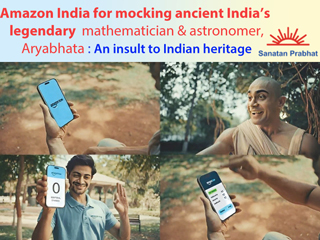 Amazon Insults Aryabhata : Hindu Janajagruti Samiti serves legal notice
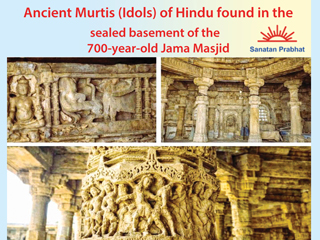 Murtis of Hindu Deities found in the basement of Jama Masjid in Bharuch (Gujarat)
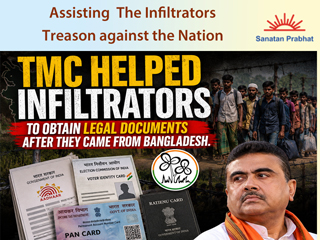 Bengal insight : Is assisting infiltrators not treason against the Nation ?