
(Continued from Part 1)
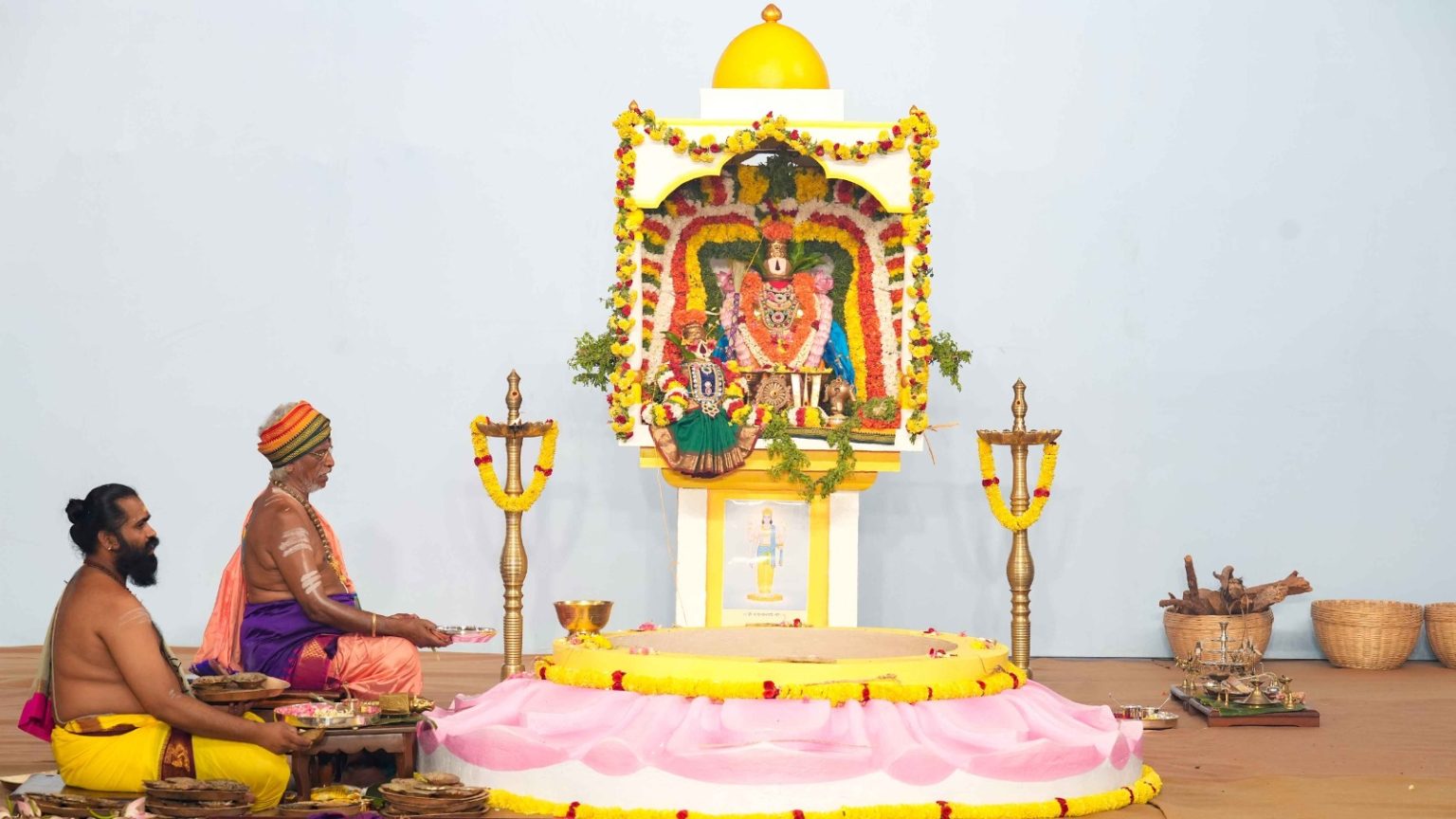
1 D. Positive effects on the surroundings and various components of the Yag : The effect of the Shri Dhanwantari Yag on the surroundings and various components such as the photograph of Deity Dhanwantari, Presiding Deity of the Yag, the yadnyakund (sacrificial pit) etc were studied. Negative energy was absent in all these components. Before the Yag a considerable amount of positive energy was found in all components which increased after the Yag. This is shown in the table given further.
| Components from the Yag | Positive energy aura in the components from the Yag (metres) | Positive energy aura in the components from the Yag (metres) |
| Before the Yag | After the Yag | |
| 1. Photograph of Deity Shri Dhanwantari | 45 | 155 |
| 2. Presiding Deity of the Yag | 547 | 733 |
| 3. Soil from the venue of the Yag | 2550 | 4530 |
| 4. Sample of air from the venue of the Yag | 3520 | 5425 |
| 5.Yadnyakund | 3645 | 5650 |
1 D 1. Conclusions : There was an increase in positivity of approximately 110 metres in the picture of Deity Shri Dhanwantari and 186 metres in the Presiding Deity of the Yag. The rise in positive energy in the samples of soil and air from the venue of the Yag and the yadnyakund was approximately 1900 to 2000 metres, which is indeed remarkable. This shows how the Shri Dhanwantari Yag had an immense positive effect on the surroundings and various components from the Yag.
1 E. Unique research pertaining to creation of the yadnyakund : A beautiful yadnyakund in the shape of a lotus was constructed at the venue of the Yag, as per the guidance of Maharshi. The construction commenced on 14.5.2025 and was completed on 16.5.2025. Photographs of this yadnyakund in various stages of construction were taken. During the Celebrations on 19.5.2025 the Shri Dhanwantari Yag was held from 3.30 pm to 7 pm. As this yadnyakund was at a short distance from the dais of the Celebrations the effect of the Celebrations on the yadnyakund was studied by taking photographs of the yadnyakund everyday. Further readings of these photographs were taken using a pendulum. Details of this are given in the table further.
| Photographs of the yadnyakund in various stages of construction | Positive energy aura (metres) in photographs of the yadnyakund |
| 1. After a pit was dug to construct a yadnyakund (14.5.2025) | 145 |
| 2. After the yadnyakund was built with bricks (15.5.2025) | 300 |
| 3. After plastering of the yadnyakund was completed (15.5.2025) | 400 |
| 4. After painting of the yadnyakund was completed (16.5.2025) | 600 |
| 5. On the first day of Celebrations (17.5.2025) | 1000 |
| 6. On the second day of Celebrations (18.5.2025) | 1350 |
| 7. On the third day of Celebrations (19.5.2025) | 4045 |
1 E 1. Conclusions : The table shows that as the process of construction of the yadnyakund attained completion the positive energy in it started growing. It also increased progressively during the Celebrations. ‘From there at every stage the Sattva component in the yadnyakund went on increasing. Simultaneously the Divine Consciousness (Chaitanya) charged atmosphere of the Celebrations also had a positive effect on the yadnyakund.’
2. Spiritual analysis of observations from the study
2 A. Great amount of Divine Consciousness (Chaitanya) emanating from the Shri Dhanwantari Yag : The Yag was commenced with lighting of the traditional lamp by Shrisatshakti (Mrs.) Binda Singbal and Shrichitshakti (Mrs.) Anjali Gadgil. The Shri Ganesh Holy verse (shloka) was chanted collectively. Thereafter periodic readings of the Shrivishnusahastranam (thousand Names of Shri Vishnu) were commenced after the rituals of Punyahavachan, Mahaganapatipujan and Navagrahapujan. Priests invoked Deities into the Yag and worshipped them and performed havan, recitation of mantras etc wholeheartedly with spiritual emotion to win Their grace. Divine Consciousness was activated in Deity Dhanwantari. Various medicinal herbs were offered as oblations in the yadnyakund. Great amount of Divine Consciousness was emitted from the yadnyakund and this had a positive effect on all as given further.
1. Seekers attending the Yag imbibed Divine Consciousness from the Yag as per their potential and spiritual emotion.
2. The priests presided over the Yag wholeheartedly with spiritual emotion because of which they derived spiritual benefit from it.
3. Married couples who had made a resolve (sankalp) for the Yag imbibed Divine Consciousness from the Yag as per their potential and spiritual emotion because of which they derived spiritual benefit from it.
2 B. Reason for Sattva component in great amounts generated from the yadnyakund : Seekers constructing and painting the yadnyakund toiled day and night to create a unique lotus shaped yadnyakund. As it assumed shape its Sattva component increased progressively. This shows how if construction and painting is undertaken in a sattvik manner, as spiritual practice, then it is able to generate a lot of Sattva component.
2 C. As all components associated with the Yag were sattvik its outcome was excellent : This Yag was performed with the objective of protecting the health of all seekers in the upcoming period of disaster and for early establishment of a Sanatan Nation. Maharshi had made a resolve (sankalp) for performing the Yag and it was performed with the service (seva) attitude. All the three Gurus of the Sanatan Sanstha who hosted the Yag are highly evolved Saints striving towards the welfare of society. Seekers from the country and abroad, Saints, Hindu protagonists, activists, dignitaries etc attended the Yag which was completed in an atmosphere enriched with Divine Consciousness. In short, as all components associated with the Yag were sattvik the outcome was excellent.
– Mrs. Madhura Dhananjay Karve, Maharshi Adhyatma Vishwavidyalay, Goa (1.8.2025)
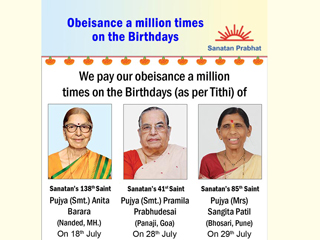 We pay our obeisance a million times on the Birthdays (as per Tithi) of
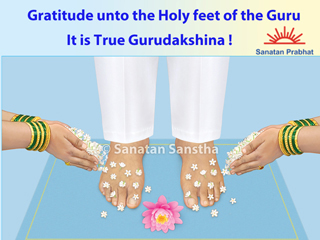 Offering gratitude unto the Holy feet of the Guru is true Gurudakshina !
 Messages of the Gurus on the occasion of Guru Purnima (29th July)
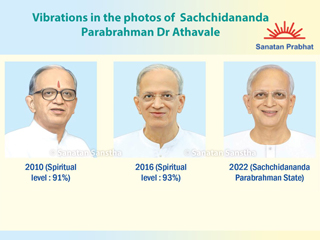 Sadguru (Dr) Mukul Gadgil’s analysis of the vibrations in the photos of Sachchidananda Parabrahman (Dr) Athavale, corresponding to His spiritual level at different times
 Projects of funding commercial complexes worth Rs 246 crore using temple funds cancelled by Tamil Nadu Government
 Salutations unto the Guru !