
What Is the Purpose of Human Life? A Journey Towards Lasting Happiness and Fulfilment
Key Insights• Lasting happiness cannot be found solely through possessions or achievements.• Change is the only constant in human life.• Much of our suffering arises from resisting reality rather than accepting it.• Although we cannot control every circumstance, we can always choose our response.• Selfless service, compassion, and positive choices contribute to enduring fulfilment. |
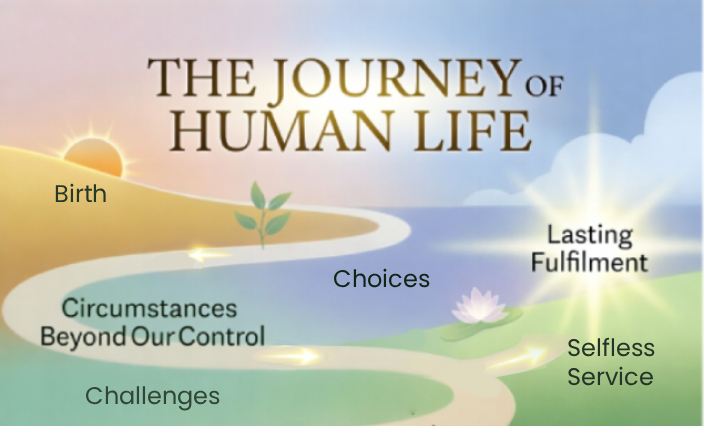
The Central Question
If we cannot control every circumstance in life, what truly determines whether we experience suffering or fulfilment? This essay invites readers to explore whether the purpose of human life lies not in controlling events, but in transforming the way we respond to them.
Humanity spends much of its time seeking happiness and fulfilment. Yet despite extraordinary advances in science and technology, lasting joy seems rare.
We yearn for peace and security while remaining fascinated by conflict. Violence fills the headlines, while entertainment portrays aggression and revenge as admirable or heroic. Even nations resort to fighting to resolve their disagreements.
Why Do We Continue Searching for Happiness?
This leads to an important question: Do we fully understand the function of human life?
Beneath the identities people fight in the name of lies, a reality shared by all—no one chooses the body into which they are born. Nor do we select our parents, appearance, nationality, language, belief system or circumstances at the time of our birth. These realities exist before personal choice begins.
Acceptance: The Foundation of Inner Peace

Every day life demonstrates another foundational reality—change is inevitable. Bodies mature. Relationships evolve. Circumstances progress. People enter our lives and later unexpectedly depart. Everything visible shifts with time. Change is the one constant for humanity.
Why We Resist Reality
If the basis of our existence as humans is beyond our control, why then do we strongly resist what life brings? Though we are aware of reality, much of humanity fights the movement of life itself. People struggle against what they cannot control, becoming frustrated when events progress differently from what they imagined. When reality fails to conform to their expectations, disappointment, conflict, and discomfort often follow. Complaining and quarrelling have become humanity’s favourite pastime. We argue with circumstances, resist outcomes, and fight against change, yet life continues unfolding whether we approve of it or not.
Fighting reality is a battle no one has ever won.
Human suffering, therefore, appears connected not merely to challenging circumstances, but to resisting life. This reveals an important possibility—much of our discomfort may arise from our reactions to events rather than the events themselves.
Living in the Present Moment

Our non-acceptance of reality is illustrated by how much our attention remains divided between the past and the future. Humanity revisits memories—often coloured by disappointment or regret—while simultaneously projecting hopes, fears, and expectations into the future. Yet life itself is experienced only in the present, for the moment of now is the only reality. The past is over. The future is adjustable, based in part on what we choose right now.
We may be so occupied with our thoughts and pursuits that something more fundamental has been overlooked. Do our plans unfold exactly as expected? Rarely. Directions change. Circumstances shift. What once appeared essential soon becomes unnecessary. Global events reveal the same reality—life continues moving forward whether we like it or not, while control beyond ourselves remains limited.
Life is experienced only in the present, for the moment of now is the only reality.
If life’s conditions are uncertain and control is minimal, perhaps our fulfilment cannot entirely depend upon them. Acceptance, therefore, teaches us how to live with reality. Our responses determine how we participate within it. And in many ways, honesty begins with our acceptance of reality.
If circumstances cannot always be chosen, perhaps the quality of our responses matters more than we realise. Challenges, then, are more than interruptions in life—they reveal aspects of ourselves that would otherwise remain hidden. Patience is rarely discovered without delay. Courage is seldom revealed without uncertainty. And compassion often emerges only after suffering has been experienced.
Our attachment to specific outcomes can then gradually diminish as experiences repeatedly reveal that making the most of the journey toward a destination is more important than our arrival there.
Pause and Reflect!
• What aspects of my life am I resisting?
• How do I usually respond to unexpected challenges?
• Are my choices guided by temporary desires or lasting values?
• What positive contribution can I make to those around me today?
Our Responses Shape Our Lives
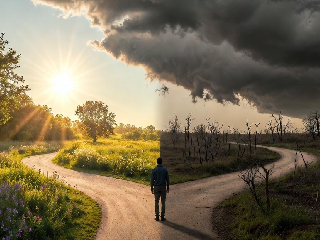
Although events are not always within our control, how we respond to them always is. At every moment, there is a crossroads of choice between positive and negative responses—patience or anger, understanding or bitterness, cooperation or conflict, selfless service or self-interest.
Just because we can do something does not mean we should. The cumulative effect of our choices gradually influences the direction and quality of our lives. For this reason, our decisions may ultimately prove more important than circumstances. What we choose now is more powerful than anything we have done in the past, for positive responses often transform situations that initially appear difficult.
Qualities such as integrity, empathy, and adaptability, once enacted, not only benefit others; they also shape the experiences of the individual expressing them, positively influencing both the giver and the receiver.
Even people who behave negatively wish to receive compassionate responses when they suffer. This suggests that empathy may be closer to our natural state than we realise.
If every person wishes for benevolent treatment regardless of their actions, why are we not consistently extending the same care to others? Why is harm justified if we ourselves do not wish to be harmed? We often forget that whatever we choose eventually returns to us.
If everyone desires dignity and respect, then practising these principles in our interactions with others becomes not merely an ideal but a practical way of living. With this understanding, we may begin approaching life differently. Instead of asking, “What can I gain from life?” we may begin asking, “How should I respond to life?” and “What is the best contribution I can make during my time on Earth?”
Human life may then be teaching us how to participate constructively within it while contributing positively to others’ well-being. Seen from this perspective, living appears less like a struggle for control and more like a process of transformation.
What Is Humanity Truly Searching For?

This raises another question—what is humanity ultimately searching for?
Behind all our actions lies the hope that temporary happiness will one day become everlasting joy. But after immense time and energy invested in our endeavours, lasting fulfilment often remains elusive. Even when desires are fulfilled, the satisfaction they bring is usually temporary. If we do realise our dreams, achievement eventually becomes a memory, and every position, possession, and accomplishment is left behind with time.
Our experiences repeatedly demonstrate that what we acquire only momentarily satisfies us. Life, then, may be less concerned with fulfilling our expectations than with revealing our responses. Every step presents an opportunity for us to choose positivity or negativity, and that choice influences what unfolds next.
Perhaps this is what exists beyond the surface—that the deeper function of living is not simply to get what we want or to please ourselves, but to develop the qualities through which we can participate positively in life.
The Central MessageHuman fulfilment does not arise from controlling life or acquiring more possessions. It emerges through accepting reality, making positive choices, developing noble qualities, and serving others without expectation of reward. |
The Function of Human Life

In a world increasingly occupied with negativity, where destructive behaviour is often celebrated, and less-than-positive actions are justified for temporary excitement, we must become truly human first. Kind, caring, compassionate, and service-oriented. These qualities strengthen individuals, families, and communities beyond ourselves.
What we become is more important than what we acquire.
It is clear then that the enduring joy humanity seeks is not the result of obtaining what it desires. Rather, it emerges naturally when we consistently choose positivity and selfless service without expectation of reward. We may then discover that lasting happiness was never hidden in what we acquire or experience, but in what we become. In embodying these primordial attributes, lasting fulfilment may be realised not in controlling outcomes, but in learning how to respond to them positively.
Life will continue presenting circumstances beyond our control, and the direction of our lives will be influenced by how we respond to them. The function of life, then, is not merely to acquire or control, but to learn, develop our character, choose positivity at every crossroads and serve others with every opportunity.
About the Author

Ananda Mathews, known professionally as Matthew David DOP, is a Mumbai-based cinematographer and author residing in Goa. He engages in psycho-spiritual counselling and social service throughout Bharat alongside his Guru Ji, Divine Colonel – Ashok Kini Ji. His first book, In Quest of Guru, and forthcoming Living Science explore the journey of human transformation.
 NCERT textbook mentions a verse from Manusmriti to highlight women were respected during Vedic period
 Smoking causing an extreme effect on the Kundalini-chakras of a seeker
 5 Hindu youths arrested for consuming meat and alcohol on a boat in the River Ganga
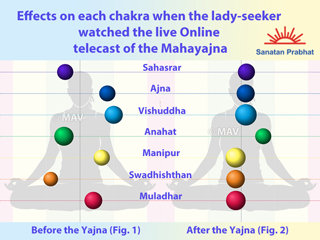 Six Kundalini-chakras of a lady-seeker becoming conducive to imbibing Chaitanya after watching the Shri Rajamatangi Mahayajna Online
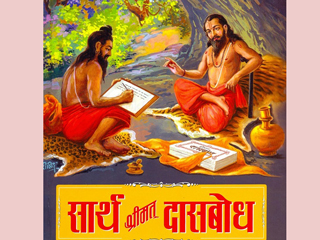 Spiritual Research on the vibrations emitted from a Spiritual Text and a handwritten Spiritual Text
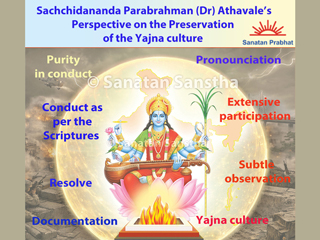 Sachchidananda Parabrahman (Dr) Athavale’s perspective on the preservation of the Yajna culture