
On the occasion of ‘International Day Against Drug Abuse’ on 26 June 2026……..
A scientific experiment conducted by Maharshi Adhyatma Vishwavidyalay using the Bio-Well GDV (Gas Discharge Visualisation) device
June 26th is observed as ‘International Day Against Drug Abuse’. On this occasion, a study was undertaken by the Maharshi Adhyatma Vishwavidyalay to examine the effects of smoking on an individual’s Kundalini-chakras. In the experiment conducted, a seeker (who does not smoke; but participated solely as a service unto the Shri Guru’s research work) took eight puffs of a cigarette. The observations for this experiment were recorded using the Bio-Well GDV device (Note 1). This scientific instrument is used to study the condition and functioning of an individual’s Kundalini-chakras.
🚭 #InternationalDayAgainstDrugAbuse | What Does Smoking Do to the Body's Energy Centres?
🧘 On the occasion of the International Day Against Drug Abuse (26 June), a scientific experiment by Maharshi Adhyatma Vishwavidyalay (@spiritual_uni) using the Bio-Well GDV (Gas Discharge… pic.twitter.com/TrX7ylwR9Z
— Sanatan Prabhat (@SanatanPrabhat) June 27, 2026
Note 1 : Overview of the Bio-Well GDV (Gas Discharge Visualisation) Device
Bio-Well GDV device
The Bio-Well device has been developed by a team of researchers under the leadership of Dr Konstantin Korotkov in Russia. It is based on Gas Discharge Visualisation (GDV) technology and incorporates a specialised camera and a computerised system designed to assess an individual’s energy field. During the experiment, each finger of the subject’s hand is exposed to a mild, painless electrical impulse for less than one second. This stimulus promotes the emission of photons and electrons, the extremely subtle particles, from the surface of the skin. Images of photon emissions from each finger are captured by the camera integrated into the Bio-Well GDV device. Based on these images, the computerised system generates information regarding the individual’s energy field and Kundalini-chakras . |


Sadguru (Dr) Mukul Gadgil
1. Useful parameters for interpreting the size and position of the seven Kundalini-chakras in the images generated by the Bio-Well GDV device
1A. The size of a Kundalini-chakra : According to the computerised image obtained by the Bio-Well GDV device, when the size of a chakra is within the normal range, it indicates that the chakra is supplying an adequate amount of subtle energy to the organs and systems associated with it.
1B. The location of a Kundalini-chakra : Similarly, when a chakra is located on or near the central axis (midline), its position is considered balanced.
1C. The functions of the Kundalini-chakra : In general, the lower three chakras—Muladhar (The first centre in the spiritual energy flow system, located in the region between the anus and the base of the genitals in the subtle body), Swadhisthan (The second centre in the spiritual energy flow system, located in the region of the genitals in the subtle body) and Manipur (The third centre in the spiritual energy flow system, located in the region of the navel in the subtle body)—provide the subtle energy required for an individual’s physical activities and bodily functions. The upper four chakras—Anahat (The fourth centre in the spiritual energy flow system, located at the mid chest level in the subtle body), Vishuddha (The fifth centre in the spiritual energy flow system, located in the throat in the subtle body), Ajna (The sixth centre in the spiritual energy flow system, located in the mid-brow region in the subtle body), and Sahasrar (Notional opening situated at the crown of the head, which leads to realisation of God)—provide the subtle energy required for an individual’s mental, intellectual, and spiritual activities.
1D. The functions of an individual’s left and right sides of the body : According to the Yogic science, the Ida nadi (Moon channel) flows along the left side of the body, while the Pingala nadi (Sun channel) flows along the right side. The Ida nadi is considered calm and cool, whereas the Pingala nadi is considered dynamic and intense. The left side of the body is considered conducive to subtle-level functioning, while the right side is associated with and supportive of gross, physical-level activities.
1E. A Kundalini-chakra being positioned to the left or right of the central axis : According to the computerised image obtained by the Bio-Well GDV device, if a chakra is positioned to the left of the central axis, it is interpreted as indicating that the chakra is in a non-functional (nirgun [Non-materialised] state) or the individual has become introverted. Similarly, if a chakra is positioned to the right of the central axis, it is interpreted as being in an active (sagun [Materialised] state) or the individual has become extroverted.

2. Comparative analysis of the effects of smoking on each of the seeker’s Kundalini-chakras
In this experiment, computerised images depicting the condition of the seeker’s Kundalini-chakras were obtained using the camera integrated into the Bio-Well GDV device. These images are presented below.
The chakras are displayed from top to bottom in descending order in the following sequence in the images :
1. Sahasrar
2. Ajna
3. Vishuddha
4. Anahat
5. Manipura
6. Swadhisthan
7. Muladhar
2A. The testing of the seeker at five distinct stages using the Bio-Well GDV device to study the effects of smoking, and the corresponding five images obtained
For analysis, the image from each stage after smoking was compared with the image from the immediately preceding stage. For example, the image obtained immediately after smoking was compared with the image obtained before smoking.
3. The interpretation of key findings based on the research study and their spiritual analysis
3A. Smoking
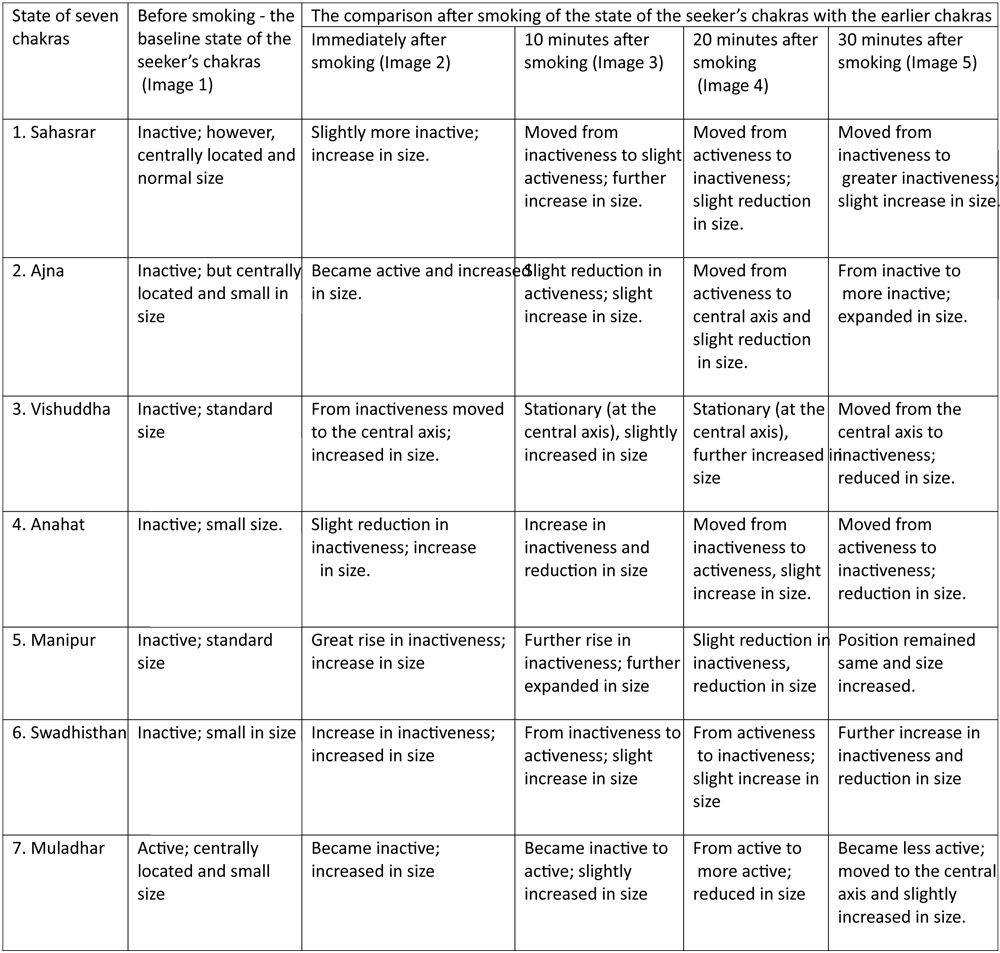
3A 1. The state of the seeker’s Kundalini-chakras was favourable before smoking
Image 1 – State of Kundalini-chakras before smoking

3A 1A. Before smoking, the seeker’s 3 chakras were aligned along the central axis : This seeker had been performing Dhyan (Meditation) sadhana (Spiritual practice) from 2017 for 3–4 years. Thereafter, he began performing sadhana under the guidance of Sanatan Sanstha. In 2021, he became a full-time seeker at Sanatan’s Ramnathi Ashram in Goa. This sadhana was the spiritual reason why the seeker’s 3 Kundalini-chakras —Sahasrar, Ajna, and Muladhar—were aligned along the central axis. This alignment indicates that these chakras were favourably disposed to imbibe Chaitanya (Divine Consciousness). Spiritually, this is a good state.
3A 1B. The seeker’s remaining 4 chakras were inactive before smoking, as he was mentally singing a bhajan by Param Pujya Bhaktaraj Maharaj : While travelling to Nageshi—a separate location a short distance from Sanatan’s Ramnathi Ashram—for the experiment, the seeker automatically began mentally singing the bhajan ‘Chinta Karu Mi Kashala, Mazhi Kalaji Devala’ (Why should I worry, when God cares for me) sung by Param Pujya Bhaktaraj Maharaj. In fact, he mentioned that he had rarely ever sung that bhajan. As his mind was absorbed in the bhajan, the seeker was in an introverted state before the experiment. Consequently, his remaining 4 chakras were in an inactive state. Spiritually, this too is a good state.
3A 2. The effect on chakras immediately after smoking
Image 2 – State of Kundalini-chakras immediately after smoking

3A 2A. I3A 2A. Increase in sizes of all chakras : The negative energy generated by smoking affected all the chakras. As the chakras became charged with this negative energy, their size increased.
3A 2B. Four chakras becoming inactive due to the negative energy : The negative energy caused the Sahasrar, Manipur, Swadhisthan, and Muladhar chakras to become inactive.
3A 2C. Apparent activation of three chakras : Smokers often believe that smoking alleviates stress or despondency and produces a feeling of renewed energy. As a result, they experience an illusory sense of enthusiasm. A similar apparent effect was observed in some of the seeker’s chakras during the experiment. The Ajna and Vishuddha chakras appeared to become active, while the degree of inactivity of the Anahata chakra was slightly reduced.
3A 3. The effect on chakras 10 minutes after smoking
Image 3– State of Kundalini-chakras 10 minutes after smoking

3A 3A. Further increase in the size of six out of the seven chakras due to the adverse effect of smoking : The Sahasrar, Ajna, Vishuddha, Manipur, Swadhisthan, and Muladhar chakras received negative energy, causing their size to increase further. This indicates that even 10 minutes after smoking, the seeker was still experiencing the adverse effects of smoking.
3A 3B. The Anahata-chakra was the first to resist the negative energy of smoking : Through the Anahata-chakra, the seeker’s Chaitanya resisted the negative energy generated by smoking. As a result, the level of negative energy in the chakra decreased, causing a slight reduction in its size. The chakra also adopted a defensive posture by increasing its inactiveness slightly.
3A 3C. Apparent activation of three different chakras : As a result of the negative energy generated by smoking, three different chakras—Sahasrar, Swadhisthan, and Muladhar—seemingly became active.
The apparent activation of the Ajna and Vishuddha chakras in the previous stage (immediately after smoking) ceased at this stage (10 minutes after smoking). Of these, the activeness of the Ajna-chakra decreased slightly, while the Vishuddha-chakra remained as active as it had been earlier. In contrast, at this stage, the Anahat-chakra began to resist the negative energy.
3A 4. The effect on chakras 20 minutes after smoking
Image 4 – State of Kundalini-chakras 20 minutes after smoking

3A 4A. At this stage, four additional chakras—the Sahasrar, Ajna, Manipur, and Muladhar —began to resist the negative energy generated by smoking, and the consequent effects on these chakras
1. As these four chakras—the Sahasrar, Ajna, Manipur, and Muladhar —began to resist the negative energy, the level of negative energy within them decreased, resulting in a reduction in their size
2. The activeness of three chakras—the Sahasrar, Ajna, and Muladhar —decreased slightly. This indicates that they adopted a defensive strategy.
3. The inactiveness of the Manipur-chakra decreased slightly, indicating that it had begun to resist the negative energy more vigorously.
3A 4B. The Anahata-chakra also resisted the negative energy generated by smoking; consequently, its size reduced, and it abandoned its defensive strategy and became active to resist the negative energy.
3A 4C. The adverse effects of smoking continued to affect the Vishuddha and Swadhisthan chakras : Even 20 minutes after smoking, the Vishuddha and Swadhisthan chakras continued to reel under the adverse effects of smoking. As a result, the size of these chakras increased further.
3A 4D. The Swadhisthan chakra, which had apparently become active in the previous stage, became inactive at this stage : This indicates that the apparent activation of the chakra had ceased completely.
3A 5. The effect on chakras 30 minutes after smoking
Image 5 – State of Kundalini-chakras 30 minutes after smoking

3A 5A. The remaining two chakras – Vishuddha and Swadhisthan also began to resist the negative energy generated by smoking : At this stage, the Vishuddha and Swadhisthan chakras were resisting on the strength of Chaitanya. Consequently, the level of negative energy in them decreased, resulting in a reduction in their size. Furthermore, these chakras adopted a defensive strategy and became inactive.
This indicates that, by 30 minutes after smoking, all the chakras had begun to resist the negative energy generated by smoking. Thus, it can be inferred that the adverse effects of smoking persisted for approximately 30 minutes.
3A 5B. An increase in the size of the Sahasrar, Ajna, Manipur, and Muladhar chakras : The Sahasrar, Ajna, Manipur, and Muladhar chakras were resisting the negative energy generated by smoking at the level of Chaitanya. Consequently, these chakras received Chaitanya, leading to an increase in their size. As these chakras maintained a defensive stance, they continued to resist the negative energy while remaining in an inactive state.
3A 5C. A decrease in the size of the Anahata-chakra and it becoming inactive : The Anahata-chakra was the first to begin resisting the negative energy generated by smoking, for which it had also become active. Now, as all the other chakras stood ready to resist the energy, and because a significant amount of the Anahata chakra’s positive energy was spent in the fight, its size decreased slightly. Consequently, it then adopted a defensive stance and became inactive.
4. Testing of the seeker conducted using a pendulum
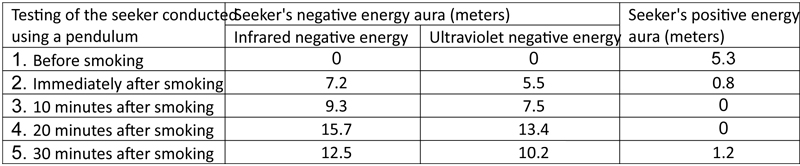
The following points can be inferred from the table above table
A. Due to the seeker’s sadhana, he did not possess any negative energy before smoking. Furthermore, the positive energy within him was also at a good level.
B. Immediately after smoking, he imbibed negative energy, and his positive energy decreased substantially. Subsequently, the positive energy within him completely vanished.
C. The negative energy in him continued to increase up to 20 minutes after smoking.
D. Thirty minutes after smoking, the negative energy in the seeker decreased slightly, and a small amount of positive energy began to reappear in him.
E. The testing of the seeker conducted using the Bio-Well GDV device also revealed the same conclusion—that the adverse effects of the negative energy generated by smoking were felt by the seeker’s chakras for up to 20 minutes.
F. In the testing conducted with the Bio-Well GDV device after 30 minutes, it was also observed that, at that time, all his chakras began to resist the negative energy generated by smoking. Consequently, the pendulum testing revealed that at that moment, the negative energy in him decreased, and positive energy began to appear once again.
It indicates that the evaluation conducted with the help of the Bio-Well GDV device and the testing conducted using the pendulum are consistent with each other.
5. Conclusion
A. If one performs sadhana persistently and consistently for many years, the state of the Kundalini-chakras remains good. Since the Kundalini-chakras supply the subtle energy for all physical, mental, intellectual, and spiritual functions of an individual, the optimal functioning of the Kundalini-chakras is an essential and indispensable factor for success in every aspect of life. Naturally, the better the functioning of one’s Kundalini-chakras, the greater the guarantee of success in one’s life !
B. This experiment reveals that even the good condition of the Kundalini-chakras maintained through several years of full-time sadhana deteriorates significantly after taking just 8 puffs of a cigarette, as well as demonstrating how long its adverse effects persist.
C. This experiment demonstrates how smoking negatively impacts the seven chakras.
D. This experiment also revealed that the negative energy generated by smoking causes the chakras to become illusorily active. At one stage or other, every single chakra became illusorily active.
E. After smoking, the sizes of the Sahasrar and Manipur chakras increased the most. This indicates that these chakras absorbed the maximum amount of negative energy. Consequently, the most harmful impact of smoking was the reduction in the seeker’s ability to imbibe the Divine Principle and maintain healthy digestion. These are highly critical functions.
F. This experiment reveals how each chakra begins to resist in a stepwise manner. Which chakra will initiate the resistance first, and how the other chakras follow in sequence at each stage, is determined by the inherent capacity of an individual’s chakras.
G. After smoking, the seeker’s Kundalini-chakras sustained the negative effects generated by smoking for approximately 30 minutes. This timeline also depends on variables such as an individual’s physical capacity, sadhana, and the intensity of any spiritual distress he may be experiencing.
H. If an individual is free from spiritual distress and possesses a good foundation of sadhana, he can endure the harmful, Raja-Tama-predominant environment. This highlights the immense importance of both these factors in human life.
This experiment reveals that smoking adversely impacts an individual’s Kundalini-chakras, thereby negatively affecting both the gross (material) and spiritual dimensions of his life.
– Sadguru (Dr) Mukul Gadgil, Ph.D. (Chemistry), University of Mumbai and Dr (Mrs) Nandini Samant, Maharshi Adhyatma Vishwavidyalay, Goa. (28.5.2026)
 Postpartum woman at Rajasthan hospital mistakenly given B-positive blood instead of O-positive: Condition critical !
 Offering gratitude unto the Holy feet of the Guru is true Gurudakshina !
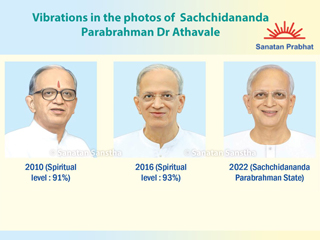 Sadguru (Dr) Mukul Gadgil’s analysis of the vibrations in the photos of Sachchidananda Parabrahman (Dr) Athavale, corresponding to His spiritual level at different times
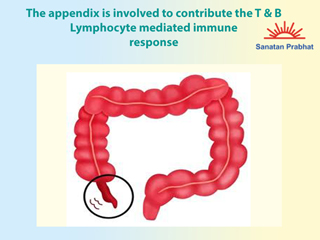 Amaja shula, Diet useful in Amaja shula, Diet beneficial in abdominal pain, Spiritual therapy & What is appendicitis.
 Guidelines from the Kurma Puran on the conduct of a Brahmachari (Disciple)
 O’ Seekers ! Intensify your sadhana by recognising the ploy of powerful negative energies, which are active in spreading doubts through the medium of Shabdashakti !