
ब्रह्मानन्दं परमसुखदं केवलं ज्ञानमूर्तिं
द्वन्द्वातीतं गगनसदृशं तत्त्वमस्यादिलक्ष्यम् ।
एकं नित्यं विमलमचलं सर्वधीसाक्षिभूतं
भावातीतं त्रिगुणरहितं सद्गुरुं तं नमामि ।।
– Shri Gurugeeta, 2.111 (Skanda Purana, Uttarakhanda, Uma-Maheshwara Dialogue)
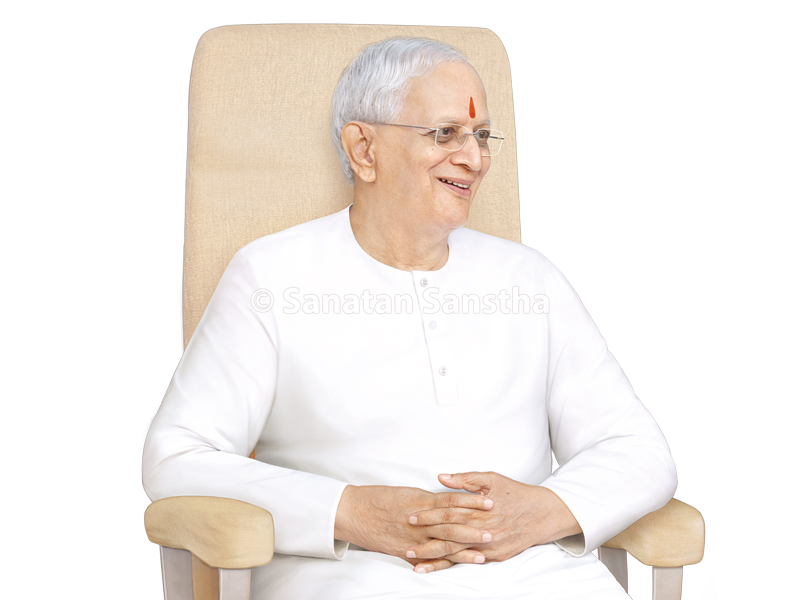
Meaning of the Shloka
I bow unto the Sadguru, Who is in the form of Brahmananda (Divine Bliss), Who bestows supreme happiness, Who is the one and only, Who is the embodiment of pure knowledge, Who is beyond the struggle between two (such as pleasure and pain, life and death, etc.), Who is like the sky (vast, protecting), and the One referred to by the great Truths ‘Tattvamasi (You are that [Brahman]); Who is eternal, pure, steady, Omniscient, the witness of all, beyond emotions, and beyond the three gunas (Sattva, Raja and Tama components).
The day of Vaishakha Krushna Saptami marks the Birth Anniversary of Sachchidananda Parabrahman (Dr) Jayant Athavale (fondly addressed as ‘Gurudev’). For seekers, Gurudev’s Anniversary is an intensely Chaitanya (Divine consciousness) imparting, Divine, and unparalleled occasion. It is the sacred moment that seekers await eagerly throughout the year.
As mentioned in the Saptarshi Jiva-Nadipatti, Gurudev’s Birth Anniversaries have been celebrated in different forms each year. In 2022, it was celebrated as a Rathotsav; in 2023, as a Brahmotsav; and in 2025, as the Sanatan Rashtra Shankhnad Mahotsav. Each year, the celebrations expanded in spiritual grandeur and magnificence. Through these events, devotees experienced the glorious form of the Guru’s mission; however, Gurudev’s true form extends far beyond, and that is His Nirgun (Non-materialised) form. On Gurudev’s Birth Anniversary in 2026, I bow in deep gratitude at His Holy feet and offer a few humble words about that Nirgun Guru Principle.
1. The Nirgun and Omnipresent nature of the Guru
At the beginning of spiritual practice, we perceive the Guru in a human body. But as spiritual practice deepens within us, we begin to realise the Guru’s vastness. The Guru’s true nature is not limited to the physical or manifest form. Fundamentally, the Guru is a Nirgun Principle – infinite, boundless, and Omnipresent. The Guru is beyond limitations of space and time. Wherever we look, the Guru Principle exists – in every particle, every being, and every moment.
2. The glory of the Guru described in the Shri Gurugeeta
The extraordinary nature and immeasurable greatness of the Guru are beautifully expressed by Deity Shiva in a Shloka in Shri Gurugeeta –
Brahmanandam paramasukhadam kevalam jnanamurtim,
Dvandvatitam gaganasadrisham tattvamasyadilakshyam.
Ekam nityam vimalamachalam sarvadhisakshibhutam,
Bhavatitam trigunarahitam sadgurum tam namami.
(Meaning is given in the introduction.)
3. How every word of this Shloka perfectly applies to Gurudev
Each word in this Shloka unveils a profound mystery of the Guru Principle. Explained ahead is how every single word applies perfectly and precisely to Sachchidananda Parabrahman (Dr) Jayant Athavale.
3A. Brahmanandam (Immersed in Supreme Anand) : God is beginningless and beyond space, time, and body. His nature is eternal Sat-Chit-Ananda-form (Truth-Consciousness-Bliss). The state of Brahman is Anand itself. Since Sachchidananda Parabrahman (Dr) Jayant Athavale is regarded as an incarnate Guru, although He appears in human form, He remains constantly immersed in Brahmananda. Being one with the Divine, His existence too is eternal and beginningless.
3B. Paramasukhadam (Bestower of Supreme Anand) : Worldly pleasures are temporary and intertwined with sorrow; however, the Guru grants supreme Anand, meaning eternal happiness. Gurudev has taught spiritual practice for attaining Anand so that seekers may experience everlasting Anand. Since He Himself dwells in Divine Bliss He guides seekers toward the same peak of transcendental Anand.
3C. Kevalam Jnanamurtim (Embodi-ment of Pure Knowledge) : True knowledge lies beyond the mind and intellect. When defects of the inner self (Mind, intellect, subconscious mind and ego) are removed and one transcends virtues, one attains the Nirgun state. Because Gurudev attained this state and His mind and intellect have merged with the Universal Mind and Universal Intellect, He is said to possess all knowledge.
Since 1986, He has continuously worked on compiling spiritual knowledge and authoring Texts so that seekers have their doubts resolved and the future generations benefit from this wisdom. Thus, the title ‘Embodiment of Pure Knowledge’ truly fits Him. He is the great epoch-making Guru who bestows upon seekers spiritual knowledge as well as supreme Anand.
3D. Dvandvatitam (Beyond dualities) : Even the Vedas become exhausted saying ‘Neti, Neti’ (Not this, not this) while attempting to describe the Supreme Brahman. Similarly, Gurudev’s spiritual state is so exalted that it can never be fully comprehended through the ordinary human intellect. His profound nature lies beyond all contradiction, duality, and conceptual limitation.
3E. Gaganasadrusham (Vast like the sky) : Just as the sky is formless, immeasurable, and all-pervading, Gurudev’s nature too is vast and Omnipresent. Therefore, seekers of Sanatan, wherever they may be in the world, continually experience the protective grace of the Guru like an all-encompassing sky.
3F. Tattvamasyadilakshyam (The One indicated by ‘Tattvamasi’) : The Guru is the one to whom the Vedic statement ‘Tattvamasi’ is addressed. Gurudev is the Sagun and Nirgun form of the Supreme Brahman. Vast like the sky, yet subtler than the subtlest, He perfectly embodies this Tattvamasi.
3G. Ekam Nityam Vimalamachalam (One, Eternal, Pure, and Steady) : Gurudev constantly remains in the state of Sat-Chit-Ananda (Absolute Truth-Divine Knowledge-Bliss). Hence, He is said to have little awareness of the physical body and experiences Chaitanya (Divine consciousness) primarily. Having transcended body-consciousness, He attained the state of Vimal (Supreme purity). Just as God’s position is unshakable, Gurudev too remains unwavering and incomparable – truly one without a second.
3H. Sarvadhisakshibhutam (Witness of all Intellects) : As the Nirgun Principle increased within Gurudev, His consciousness expanded universally. Since He pervades all as a Principle, nothing remains personal to Him. As a result, the sensations associated with Gurudev’s sense of ‘self’ have diminished. An example of this came in 2017, when Gurudev reportedly said, “Even while moving in my room, I feel as though I am staying in someone else’s room or a hotel room. I do not feel it is my room. The same applies to clothes, footwear, and everything else. Even the body does not feel like mine”.
These thoughts have now made me experience the true meaning of the Sanskrut statement ‘Idam Na Mama’, meaning, ‘This is not mine’. Earlier, I used to try to understand this only intellectually. Through this, I am also experiencing how one can gradually become free from Maya (The Great Illusion).
From this, one realises how Gurudev observes even His own body with sakshibhav (Observer stance), and how exalted is the Nirgun state that He experiences.
3I. Bhavatitam Trigunarahitam (Beyond emotions and the triguna) : One who transcends the triguna (The three basic components in the Universe – Sattva, Raja and Tama) observes events related to oneself as well as to others with sakshibhav. Since his sakshibhav has become his permanent state he lives his entire life in accordance with the Divine Will. Sachchidananda Parabrahman (Dr) Jayant Athavale has transcended triguna. Existing constantly in Shivatma (God-realised) state, He continuously experiences Moksha (Final Liberation). Because of this transcendence, the Marathi line of Param Pujya Bhaktaraj Maharaj’s bhajan, which means, ‘There is neither bhav nor emotion’ aptly describes His state.
3J. Sadgurum tam namami : I bow unto that Sadguru.
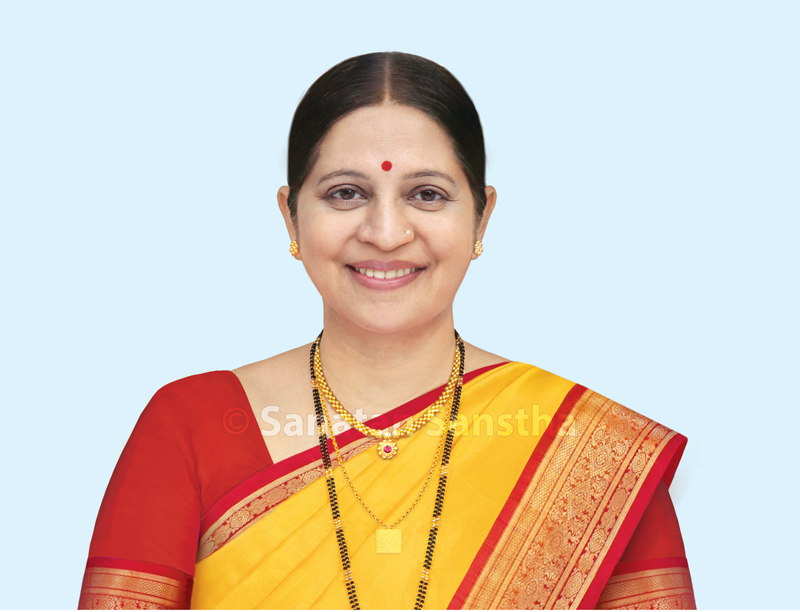
– Shrisatshakti (Mrs) Binda Nilesh Singbal
 Radiant Thoughts of Sachchidananda Parabrahman (Dr) Jayant Athavale
 We pay our obeisance a million times on the Birthday (as per Tithi) of
 Major win for Hindu unity : Maharashtra Government suspends the controversial ‘Devasthan Inam Abolition Draft Act’
 Mumbai-based advocate Siddhavidya, who is trying to stop trafficking through surrogacy (artificial pregnancy) and animals, and animal killing
 Construction of Sanatan Dharma Complex halted due to threats in Bangladesh
 Cuba 2026 : Why Havana Suddenly Matters Again