

The sacrifice of the soldiers and generals for the Hindavi Swarajya as envisaged by Chhatrapati Shivaji Maharaj is supreme. Similarly, in the present times, many devout Hindus and patriotic citizens of this country have been striving to protect the Nation & Dharma.
The ‘Warriors of Hindutva’ is a series of articles that sheds light on their life and their struggle to protect Hindu Dharma. We hope that it serves as a catalyst for the mission of establishing the ‘Hindu Rashtra’ and inspires many others. – Editor

1. Introduction to Pujya (Dr) Shivkumar Ojha
Pujya (Dr) Shivkumar Ojha was born on 23rd November 1933, in the village of Bojha in Etawah District, Uttar Pradesh. After completing his M.Sc. in Mathematics from Lucknow University, he obtained a Ph.D. in Aerodynamics from the Department of Aerospace Engineering at IISc, Bengaluru, where he also served as a lecturer. In 1967, he joined the Department of Aerospace Engineering at IIT Bombay as a professor.
During this time, he taught and studied various subjects related to aerodynamics, held several administrative positions, guided research projects, published research papers, undertook academic tours abroad, and authored the book ‘Flight Performance of Aircraft’, which was published in the United States.
2. Efforts to teach ‘Indian Culture’ at IIT Bombay
After retirement, Pujya (Dr) Ojha developed a deep interest in studying Indian culture, which then became his primary field of study and teaching. Due to his special efforts, ‘Indian Culture’ became a subject taught at IIT Bombay, and he himself taught it, instilling interest in students. The number of students enrolling in this subject increased every year during his tenure as a professor.
3. Authored 11 books on Indian Culture, Spirituality, Sanskrut, and more
Highlights of some key books : A deeply learned researcher of Indian culture, and one who practiced spiritual knowledge and selflessly dedicated his life to its upliftment, Pujya (Dr) Ojha authored 11 books on Indian culture, Spirituality, and Sanskrut. His 660-page book titled ‘Bharatiya Sanskruti : Mahan evam Vilakshan’ (Indian Culture : Great and Unique) is a concise summary of Sanatan Vedic culture. These books are written in Hindi and are being translated into Marathi.
A. ‘Sarvottam Shiksha Kya Hai ?’(What is the Best Education ?)
This book discusses how modern education leads people toward materialism and its harms, the meaning of ‘education’, flaws in English-based modern education, why education must be based on various standards and the benefits, the need for Dharma in education, intellect-ual damage to youth due to modern schooling, etc.
B. ‘Bharatiya Sanskruti Samajhna Anivarya Kyon ?’ (Why Is It Essential to Understand Indian Culture ?)
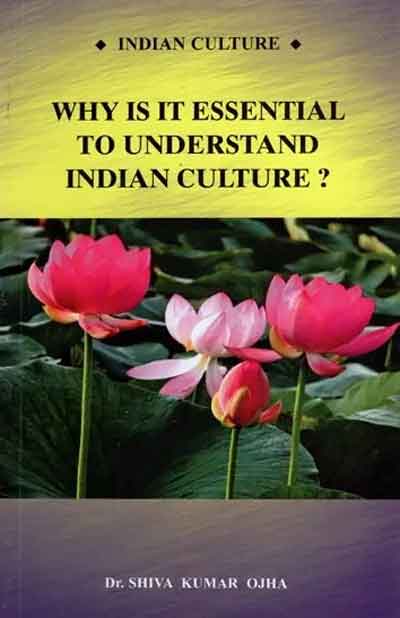
This book explores topics such as what is Indian culture, what is its core, why has Indian culture given importance to the Sanskrut, how does Indian culture explain the nature of Dharma, how does following this culture help one properly select life goals, how does it explain the science underlying Karma, what are the methods for inner purification suggested by this culture, etc. The book also contrasts the materialistic society with Indian culture.
C. ‘Bharatiya Sanskruti : Kendrabindu evam Tattva Kya Hai ?’ (Indian Culture : Core and Principles)
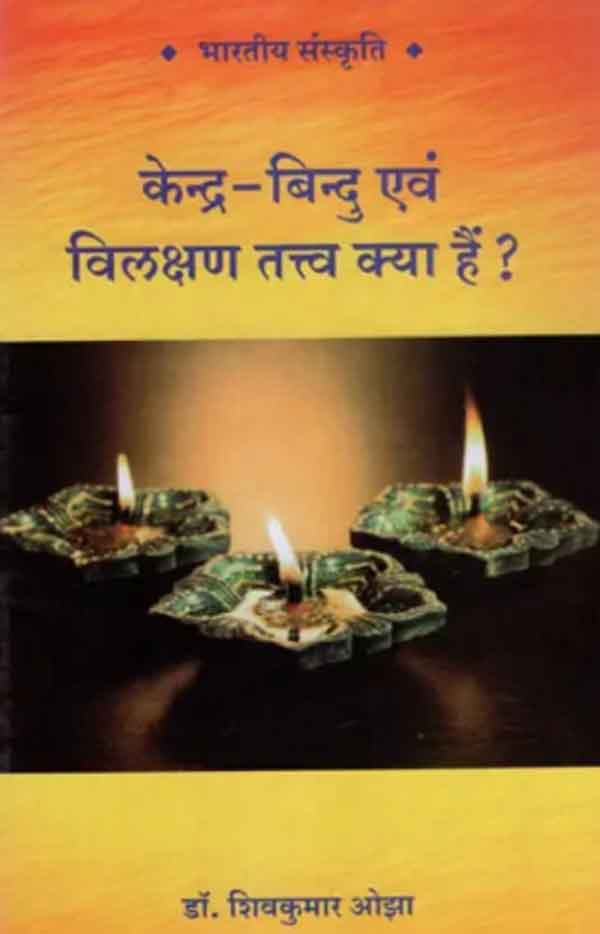
This book addresses the purpose of rituals, meditation, yoga, pranayam, chanting of mantras, tantra, and spiritual discourses, the central purpose of all these practices, what makes Indian culture the greatest, how does it bring stability to life, the disadvantages of gaining only material knowledge, etc.
D. ‘Sanskrut-Hindi Mahatvapurna Kyon, Prachar Kaise Ho ?’ (Why are Sanskrut and Hindi important, and how to promote them ?)
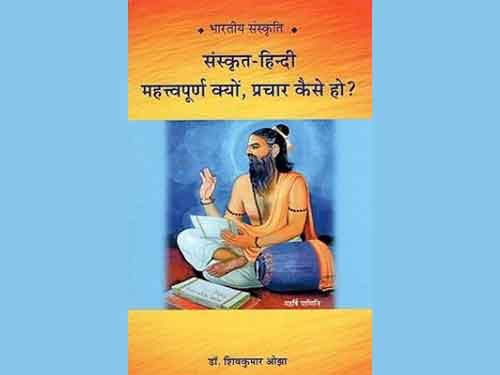
This book discusses the unique features of Sanskrut, its rich vocabulary, ways to promote Hindi and other languages, importance of correct pronunciation, etc.
These books are Divine gifts for scholars of Dharma, culture, and Spirituality – and a priceless treasure for the Hindu society. Their content represents the essence of Hindu literature and rightly deserve to be referred to as reference texts.
4. Studying Indian Culture awakens love for one’s mother tongue
A. Most lawyers don’t know about Nyay Darshan : There is significant ignorance about Dharma among Hindus. The Supreme Court of India itself once said that ‘Hinduism is a way of life’. If this wasn’t understood, the Court should have consulted religious scholars. Even lawyers lack education on Dharma. Sage Gautam’s Nyay Darshan defines what true justice is. Most lawyers don’t even know its name, let alone study it. Today, justice is defined only by evidence-based rulings, but this is a narrow view.
B. Decline in knowledge due to lack of proficiency in mother tongue : Our scholars do not study Hindu Dharma, and as a result, their scholarship has diminished. Since students do not receive education in their mother tongue, they acquire only limited knowledge, and their intellectual depth is also decreasing. Because people do not understand the meanings of many Sanskrut words related to life, they are also unable to grasp the true meaning of life. If Indian languages are spoken and studied, we will gain greater knowledge, and our self-confidence will increase. If Indian culture can be studied at IIT Bombay, it can surely be taught elsewhere as well. Through the study of Indian culture, self-confidence in one’s identity will grow. Language reflects a Nation’s culture. The current generation must be taught material and spiritual knowledge.
(Ref.: SanatanPrabhat.org/english/)
| If Indian languages are spoken and studied, we will gain greater knowledge, and our self-confidence will increase ! |
 Porous Borders, Shadow Operatives: Unpacking the Geopolitical Rift in the US-India Intelligence Relations
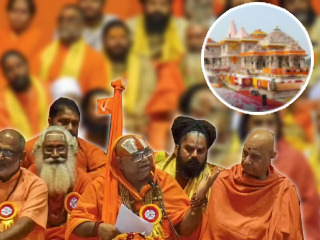 Shri Ram temple needs a devotee, not a government-appointed officer : Saints demand
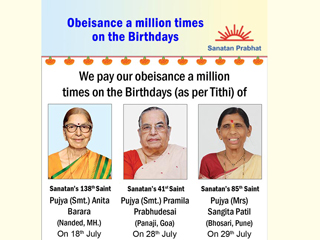 We pay our obeisance a million times on the Birthdays (as per Tithi) of
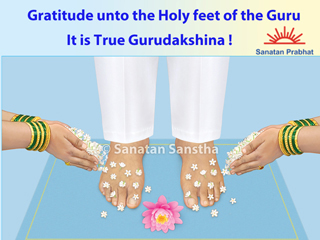 Offering gratitude unto the Holy feet of the Guru is true Gurudakshina !
 Messages of the Gurus on the occasion of Guru Purnima (29th July)
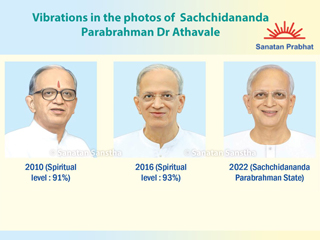 Sadguru (Dr) Mukul Gadgil’s analysis of the vibrations in the photos of Sachchidananda Parabrahman (Dr) Athavale, corresponding to His spiritual level at different times