
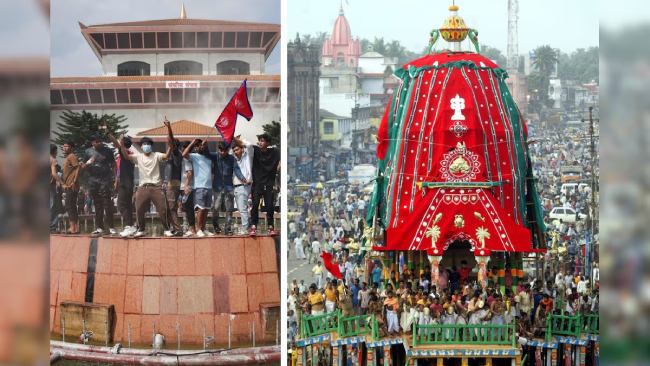
New Delhi – Nepal is currently facing severe instability. The youth-led movement there became so violent that Prime Minister K. P. Sharma Oli had to resign. More than 30 people were killed, government buildings were set ablaze, and a curfew was imposed in Kathmandu. Many reasons are being cited for this unrest, including the ban on social media; however, the servitors of the Jagannath Temple in Puri, Odisha, believe the real cause is the halt in the supply of musk from Nepal.
What is musk, and why is it important in Puri Temple ?
Musk is a rare substance obtained from the navel gland of the musk deer, found near Mount Kailash and Lake Mansarovar in the Himalayas. It holds immense ritual significance in the worship of Shri Jagannath, Balbhadra, and Subhadra at the Jagannath Temple in Puri.
According to servitor Dr Sarat Mohanty, ‘Musk is used in daily rituals as well as in special ceremonies. It is especially important in the secret ritual called ‘Banak Lagi’, where the Deities are decorated. It protects the wooden idols, carved from neem wood, from insect damage and enhances the divine radiance of the Idol’s face. Without musk, worship is considered incomplete, and sacred traditions are disrupted’.
Ancient spiritual bond Between Nepal and Puri
The kings of Nepal were of the Solar Dynasty, while the Gajapati kings of Puri belong to the Lunar Dynasty. The Jagannath tradition spiritually united both dynasties. In earlier times, the kings of Nepal regularly sent musk to Puri. They enjoyed the special privilege of worshipping on the Ratna Simhasana (bejewelled throne) of Lord Jagannath. According to Mukti Mandap scholar Pandit Santosh Kumar Das, musk was an inseparable part of this sacred tradition. Just as the Pashupatinath Temple of Nepal has a spiritual bond with Kedarnath in India, Puri also shares a similar sacred connection with Nepal. However, after the abolition of monarchy in Nepal in 2008 and due to wildlife protection laws, the supply of musk stopped. The Jagannath Temple has since had to rely on domestic sources, which are costlier and less effective. The temple administration says that it was Nepal’s king itself who cut off the supply.
Belief that Nepal faces calamities because musk supply stopped
Servitors firmly believe that Nepal’s crises are linked to the discontinuation of musk supply. Dr Mohanty recalled that earlier too, when musk supply had stopped, disasters like earthquakes struck Nepal. They argue that these events are interconnected. Servitors have appealed to the temple administration and the Government of India to make efforts to resume the supply of musk. They cited the sacred bond between Pashupatinath and Kedarnath as an example of how such traditions must be preserved. According to them, without musk, not only are rituals at the Jagannath Temple affected, but the ancient spiritual ties between Nepal and Puri are also weakened.
Editorial PerspectiveIt would not be a surprise if the so-called rationalists, driven by their anti-Hindu mindset, dismiss these matters with critical commentary merely to satisfy their prejudice ! |
 ‘Devasthan Inam Abolition Draft Act 2026’ put on hold
 Bangladesh alleges that India is forcibly pushing infiltrators across the border!
 India’s Coal Gasification Mission: Can It Reduce Energy Import Dependence?
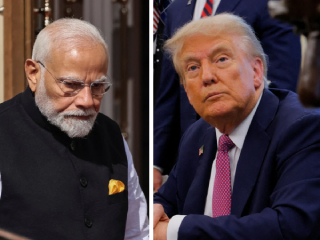 I like PM Modi, he is a good friend of mine: Donald Trump
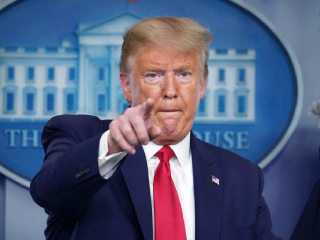 If our soldiers are targeted, war will erupt; Trump warns Iran
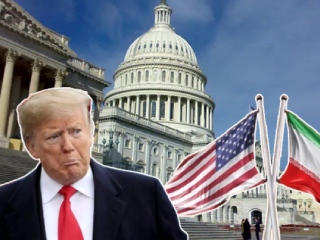 US House of Representatives passes resolution to halt war against Iran