
Fear of a ‘brain drain’ problem in US
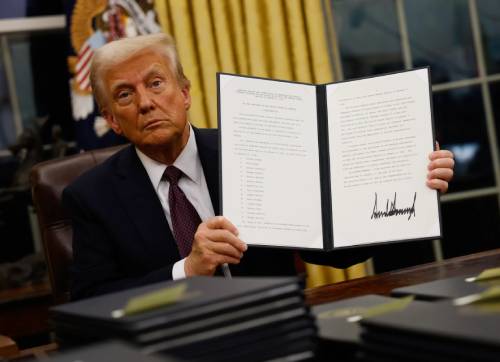
Washington, US – For the past several years, the US has been considered a heaven for global scientific talent, but now that country is losing its lustre. For the first time in 80 years, the country is facing a ‘brain drain’. A recent survey conducted by the American Association for the Advancement of Science has shown that 75% of scientists are leaving US or have already migrated to find new places in Europe and Asia. US President Donald Trump’s tough policies, such as cutting research funding, banning immigrant students and attacking academic freedom,m are the main reasons behind this ‘brain drain’.
1. Protests have also taken place in several states in the US against Trump’s decision to cut research funding. The funding cuts have broken the backbone of research.
2. The Trump administration has cut the National Institutes of Health grant by 40% for the year 2026. Along with this, there is talk of cancelling a grant of ₹13,000 crore from the National Science Foundation. Scientists have expressed concern that projects may be closed due to a lack of funds.
3. Countries around the world are now making various proposals to attract scientists working in fields like ‘Artificial Intelligence’, climate science and genetics. This has created a new level of competition globally. China and Europe are on hiring sprees. An analysis by the journal Nature captured the reversal: Applications from China and Europe for graduate student or postdoctoral positions in the US have dropped sharply or dried up entirely since President Trump took office.
4. The European Union has announced various large investment programs to attract scientists to Europe. A university in France that created new positions for scientists with cancelled federal grants capped applications after overwhelming interest. A scientific institute in Portugal said job inquiries from junior faculty members in the US are up tenfold over the last two months.
5. The University of Marseille in France has launched a program called ‘Safe Place for Science’ to provide shelter to scientists. Germany has made plans to attract scientists. Singapore’s Nanyang Technological University has proposed to American researchers to work there. The number of postdocs and graduate students in the US applying for jobs abroad has spiked.
 Nepal’s youth take to the streets again: Anger over unemployment !
 “Statues of Chhatrapati Shivaji Maharaj are being installed to target Muslims !” : France 24
 USA to seek extradition of gangster Lawrence Bishnoi imprisoned in India
 US attacks 140 Iranian military sites
 Racial discrimination against Indian truck drivers working in Australia
 Our DNA and India’s DNA are the same !