
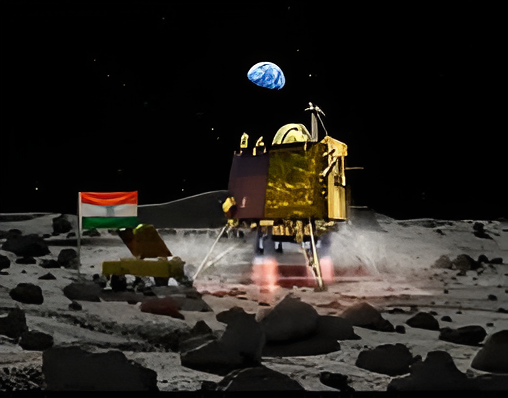
Down to Three Operational Satellites Amid Clock Failures
India’s homegrown Navigation with Indian Constellation (NavIC), formerly Indian Regional Navigation Satellite System (IRNSS), faces a critical juncture. Following the failure of IRNSS-1F on 13 Mar 26, only three satellites fully support core Position, Navigation, and Timing (PNT) services. This drops below the theoretical minimum of four needed for reliable 3D positioning, raising alarms for regional GNSS independence.
IRNSS-1F’s final clock malfunctioned after exceeding its life. Healthy survivors: IRNSS-1B, IRNSS-1I, NVS-01. Others, like 1A/C/D/E/G, offer one-way messaging only; NVS-02 struggles with propulsion. With four satellites, accuracy hit design specs (5-10m horizontal); three satellites risk geometry degradation.
Background and Design
Launched after the United States’ deliberate delay and denial of Global Positioning System (GPS) service to India during the 1999 Kargil War, NavIC aims for high-precision coverage over India and 1,500 km beyond. Its seven-satellite constellation – three geostationary (GEO), four inclined geosynchronous (IGSO) – delivers civilian Standard Positioning Service (SPS) at 5-10m accuracy in L5/S bands, plus strategic Restricted Service (RS). Of 11 launched satellites (IRNSS-1A to 1I and NVS-01/02), early atomic clock failures plagued reliability, with imported rubidium units from SpectraTime of Belgium, Europe, underperforming beyond 10-year lifespans.
Recent Setback: IRNSS-1F Clock Failure
IRNSS-1F was launched in March 2016. The SpectraTime atomic clock completed its 10-year design life on 10 Mar 2026, and it failed on 13 Mar 2026. Perfect timing to ensure no breach of contract! Coincidence, ..or…
This is the third failure in the fleet’s recurring issue. With imported clocks proving to be unreliable, ISRO now pushes indigenous alternatives in the newer NVS series.
Government Roadmap
Publicly known plans: NVS-03 (launch was scheduled in Jan 2026, status unconfirmed), NVS-04 (mid-2026, four months after NVS-03), NVS-05 (Q4 2026) via GSLV from Sriharikota. These 12-year lifespan birds add an L1 band and dual indigenous clocks for redundancy. Long-term: seven NVS for full regional restoration; potential 12 Medium Earth Orbit (MEO) satellites for global reach. Delays are tied to atomic clock technology maturation, including the development of reliable indigenous rubidium alternatives and testing for space qualification.
NavIC vs GPS. A Snapshot
| Feature | NavIC | GPS |
| Satellites | 7 planned (3 PNT now) | 31 operational |
| Coverage | India +1,500km | Global |
| Civ Accuracy | 5-10m regional | ~20m global SPS |
Path Forward: Urgent Recommendations For India
- Accelerate NVS launches with multiple clock redundancy.
- Mandate indigenous clocks; activate spares on healthy birds.
- Hybridise NavIC-GPS in mobiles (Qualcomm chips), drones, vehicles.
- Bolster ground stations, international ties (e.g., Japan QZSS).
NavIC’s woes underscore GNSS fragility but also display India / ISRO’s resolve. Swift measures as outlined above could reclaim the strategic edge by late 2026, blending regional prowess with global interoperability.

(The author Brigadier (Retd) Shri Sanjay Agarwal is a Former Security Advisor, Ministry of Home Affairs, GoI.)
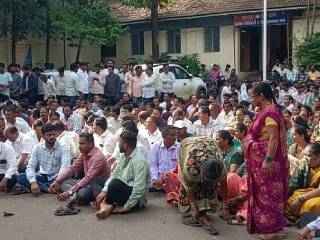 Villagers march to Kagal (Kolhapur district) Police Station in the ‘Love Jihad’ case and demand that the Hindu young woman be handed over to her parents !
 The Temple has fixed deposits worth ₹472 crore and gold and silver worth ₹300 crore !
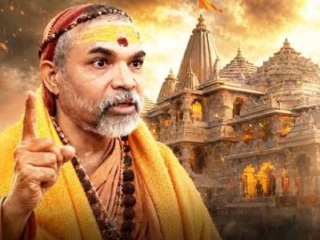 The Shri Ram Temple is an office of the BJP and the RSS; I will go for darshan when it truly becomes a Shri Ram Temple ! : Jyotish Peeth Shankaracharya Swami Avimukteshwaranand Saraswati
 Actor Aamir Khan is the ‘brand ambassador’ of ‘Love Jihad’; Boycott his films ! : Minister Nitesh Rane
 Jaunpur Hosts Seminar on Sanatan Dharma Awakening and Preservation of Vedic Culture
 Case registered against husband and wife for propagating Christianity at Sassoon General Hospital, Pune