
|

Guntur (Andhra Pradesh) – Ambati Rambabu, the president of the opposition political party YSR Congress (Yuvajana Sramika Rythu Congress), abused Chief Minister Chandrababu Naidu. Following this, workers of the ruling Telugu Desam Party (TDP) attacked Rambabu’s residence. After a complaint was filed, Police arrested Rambabu from his home. The YSR Congress has now begun politicising the issue.
After Rambabu used abusive language against Naidu, TDP workers staged protests for several hours on the streets of Guntur and near Rambabu’s residence. Subsequently, they vandalised his house and vehicles and also set them on fire. Rambabu had earlier served as the Water Resources Minister in the previous government.
A planned conspiracy to silence those who question the Government: YSR Congress allegesThe ideological bankruptcy of the YSR Congress becomes evident when it claims that abusing the Chief Minister amounts to raising one’s voice against the government. The YSR Congress alleged that Rambabu was subjected to a life-threatening attack and that his life is in serious danger. It claimed that a situation akin to “jungle rule” has emerged in Andhra Pradesh. According to the party, Chief Minister Naidu is allegedly presiding over an atmosphere of lawlessness and political vendetta. The party further alleged that such actions are deliberately carried out to intimidate voices questioning the government and that this is a well-planned conspiracy. |
Editorial Perspective
|
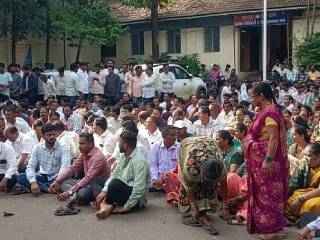 Villagers march to Kagal (Kolhapur district) Police Station in the ‘Love Jihad’ case and demand that the Hindu young woman be handed over to her parents !
 The Temple has fixed deposits worth ₹472 crore and gold and silver worth ₹300 crore !
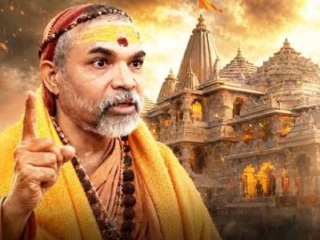 The Shri Ram Temple is an office of the BJP and the RSS; I will go for darshan when it truly becomes a Shri Ram Temple ! : Jyotish Peeth Shankaracharya Swami Avimukteshwaranand Saraswati
 Actor Aamir Khan is the ‘brand ambassador’ of ‘Love Jihad’; Boycott his films ! : Minister Nitesh Rane
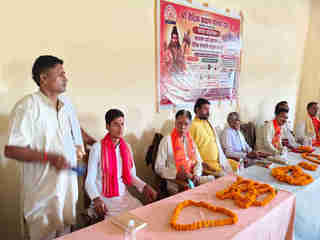 Jaunpur Hosts Seminar on Sanatan Dharma Awakening and Preservation of Vedic Culture
 Case registered against husband and wife for propagating Christianity at Sassoon General Hospital, Pune