
Claim in Bangladesh Election Surveys
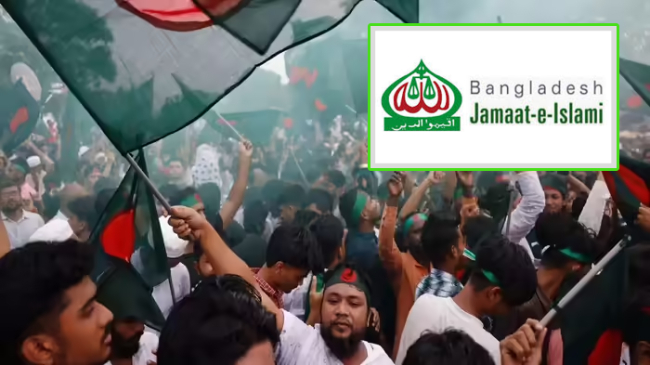
Dhaka (Bangladesh) – Bangladesh will hold its parliamentary general elections on 12 February. According to two recent independent surveys, the Pakistan-backed radical party Jamaat-e-Islami has emerged as the country’s second-largest political force. The party is posing a strong challenge to former Prime Minister Khaleda Zia’s Bangladesh Nationalist Party (BNP).
🚨 Bangladesh Election Alert 🚨
Reports from election surveys suggest Jamaat-e-Islami, a pro-Pakistan extremist outfit, could be part of the next government 🇧🇩
⚠️ Whoever takes power now, hostility toward India and Hindus seems inevitable.
🧭 This means India must stay… pic.twitter.com/g3DqaHBoc8
— Sanatan Prabhat (@SanatanPrabhat) January 23, 2026
A survey conducted in December 2025 by the US-based International Republican Institute found that the BNP had the support of 33% of voters, while Jamaat-e-Islami secured 29%. A subsequent joint survey conducted in January showed further narrowing of the gap, with BNP receiving 34.7% support and Jamaat close behind at 33.6%. This survey was jointly conducted by Narrative, Projection BD, the International Institute of Law and Diplomacy, and the Jagoron Foundation.
Jamaat-e-Islami had opposed Bangladesh’s independence in 1971 and had supported the Pakistani Army during the Liberation War. After Bangladesh attained independence, the party was banned in 1972. The ban was lifted in 1975, and in 1979, during the rule of Ziaur Rahman, Jamaat-e-Islami was allowed to participate in electoral politics once again.
Experts state that widespread public anger over the policies of the previous government has benefited Jamaat-e-Islami. Taking advantage of this dissatisfaction, the party is now presenting itself as an ethical alternative by promoting the slogan, “Islam is the only solution.”
Editorial Perspectives
|
 Iran attacks oil tankers in the Strait of Hormuz; Indian national killed
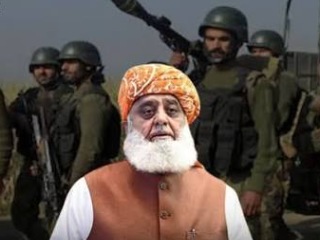 If you want to do politics, take off your uniforms and participate in the elections : Maulana Fazlur Rehman
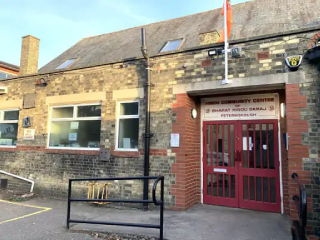 Temple premises sold to Muslims in an auction in Britain
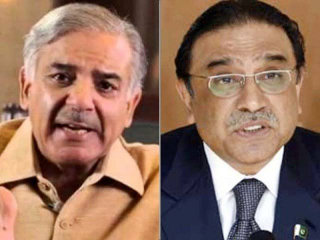 The Kashmir issue should be resolved in accordance with the UN resolutions !
 Nepal’s youth take to the streets again: Anger over unemployment !
 26/11 Mumbai attack was orchestrated jointly by the Congress and the ISI: RVS Mani