
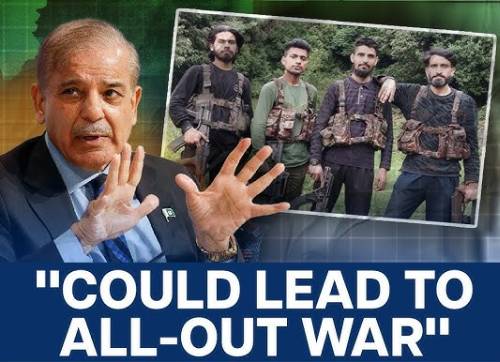
Washington (USA) — Pakistan continues to nurture a system that promotes terrorism and directly contradicts its international obligations, an analyst has said, noting that Pakistan’s enduring terror ecosystem aligns closely with the country’s long-standing military doctrine of “bleeding India with a thousand cuts” and that Islamabad’s terror ecosystems remain intact.
Siddhant Kishore, a national security and foreign policy analyst based in Washington, writing in The Milli Chronicle, that when Pakistan assumed the chair of the Shanghai Cooperation Organisation’s permanent anti-terror body, the Regional Anti-Terrorist Structure (RATS), last month, optics were striking with a state sponsor of terrorism now overseeing a regional network tasked with combating it.
“Until Pakistan matches words with actions, its participation in regional counterterror frameworks will remain a facade.” He called it “a state sponsor of terrorism now overseeing a regional network tasked with combating it.”
The networks of Jaish and Lashkar are still intact
Kishore said Pakistan’s long-standing military doctrine of “bleeding India with a thousand cuts” continues to drive its proxy strategy. “Under this logic, groups like Jaish-e-Mohammad (JeM) and Lashkar-e-Taiba (LeT) serve not merely ideological but strategic purposes,” he noted.
He pointed to Jaish-e-Mohammad (JeM) as an example, saying the group “continues to plan operations, maintain training facilities, and innovate its fundraising mechanisms.”
“JeM is attempting to rebuild as many as 313 terror hubs across Pakistan,” he wrote. He added that even after Operation Sindoor, which killed more than a dozen members of Masood Azhar’s family and destroyed JeM’s headquarters in Bahawalpur, Azhar “remains defiant in his terrorist drive against India.”
The analyst also noted public moves by the next generation of terrorists. He said the son of Lashkar-e-Taiba chief Hafiz Saeed “has openly defied extradition calls,” using public rallies to praise military operations and urge “jihad.”
Counterterrorism stance is only for show
Kishore concluded that Pakistan’s claim to regional leadership in counterterrorism “rests on fragile ground so long as its own territory hosts and in many cases, protects the very networks it purports to combat.” He warned that the U.S.-Pakistan relationship’s transactional nature risks reinforcing Islamabad’s confidence that it can pursue “dual policies: cooperation abroad and complicity at home.” “The question for the international community,” he wrote, “is not whether Pakistan can change, but whether it wants to.”
Editorial PerspectiveThis suggests that “Operation Sindoor” has not had far-reaching effects. Therefore, destroying Pakistan seems to be the correct and decisive course. Will India learn from Israel? |
 NATO member states that supported the United States in the war should be held accountable ! : Iran
 Iran has no alternative but to develop a nuclear bomb for self-defence !
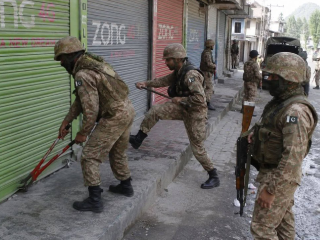 Pakistani soldiers loot a petrol station in Pakistan-occupied Kashmir !
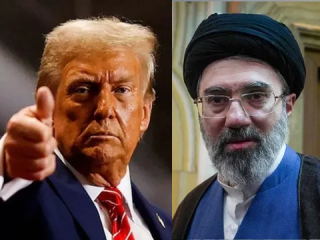 “We will wipe Iran off the map !” : Donald Trump warns Iran
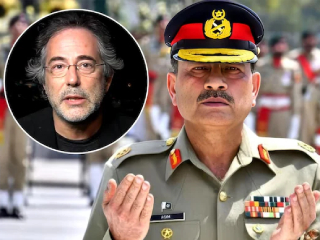 Israel’s spy agency Mossad had plotted to assassinate Pakistan’s army chief Asim Munir
 U.S. grants 60-day sanctions relief to Iran