

Article 26 protections hinge on the term “religious denomination,” a concept rooted in Western Christian theology that does not align with the pluralistic, decentralized ethos of Hindu Dharma. By interpreting this term through a Western lens, Indian courts have denied Article 26 protections to countless Hindu sampradayas and temples—undermining religious autonomy in the very land that gave birth to Dharma.
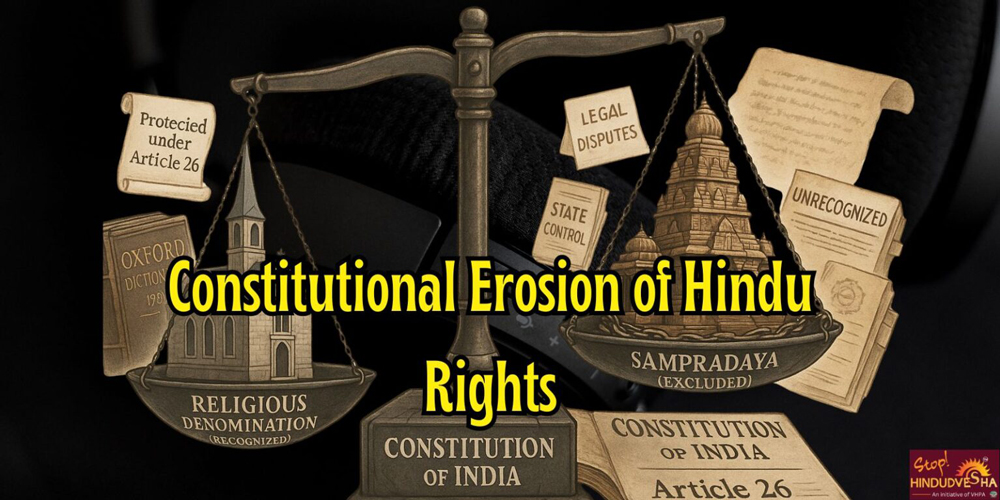
Article 26 protections are based on the term ‘religious denomination,’ defined using Western-Christian concepts that don’t reflect the pluralistic and decentralized nature of Hindu Dharma.
Hindu sampradayas, lacking rigid hierarchies or exclusive structures, often fail to qualify as ‘denominations,’ leaving many temples and communities unprotected under the current legal interpretation.
Nearly two-thirds of Hindus who don’t affiliate with a specific sect or matha are automatically denied Article 26 rights, despite their deep spiritual practices and traditions.
Christian-style religious institutions enjoy constitutional safeguards, while Hindu temples – especially independent or local ones – remain under state control due to this flawed interpretive framework.
To ensure justice, Article 26 must be reinterpreted through the lens of Hindu civilizational realities, recognizing the legitimacy of diverse spiritual traditions and the lived faith of ordinary Hindus.
Constitution of India guarantees the freedom to manage religious affairs under Article 26, but only to those who qualify as a ‘religious denomination’. This sounds fair in theory, but in practice, this provision has been used as a tool to deny rights to the Hindu community. The interpretation of ‘religious denomination’ has been largely influenced by Christian-Western concepts, which do not apply to the diverse and complex traditions of India. When applied to Hindu Dharma, this interpretation is limited and fails to account for the unique characteristics of Indic spirituality. As a result, many Hindus and sampradayas (traditions) are deprived of their rights under Article 26.
The need to reclaim and reinterpret Article 26 in a manner that reflects the religious and civilizational ethos of Bharat is not just a legal necessity but a matter of cultural survival.
Article 26 : Rights Denied by Definition
Article 26 of the Indian Constitution reads as follows : Subject to public order, morality, and health, every religious denomination or any section thereof shall have the right –
- to establish and maintain institutions for religious and charitable purposes;
- to manage its own affairs in matters of religion;
- to own and acquire movable and immovable property; and
- to administer such property in accordance with the law.
While Article 25 guarantees an individual’s right to freedom of religion, Article 26 safeguards the collective rights of religious groups to establish and maintain institutions, manage their properties, and practice their faith without undue interference. It recognizes the autonomy of religious denominations to manage their internal affairs, while also ensuring that such autonomy is exercised in a manner consistent with public order, morality, and health. The applicability of this Article hinges on a nuanced understanding of the term ‘religious denomination’ itself. To fully leverage the protections and freedoms afforded by this Article, it is crucial to define and comprehend the scope of this phrase.
Judging Hindu Traditions Through a Western Lens : A Constitutional Injustice
The term ‘religious denomination’ has not been defined anywhere in the Constitution. The Supreme Court, in the Shirur Mutt case (1954), defined ‘religious denomination’ using the Oxford Dictionary. According to this definition, a denomination must have a distinct name, a common faith, and an organizational structure.
This definition mirrors the Christian ecclesiastical system, where denominations like Catholicism, Anglicanism, and Methodism are structured in an exclusionary and centralized manner. Relying solely on the Oxford Dictionary to define ‘religious denomination’ without considering the nuances of our own religious texts and practices is clearly misguided and deeply discriminatory to the organic, diverse, and pluralistic nature of Hindu Dharma.
In Christianity, denominations are clear and exclusive. One may be either Anglican, Methodist, Catholic, or Protestant, and so on – and they typically go only to the place of worship associated with their denomination. In other words, their structure is hierarchical, doctrinal, and geographically compartmentalized. Christian denominations often operate with exclusive identity and centralized authority. For instance, Catholics would not generally attend a Protestant church service, and vice versa. These religious institutions have codified doctrines, centralized administration, and fixed rituals, making the classification of a ‘denomination’ logical and easy within that context.
In Hindu Dharma, the closest equivalent to a ‘religious denomination’ is the ‘Sampradaya’. But unlike denominations in Christianity, sampradayas are fluid, lineage-based, and often do not demand exclusivity or rigid structure. The Guru-Shishya parampara (teacher-disciple lineage) defines many sampradayas, and they often coexist, overlap, or interweave within a single community or household. For example, within the Vaishnava tradition, there are multiple sampradayas such as the Sri Sampradaya, the Madhva Sampradaya, and the Gaudiya Vaishnavas – each with its own distinct practices and philosophies. Yet, their followers do not view one another as outsiders. Likewise, a devotee of Devi may also participate in Vaishnava festivals. Hindu Dharma does not require exclusive allegiance to one form of the Divine; instead, it embraces this diversity as a source of strength, not weakness.
In many Hindu households, it is common to find worship of different Deities and practices stemming from various sampradayas – or none at all – within the same family. In fact, nearly two-thirds of the Hindu population do not identify themselves with any specific sampradaya. Far from being a sign of confusion, this reflects the deep pluralism and inner freedom that lie at the heart of the Hindu worldview.
Yet this very flexibility – so integral to the ethos of Hindu Dharma – becomes a disadvantage within legal and administrative frameworks shaped by Abrahamic categories. The Indian judiciary, in its infinite wisdom, continues to interpret the term ‘religious denomination’ through a rigid, church-centric lens lifted straight from Western theology. Instead of engaging with the civilizational depth of Indic traditions, our courts persist in applying colonial-era definitions that are fundamentally ill-suited to the Hindu context.
The result of this colonial hangover in constitutional jurisprudence is that the rights of Hindu communities remain precarious, conditional, and systematically undermined. Worse still, the vast majority of Hindus who do not affiliate with a particular sampradaya are automatically excluded from protection under Article 26. Unless Indian jurisprudence discards its colonial baggage and begins to recognize Hindu Dharma on its own terms, the rights of Hindu communities will continue to be denied by those ironically entrusted with delivering justice. This is a profound civilizational disconnect, one that perpetuates the colonial project under the veneer of constitutional neutrality.
Advocate J Sai Deepak has aptly argued before the Supreme Court in a review petition challenging the Sabarimala verdict that ‘… the term Sampradaya, as used in the Hindi version of Article 26, more accurately describes Indic sects as opposed to ‘denomination’ which is distinctly Christian and therefore cannot be used to understand Hindu sects…’
How Article 26 Protection is Denied to Hindus
The most visible consequence of this flawed interpretation is the continued State control of Hindu temples, which are deemed ineligible for Article 26 protection unless they are backed by a formally recognized matha or religious order.
Take the Sabarimala Temple case. The Supreme Court refused to recognize Ayyappa devotees as a religious denomination, thereby denying them protection under Article 26. The Court’s rationale was rooted in the absence of a structured doctrine or hierarchical clergy. Despite centuries of continuous and unique practice (observing 41-day vratham (fasting), celibacy, and pilgrimage), the devotees were denied the fundamental right to preserve their tradition.
Advocate Anand Prasad offers a powerful illustration of Chitrapur Saraswat Brahmins to expose the absurdity of the current interpretation of Article 26. Chitrapur Saraswat Brahmins are affiliated with a specific matha in Shirali, Karnataka. Therefore, as per the current interpretation, Article 26 rights can be claimed by people of that community only in respect to that math.
However, if someone from that community is personally devoted to a Devi temple or any other temple not linked to that matha, they cannot seek protection under Article 26 for their temple, even if their devotion is genuine and long-standing.
This means that devotion alone does not translate into legal standing under Article 26. The right to manage or protect a religious institution exists only if one belongs to the group that qualifies as a denomination under the present meaning. The spiritual reality of a devotee, no matter how sincere or lifelong, is disregarded if it does not align with the rigid institutional criteria. This, he argues, is the heart of the problem – the law gives the right to protect an institution with which a Hindu has little or no spiritual connection, but denies him the right to safeguard the temple and tradition he actually reveres. This inversion of rights – where constitutional protection is granted based on institutional form rather than lived faith – demonstrates how Article 26 has effectively vanished for countless Hindus who don’t fit into a colonial definition of ‘religious denomination.’
In today’s India – where inter-community marriages are rising and spiritual practices increasingly cut across caste and sectarian lines – the notion that one must belong to a formally recognized ‘denomination’ to claim spiritual rights is not just outdated, it’s patently absurd.
The State’s ongoing control of temples not tied to a specific matha or sect – and its selective application of Article 26 protections across Hindu institutions – is not just unfair; it’s a blatant double standard. Forcing the Christian concept of ‘religious denomination’ onto Hinduism is a crude oversimplification that erases the civilizational depth of Hindu Dharma. Hinduism’s inherently decentralized structure, its diverse sampradayas, and its fluid philosophical traditions cannot be boxed into rigid, church-like categories. What’s needed is not legal mimicry of Abrahamic models, but a fundamentally different and dharmic understanding of ‘religious denomination’ – one that reflects the realities of India’s own civilization rather than distorting them to fit foreign frameworks.
Rethinking Article 26
There is an urgent need to rethink and reinterpret the term ‘religious denomination’ in the Indian legal context, grounded in the civilizational and spiritual realities of Hindu Dharma. The Constitution must not be filtered through colonial hangovers or Christian theological frameworks. Instead, Indian courts must actively engage with Indic knowledge systems and adopt a more culturally rooted, inclusive approach.
The core test under Article 26 should not be : ‘Does a Hindu belong to a recognized denomination ?’ It should be : ‘Does a Hindu have a genuine relationship with a tradition, temple, institution, or Deity ?’ If yes, then that individual must have standing under Article 26. This right should not extend to unrelated third parties or self-proclaimed ‘good Samaritans’ with no spiritual connection. But it must protect actual devotees, even if they don’t fit Western templates of religion
Spiritual autonomy, the right to worship, and the right to manage religious affairs are fundamental aspects of personal liberty. The freedom to practice one’s faith, to administer religious institutions, and to preserve sacred traditions is deeply embedded in Article 21. Just as the rights to privacy and to live with dignity are considered integral to personal liberty, so too should be the right to religious freedom and the management of one’s own spiritual affairs.
It is essential to recognize that Articles 25 and 26, which safeguard religious freedom and institutional autonomy, merit the same interpretive depth and constitutional significance as Article 21. While Article 21 has benefited from expansive judicial interpretation over time, Articles 25 and 26 have often not been accorded the same level of attention in practice. There is a growing realization that these crucial rights – particularly in the context of Hindu traditions – have not been treated with the seriousness they deserve.
To truly uphold the spirit of the Constitution, Articles 25 and 26 must be interpreted generously and in context, with due regard for India’s civilizational and spiritual heritage. These provisions are not just legal safeguards; they are vital protections for the soul of Bharat’s dharmic and cultural freedom.
Wrapping Up
Within Hinduism, only those religious institutions directly associated with a matha or an organized religious body are granted protection under Article 26. As a result, thousands of Hindu temples – those that are independent or not established by such mathas, institutions, or bodies – are left without any protection guaranteed under Article 26. The current interpretation of the term ‘religious denomination’ marginalizes Hindu sampradayas and temples, denies them equal protection, and legitimizes state intrusion into sacred spaces. This exclusion reflects not just a legal gap but a deep civilizational injustice, where the lived faith of countless Hindus is rendered invisible by a framework that fails to grasp the decentralized, plural character of Hindu Dharma.
For a Nation that draws its moral and philosophical core from Dharma, it is unacceptable to let colonial frameworks define indigenous spiritual rights. Article 26 must be reclaimed – reinterpreted in the light of Hindu pluralism, sampradaya diversity, and the dharmic ethos.
As the Rig Veda profoundly states : ‘Ekam sat viprah bahudha vadanti.’ – ‘Truth is one; Sages call it by various names.’
This timeless wisdom reflects the essence of Hindu Dharma – a civilization that embraces diversity not as division, but as a vibrant expression of spiritual unity and openness within the framework of Dharma. However, this very plurality, once the hallmark of our civilizational strength, is now frequently misread through legal interpretations shaped by Western theological constructs.
This disconnect demands a serious re-examination – one that acknowledges the deeply personal, fluid, and diverse expressions of faith that characterize Hindu life, all while remaining rooted in Dharma. If Article 26 is to have any real meaning, it must protect this sacred personal relationship with the Divine, rather than penalize it for not conforming to Western institutional categories.
Article 26 must cease to be a gatekeeping device that protects only a privileged few. It must become a constitutional shield for every devotee who walks the path of truth, devotion, and Dharma. The time has come to rewrite its interpretation, reclaim our rights, and ensure that the Constitution speaks in the voice of Bharat – not in the borrowed language of a colonial empire.
This Article is being re-published in Sanatan Prabhat with the explicit permission of the Editorial Team of StopHinduDvesha.org
(Courtesy : Excerpts of an Article by Mr Parth Ojas, posted on Stop Hindu Dvesha website)
Original Article on : https://stophindudvesha.org/the-constitutional-blind-spot-the-article-26-injustice-against-hindus/
| Christian-style religious institutions enjoy constitutional safeguards, while Hindu temples remain under state control !
Spiritual autonomy, the right to worship, and the right to manage religious affairs are fundamental aspects of personal liberty ! |
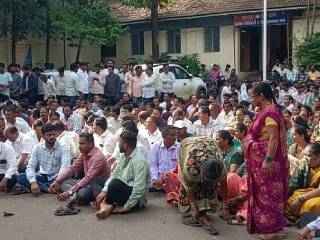 Villagers march to Kagal (Kolhapur district) Police Station in the ‘Love Jihad’ case and demand that the Hindu young woman be handed over to her parents !
 “Statues of Chhatrapati Shivaji Maharaj are being installed to target Muslims !” : France 24
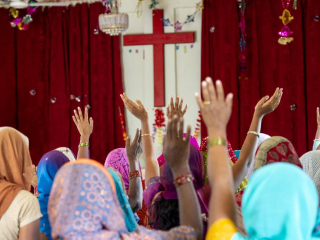 Case registered against husband and wife for propagating Christianity at Sassoon General Hospital, Pune
 Criminal case against 11 members of a Christian organisation who claimed that “Hindu is an abusive term, meaning thief, bandit and slave” will not be quashed !
 Keralite girl murdered by a fanatic Muslim man in Uzbekistan for refusing to convert to Islam
 School prayer circular upheld : High Court dismisses petition challenging recitation of Gayatri Mantra in schools !