
Former Supreme Court Judge Rohinton Nariman’s anti-Hindu remarks !

New Delhi – Former Supreme Court judge Rohinton Nariman has made remarks about the Shri Ram Mandir case that many consider offensive. Speaking at an event in Thiruvananthapuram, Kerala, Nariman criticized the 2019 Supreme Court verdict that awarded Hindus the right to build the temple at Shri Ram Janmabhoomi, calling it a “mockery of justice.” He went further, describing Hindus who seek the legal restoration of temples as possessing “demonic minds.” Nariman insisted that the Places of Worship Act must be applied rigorously so that no fresh lawsuits over temple reclamation can ever be filed. His comments conveyed a clear message: in the name of secularism, Hindus should abandon their historical claims and remain silent.
🚨 Thiruvananthapuram: Ex-SC judge Rohinton Nariman’s shocking anti-Hindu stance
🛕 “Places of Worship Act must be enforced strictly so no temple cases are filed!”
⚠️ Mocked Hindu Dharma: “Whether with divine or bovine intervention…”
👉 Earlier had called the Ayodhya verdict… https://t.co/UceF5POVY3 pic.twitter.com/kvqkYG9n9T
— Sanatan Prabhat (@SanatanPrabhat) September 18, 2025
Praying before delivering a verdict is wrong
During a program at the Press Club, an attendee asked Nariman about former Chief Justice D.Y. Chandrachud’s earlier admission that he prayed for guidance before delivering the 2019 Shri Ram Mandir judgment. Nariman replied that whether it is “divine intervention, bovine intervention, or anything else,” any judge who bases a verdict on prayer violates the judicial oath. In his view, judges must rule solely within the framework of the Constitution and the law.
Fraternity cannot exist under a religious regime
While speaking on the topic “Protection of Cultural Rights and Duties,” Nariman asserted that fraternity; the core spirit of the Indian Constitution; requires secularism. He noted that even before the 42nd Amendment formally added the word “secular,” the principle was embedded in the Constitution. According to him, true fraternity is impossible under any religious rule. (Editor’s Note: History shows that Islamic theocracies often fail to foster fraternity, while Hindu traditions uphold it. Hindu philosophy has long embraced the ideal of Vasudhaiva Kutumbakam; “the whole world is one family.” By that measure, Nariman’s sweeping claim can hardly be applied to Hindu society.)
Editorial perspectiveSuch words from a retired judge raise serious questions about the nature of the verdicts he once delivered. If anyone now calls for a review of those judgments, it should hardly be considered unreasonable. |
 Villagers march to Kagal (Kolhapur district) Police Station in the ‘Love Jihad’ case and demand that the Hindu young woman be handed over to her parents !
 The Temple has fixed deposits worth ₹472 crore and gold and silver worth ₹300 crore !
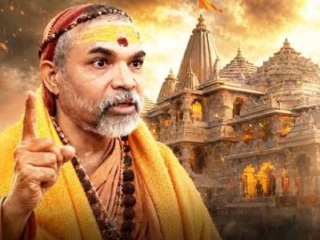 The Shri Ram Temple is an office of the BJP and the RSS; I will go for darshan when it truly becomes a Shri Ram Temple ! : Jyotish Peeth Shankaracharya Swami Avimukteshwaranand Saraswati
 Actor Aamir Khan is the ‘brand ambassador’ of ‘Love Jihad’; Boycott his films ! : Minister Nitesh Rane
 Jaunpur Hosts Seminar on Sanatan Dharma Awakening and Preservation of Vedic Culture
 Case registered against husband and wife for propagating Christianity at Sassoon General Hospital, Pune