
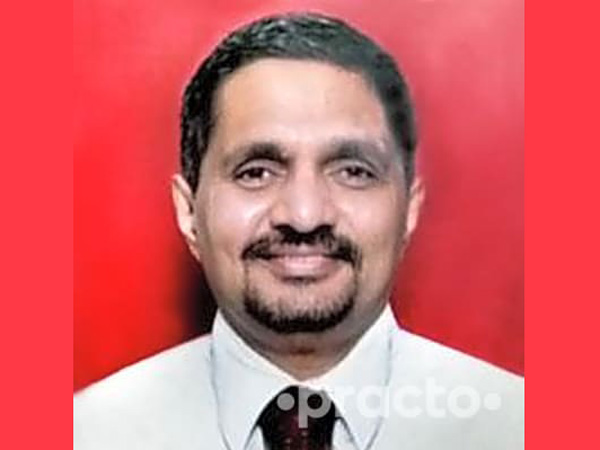
The analysis made by Dr Shetty is salutary and perfect. Since the English Education Act framed by Lord Macaulay was passed in 1851, 175 years have elapsed. The Indian populace has swallowed enough vilification of Indian culture and Dharma through education curriculum, press and platform and more so through the distorted history and culture catered under the stewardship of the consecutive five Education Ministers of Bharat from 1947 to 1977 viz. Maulana Abul Kalam Azad, Humayun Kabir, Fakhruddin Ali Ahmed, MC Chagla and Dr Nurul Hasan.
Without the establishment of a ‘Hindu Rashtra’ it will be difficult to overhaul and reform the school and college syllabus and bring in changes in the Laws of the land, as also in almost every sphere of our lives which were tampered by the British and framed for the subject race. Establishment of a ‘Dharma Rajya’ that is based on the foundation of Truth, can only ensure real welfare for all irrespective of caste, creed, religion or economic status.
The infallible Shastrassay : One who is indifferent in matters of national safety or the protection of Dharma, should be shunned as an enemy.
In Ramayana, we find in Sri Rama’s words : Mother and the Motherland are more glorious than Heaven.
Real ‘Ram Rajya’ can foster peace and progress for all without prejudice.
TRUTH – A Weekly Periodical
(Founded by Srimat Sri Upendramohan), Editor : Dr Shib Narayan Sen
It started off as a casual social experiment during a time of national tension. My old schoolmate Arpan and I, both alumni of one of Hyderabad’s most prestigious schools – batch of 2000 – decided to observe how our peers would respond to real-world issues.
This group wasn’t ordinary. It was filled with bright, well-placed individuals : Half were settled in the U.S. or Europe, the other half in India, mostly in high paying jobs in the IT sector, holding management positions. The backbenchers – once dismissed – had turned into entrepreneurs and even politicians.
We assumed that this was a group with perspective, curiosity, and the intellectual courage to engage. But we were in for a surprise.
When the Pahalgam incident occurred, we brought it up for discussion. The first response : “No heavy topics, please.” The group only wanted funny memes, birthday wishes, and feel-good nostalgia. As the situation escalated into conflict and war, nothing changed.
When we brought up issues like radicalisation and the root causes of terrorism, we were told – privately – not to “offend anyone” because “Muslims are also part of this group.” Even when drones flew in and ballistic missiles were launched, the chat remained numb.
When we said, ‘Jai Shree Ram’ or ‘Jai Hind’, especially after India’s military victory, there was no response. Not a single word of solidarity. When we criticized Pakistan’s actions, some responded not with concern or outrage, but with counter-questions about caste discrimination in India – a textbook example of false equivalence. That’s when it dawned on us : We weren’t dealing with a few passive individuals. We were staring at a collective psychological shift among educated, urban Hindus – one that has far-reaching consequences.
The Psychology behind the Silence
1. Post-Colonial Hangover : Any of us are products of an education system that subtly – and sometimes openly – glorified Western thought while deriding native Indian values. Colonial narratives painted Indian culture as backward, hierarchical, and problematic. Even after Independence, we continued to internalize these narratives, and today, many Hindus instinctively distance themselves from their own civilizational identity in an attempt to appear “progressive” or “neutral.”
2. Guilt Conditioning Through Academia and Media : From school textbooks to prime-time news, modern Indians are trained to view Hinduism through a lens of guilt – focusing largely on caste, patriarchy, and superstition, while ignoring its contributions to art, science, spirituality, and philosophy. This relentless focus on internal flaws conditions many to feel shame or discomfort when discussing anything Hindu related in public – even something as simple as saying, “Jai Shree Ram.”
3. Global Citizen Syndrome : Many of our peers settled abroad or working in MNCs, view themselves first as “global citizens”. In this worldview, pride in one’s own nation, faith, or cultural identity is seen as parochial, even dangerous. Being politically correct and culturally vague is seen as sophistication. Expressing nationalist sentiment becomes socially risky, especially on WhatsApp groups where professional reputations might be at stake.
4. Fear of Social Isolation : In elite social circles, being seen as “rightwing” or “too Hindu” can result in ridicule or exclusion. Therefore, even those who inwardly agree stay silent. Memes are safe. Birthdays are safe. “Jai Hind” may not be. This fear of isolation produces an echo chamber where everyone avoids controversy – even when truth is dying in silence.
5. Extreme Individualism : Economic success has also brought with its hyper-focus on personal growth : Career, family, EMIs, vacations. Social consciousness, cultural responsibility, or national identity are seen as distractions or optional extras. “I pay taxes and vote – that’s enough,” becomes the default mindset.
6. Selective Moral Outrage : Interestingly, many of these same people are quick to speak out against injustice – but only when it’s fashionable. Issues that align with Western liberal discourse (Climate change, minority rights, Black Lives Matter, Gaza, Ukraine) see active participation. But when India is under attack, or when Hindus face atrocities, the same voices go mute – out of fear, confusion, or indifference.
The Larger Implication
This silence – this inability to stand up, speak out, or even acknowledge – is not a side effect. It is the main feature of the crisis we’re in.
When even the best-educated, most successful Hindus feel awkward expressing cultural pride or national solidarity, we are witnessing a civilizational disconnection. The tragedy isn’t that enemies exist. The tragedy is that the sentinels are asleep.
Our social experiment revealed this quiet erosion. It’s not dramatic. It’s not violent. But it’s deadly. And if we don’t understand it, confront it, and rebuild our collective confidence – this silence will become the very sound of decline.
– Psychiatrist Dr Harish Shetty
(Courtesy : An Article published in TRUTH Weekly, 20.6.2025, from FB post of Dr Harish Shetty)
| This inability to stand up, speak out, or even acknowledge – is not a side effect; It is the main feature of the crisis we’re in ! |
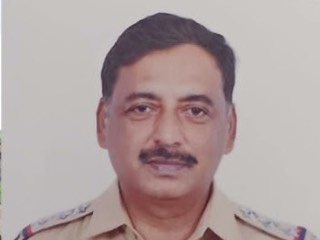 Yerawada (Pune) Police Station’s Inspector Anjum Bagwan involved in anti-Hindu and anti-social activities
 Sahil Shaikh and his gang brutally assault a Hindutva activist in Hadapsar, Pune !
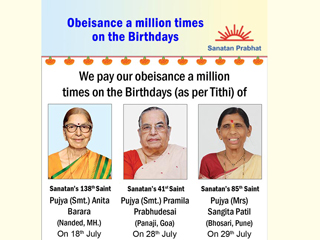 We pay our obeisance a million times on the Birthdays (as per Tithi) of
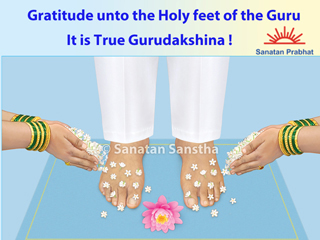 Offering gratitude unto the Holy feet of the Guru is true Gurudakshina !
 Messages of the Gurus on the occasion of Guru Purnima (29th July)
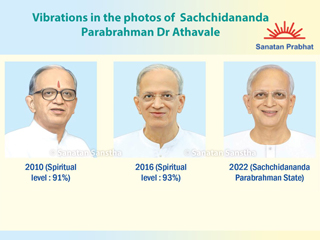 Sadguru (Dr) Mukul Gadgil’s analysis of the vibrations in the photos of Sachchidananda Parabrahman (Dr) Athavale, corresponding to His spiritual level at different times