
The story of Bharat cannot be understood without understanding the role of the mandir. Across millennia, mandirs have not merely been places of worship; they have been the foundational institutions upon which the Bharatiya Rashtra was built. Long before the modern concept of the Nation-state emerged, Bharat functioned as a civilisational Nation, held together not by a single political authority but by a shared sacred geography, cultural memory, knowledge systems, and collective consciousness. At the heart of this civilisational continuity stood the mandir.
To reduce a mandir to a ‘religious structure’ is to misunderstand its true role. A mandir has historically been an institution of social organisation, knowledge production, economic redistribution, artistic excellence, dispute resolution, and community cohesion. It was the nucleus around which society organised itself. If the Rashtra is understood as the collective civilisational expression of a people, then mandirs have been its strongest building blocks.

One of the most important functions of mandirs was to create civilisational unity across geographical diversity. Bharat has always been home to multiple languages, customs, regional traditions, and local practices. What connected this diversity into a coherent whole was the network of sacred centres spread across the land. From Kedarnath Mandir in the north to Rameswaram Mandir in the south, from Jagannath Mandir in the east to Dwarkadhish Mandir in the west, pilgrimage routes created cultural highways that integrated the subcontinent.
A pilgrim travelling across Bharat would encounter linguistic diversity but civilisational familiarity. This sacred movement produced national consciousness long before political nationalism emerged.
Mandirs were also centres of education and intellectual life. The popular imagination often associates education solely with gurukuls or universities like Nalanda Mahavihara, but thousands of mandirs functioned as knowledge hubs.
They housed libraries, hosted philosophical debates, preserved manuscripts, trained scholars, and taught disciplines ranging from grammar and logic to astronomy, mathematics, medicine, architecture, music, and statecraft. The mandir was where knowledge was not merely stored but transmitted across generations. This intellectual continuity sustained the cultural and philosophical foundations of the Rashtra.
Economically too, mandirs played a central role. They were among the largest institutions of public welfare and resource distribution. Donations made to mandirs were not idle accumulations of wealth. These resources funded anna daan, supported artisans, maintained water tanks, built roads, sustained schools, provided healthcare, and offered relief during famines and crises. Mandirs created local economic ecosystems involving sculptors, architects, musicians, dancers, priests, farmers, metal workers, weavers, and traders. Entire towns flourished around mandir economies. In this sense, the mandir was both a spiritual and developmental institution.
Mandirs also served as repositories of art and culture. The highest expressions of Bharatiya architecture, sculpture, classical dance, music, and ritual sciences evolved within mandir ecosystems. Whether it was the grandeur of Brihadeeswara Mandir, the intricate carvings of Konark Sun Mandir, or the devotional traditions of Meenakshi Amman Mandir, mandirs shaped Bharatiya aesthetics and preserved cultural continuity. They encoded philosophy in stone, rhythm in ritual, and metaphysics in architecture.
During periods of foreign invasions and political disruptions, mandirs became symbols of civilisational resistance. Invaders often targeted mandirs not merely for wealth but because they understood that these institutions represented the cultural spine of Bharat. The destruction of a mandir was an attempt to fracture civilisational memory.
Yet history also records repeated reconstruction. The rebuilding of sacred spaces reflected the resilience of society and its refusal to allow the civilisational spirit to be extinguished.
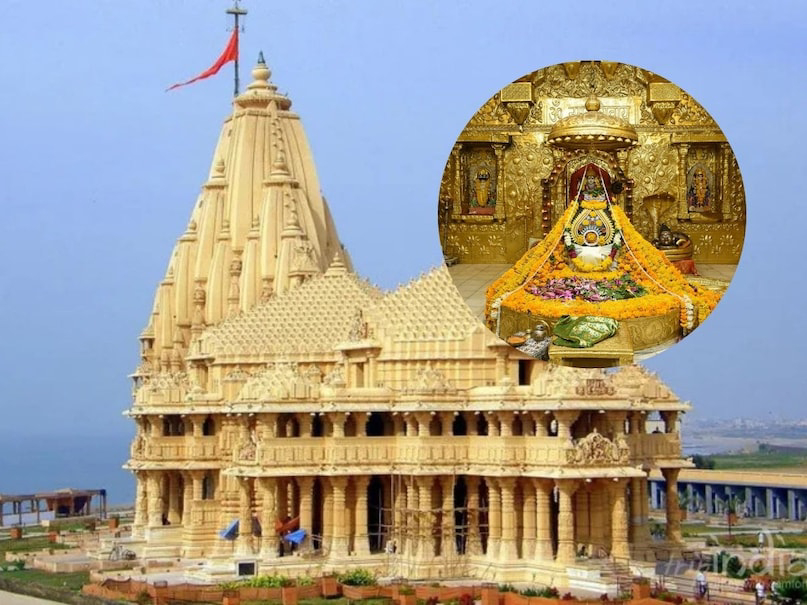
The reconstruction of Somnath Mandir after independence was not simply the restoration of a shrine; it was a declaration of national self-respect.
Mandirs have also been centres of social cohesion. Festivals, yatras, community meals, local assemblies, and collective rituals created social capital. People from different professions and backgrounds came together in shared participation. The mandir generated a sense of belonging that transcended narrower identities. It reminded society of its larger collective purpose.
In contemporary Bharat, reclaiming the centrality of mandirs is essential for cultural renewal. This does not mean viewing them only as sites of faith, but recognising them once again as living institutions capable of shaping education, social harmony, ecological stewardship, healthcare, and ethical public life.
A Rashtra is not built merely by Constitutions, Governments, or economic policies. It is built by institutions that shape the consciousness of its people. For Bharat, the mandir has been that institution. It has nourished the soul of the civilisation, connected its people across time and space, and sustained the values that define the Nation.
Mandirs are not relics of the past. They are the living building blocks of the Bharatiya Rashtra.
(Courtesy : Article by Mr Sandeep Singh , a famous author on temples and a columnist)
 17,000 Hindus in South Africa gather to recite the Hanuman Chalisa !
 Actor Aamir Khan receives death threat from Lawrence Bishnoi gang over ‘Love Jihad’
 We pay our obeisance a million times on the Birthdays (as per Tithi) of
 Offering gratitude unto the Holy feet of the Guru is true Gurudakshina !
 Messages of the Gurus on the occasion of Guru Purnima (29th July)
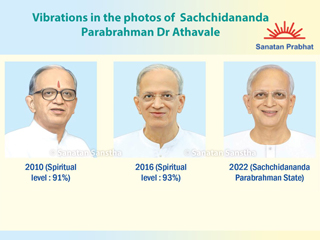 Sadguru (Dr) Mukul Gadgil’s analysis of the vibrations in the photos of Sachchidananda Parabrahman (Dr) Athavale, corresponding to His spiritual level at different times