
Shri Ram Janmabhoomi Temple Theft: Questions of Faith, Accountability and Government Control
At a Glance• Seven accused have been arrested in connection with the alleged embezzlement.• The Shri Ram Janmabhoomi Teerth Kshetra Trust has initiated action.• Questions have arisen regarding moral responsibility and public accountability.• Historical cases show that allegations against temple administrations have not always been upheld in court.• The debate has also revived discussion on government control of Hindu temples. |
A Blow to the Faith of Ram Bhakts
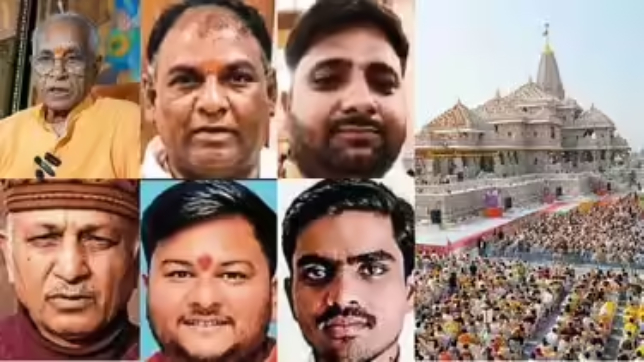
Shri Ram is the very heart of Bharat. Without Ram, the lives of Indians lose their meaning. For millions of years, the stream of devotion to Shri Ram has continued to flow uninterrupted in the hearts of the Hindu psyche. A theft of donations has occurred in Ayodhya, at the sacred Shri Ram Janmabhoomi Temple. In connection with this incident, the Special Investigation Team (SIT) constituted by the Uttar Pradesh Government has submitted its report to the Government. Acting promptly thereafter, the authorities registered a criminal case and arrested seven of the eight persons named in the report.
The theft of funds offered to the Deity has deeply distressed the Bhakts of Shri Ram. Their anguish is not merely because the money they earned through hard work and offered at the Bhagwan’s feet has been stolen. Rather, it stems from the spiritual conviction that “The wealth belongs to God. Whatever I have earned has been bestowed upon me by His grace, and I have merely returned a portion of it at His feet. Such wealth must never be stolen.” Such is the profound spiritual outlook of a Bhakt. This embezzlement represents an attempt to sever the sacred bond of devotion between the Bhakt and Bhagwan.
According to the Skanda Purana, stealing from a temple, that is, misappropriating property belonging to the Deity, is an unpardonable grave sin (Mahapataka). The Manusmriti states:
“देवस्वं ब्राह्मणस्वं वा लोभेनोपहिनस्ति यः । स पापात्मा परे लोके गृध्रौच्छिष्टेन जीवति ॥” (Chapter 11, Verse 26)
It means: A sinful person who, out of greed, usurps the property of the Deities or of Brahmins shall, in the afterlife, survive on food left over by vultures.
Such an act deserves severe punishment under both human and divine law. It is from this perspective that the Uttar Pradesh Government has begun taking decisive action.
A Question of Moral Responsibility
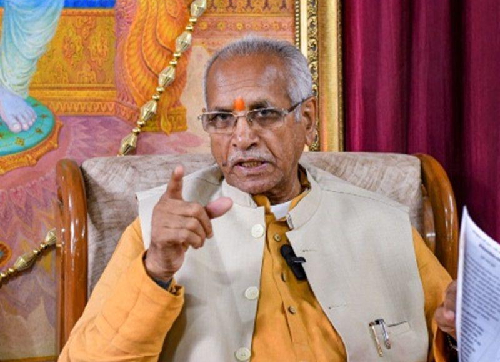
Following the temple theft, Champat Rai, the General Secretary of the Shri Ram Janmabhoomi Teerth Kshetra Trust, tendered his resignation. Allegations are also being levelled against him. However, it must be understood that Rai resigned by accepting moral responsibility for the incident.
How many politicians, bureaucrats, or office-bearers resign after corruption allegations surface against them? Will Congress leaders introspect on this?
The Vishwa Hindu Parishad (VHP) defended Rai, stating that he has devoted his entire life selflessly to the Shri Ram Janmabhoomi movement and would never commit such an act for personal gain. The sculptor Arun Yogiraj, who created the Vigraha of Shri Ram Lalla, also described Champat Rai as a symbol of honesty and integrity.
Just as Shri Ram and Shri Krishna themselves had to undergo severe trials, today a similar test confronts the Bhakts of Shri Ram. This is a crisis facing Dharma itself.
At such a time, Hindus must deepen their devotion to Bhgwan and unite to overcome this calamity that has befallen Dharma.
An Imaginary Ram?
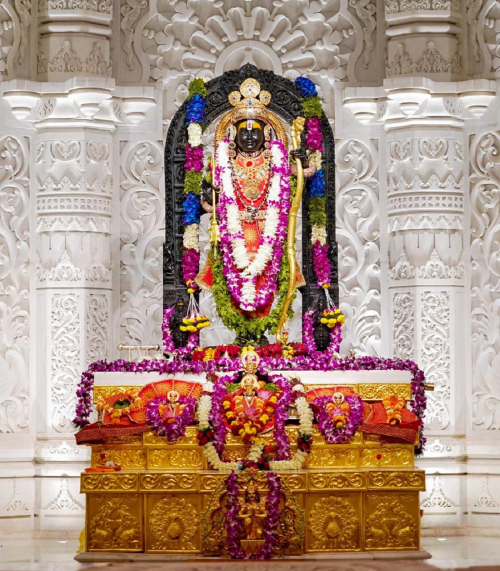
Those who harbour hatred towards Hindus have treated this theft as a convenient opportunity to spread venom. The Congress Party has demanded action against Champat Rai and has called for the investigation to be conducted under the supervision of the Supreme Court.
Political Reactions and the Larger Questions
Why this issue matters
This case extends beyond an alleged financial crime, and it raises broader questions concerning:
* Devotees’ trust
* Temple governance
* Accountability
* Constitutional interpretation
* Government oversight of religious institutions
* Protection of religious heritage
Ironically, it was this very Congress that, nearly two decades ago, submitted an affidavit before the Supreme Court describing Prabhu Shri Ram as a mythical or imaginary figure. Today, the same party seeks judicial intervention regarding alleged embezzlement in Shri Ram’s temple.
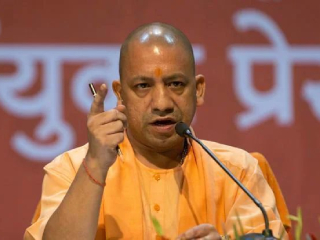
In this context, Uttar Pradesh Chief Minister Yogi Adityanath’s statement assumes significance. He said:
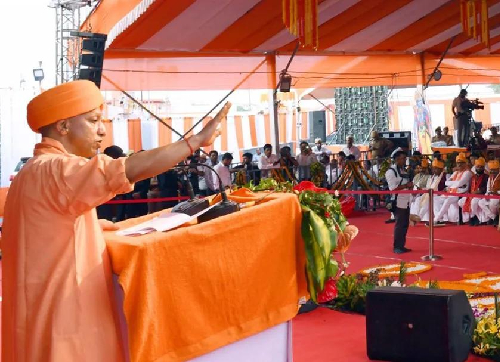
“Everything will become clear. But do not test the devotion of Ram Bhakts. Stop playing with their faith. If there are no facts or evidence, stop making allegations. If evidence exists, present it before the investigation team.”
The issue may not be as straightforward as it appears. Uttar Pradesh Assembly elections are due next year. Political history has often shown that electoral success in Uttar Pradesh has a profound bearing on national politics. Therefore, it becomes necessary to investigate whether a larger conspiracy lies behind this theft.
Over the past nine years under the leadership of Yogi Adityanath, Uttar Pradesh has witnessed far-reaching improvements in law and order. His efforts to address issues affecting Hindus through legal measures have been commendable and worthy of emulation.
Those who once mocked the BJP with the slogan, “The temple will be built, but the date will never be announced,” were effectively silenced when the foundation stone of the Shri Ram Temple was laid in August 2020, and the grand temple was inaugurated in January 2024, developments in which Adityanath played a significant role.
The state’s economy has also witnessed substantial growth through increased manufacturing, industrial investment, tourism, and other economic activities. According to the Economic Survey, Uttar Pradesh’s economy has grown from ₹13.3 lakh crore to ₹36 lakh crore over the past decade, almost a threefold increase. Naturally, much of the credit goes to the Chief Minister.
Yet, above all else, the Ram Temple at Ayodhya represents one of the most emotionally sensitive issues for the people. Is this incident an attempt to strike at that very sentiment? What if, in the days ahead, Chief Minister Yogi Adityanath is also compelled to accept moral responsibility and resign?
If one wishes to destroy a nation, one must first destroy its national consciousness. Prabhu Shri Ram is the soul of Bharat. No Hindu can tolerate an assault upon His temple. Is this embezzlement, therefore, an attempt to sow seeds of unrest among Hindus? These and many other questions remain before us. Though the answers lie hidden in the womb of time, Ram Bhakts must remember that it is within their power to give an appropriate response to this assault.
Lessons from History
Let me cite two examples wherein allegations levelled against the temples proved to be baseless via the Supreme Court’s apex judgements, and the temple committees had to fight for their rights for years.
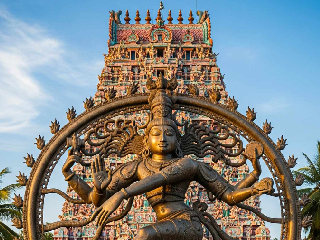
The first example is of the Chidambaram Natarajar Temple of Tamil Nadu (2008–2014). The “Podhu Dikshitars”, a distinct, hereditary clan of Vedic priests who have managed the ancient Sabhanayagar (Natarajar) Temple in Chidambaram for centuries, faced severe targeting by the state government. Alleging financial mismanagement, lack of audited accounts, and the alleged siphoning of public offerings and gold donations, the Tamil Nadu government passed an executive order in 2008 to strip the Dikshitars of their management and put the temple under state-run HR&CE control. The Dikshitars mounted a prolonged legal battle. It culminated in a historic 2014 Supreme Court judgment. The Dikshitars were restored to their position, having successfully cleared their name and protected their constitutional rights under Article 26.
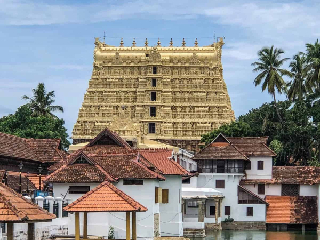
Another example is of Sree Padmanabhaswamy Temple, Kerala (2011–2020). When the subterranean vaults of the historic temple in Thiruvananthapuram were opened in 2011, revealing a treasure estimated at over $20 billion (around 90,000 crore INR as per the then yearly average exchange rate), a wave of allegations was directed at the Travancore Royal Family (the traditional custodians or shebaits). Staggering claims were levelled – severe financial irregularities, a lack of transparency in Kanikka (donation) counting, and claimed that gold worth ₹186 crore (including 769 ancient gold pots) was “missing” or pilfered during purification processes. The royal family fiercely contested these findings. In July 2020, the Supreme Court of India, through a landmark judgment, fully restored the custodianship rights of the Travancore Royal Family.
Historical Precedents
| Temple | Allegation | Supreme Court Outcome |
| Chidambaram Natarajar Temple | Financial Mismanagement | Temple administration restored |
| Sree Padmanabhaswamy Temple | Missing treasure allegations | Royal family restored as custodians |
In light of these precedents, a pertinent question arises: Are unseen forces truly operating behind the embezzlement in the Ramjanmabhoomi temple case? Let us hope that the investigation establishes the truth swiftly and that no innocent person is wrongfully implicated.
Additionally, every temple trust handling offerings from millions of Bhakts must maintain the highest standards of financial transparency, auditing, and accountability. Protecting the sanctity of temples requires not only resisting unjust interference but also ensuring exemplary internal governance. Honest administration is itself a form of service to the Deity and to the Bhakts.
Should the Government Control Hindu Temples ?
Following the embezzlement at the Shri Ram Temple, efforts have begun to place the temple under government control to prevent similar incidents in the future.
Articles 25 and 26 of the Constitution of India are often cited to justify government control over Hindu temples. These provisions are interpreted to mean that while every individual enjoys the freedom to practise religion, including worship, rituals, traditions, and festivals, the administrative, financial, and managerial aspects of temples may be regulated by the State because they are regarded as secular functions.
This interpretation gives rise to what is known as the “government takeover” of temples.
The same reasoning is now being advanced in relation to the Shri Ram Temple.
Protecting the Sanctity of Temples
On the other hand, Articles 29 and 30 of the Constitution provide institutional autonomy and protection to minority institutions such as mosques and churches.
In short, government control over the Shri Ram Temple would constitute an even greater blow than the theft itself. To prevent such an outcome, the ideal of Ram Rajya must find explicit recognition within the constitutional framework itself.
Timeline of events
| Year | Sequence of Events |
| 1528 | Disputed structure constructed |
| 1984 | Ram Janmabhoomi movement gains momentum |
| 2019 | Supreme Court verdict |
| August 2020 | Foundation stone laid |
| January 2024 | Consecration of Shri Ram Temple |
| 2026 | Alleged donation embezzlement investigated |
Frequently Asked Questions
Q1 Who is investigating the alleged theft ?
A1 – The Special Investigation Team (SIT) constituted by the Uttar Pradesh Government.
Q2 How many people have been arrested ?
A2 – Seven of the eight persons named in the investigation.
Q3 What is the constitutional debate ?
A3 – The discussion concerns the extent of state regulation over Hindu temple administration under Articles 25 and 26.
 Earlier governments of SP and Cong. considered building walls of Muslim graveyards as ‘secularism’ : Yogi Adityanath
 SPECIAL EDITORIAL : The Constructive Spirit of American Youth!
 Parliament adjourned for the day due to uproar
 District Court Lifts Stay on Chemical Coating of the Shri Vitthal–Rukmini murti at Pandharpur !
 Shri Ram temple needs a devotee, not a government-appointed officer : Saints demand
 Offering gratitude unto the Holy feet of the Guru is true Gurudakshina !