
A unique and golden moment in the history of the Ashtavinayak temples
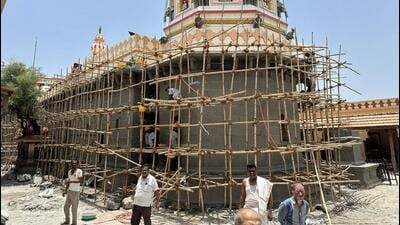
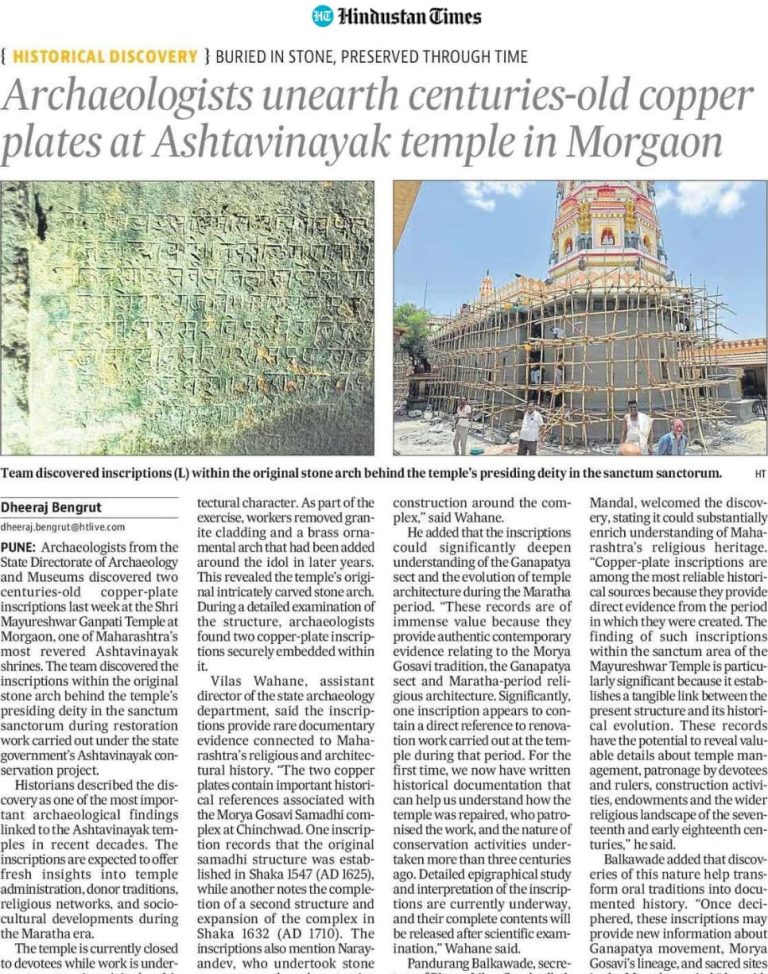
Pune – A priceless historical treasure has come to light at the Shri Mayureshwar Ganapati Temple in Morgaon. During the conservation and restoration work currently being carried out at the temple by the State Directorate of Archaeology and Museums, 2 extremely rare ancient tamrapats (copper plate inscriptions) have been discovered. This is the first time in the long history of the Ashtavinayak temples that copper plates or inscriptions have been found directly within the sanctum sanctorum.
According to information provided by Vilas Vahane, Assistant Director of the Archaeology Department, work on the Morgaon temple is currently underway under the State Government’s ₹148-crore Ashtavinayak Development and Conservation Plan. As a part of this project, work was in progress, as per scriptural injunctions, to carefully remove the granite, modern marble, and copper-bronze ornamental arch that had been installed around the idol in the sanctum during a later period. As soon as these modern coverings were removed, the temple’s original and beautifully crafted ancient stone arch, which had remained concealed behind them, came into view. The team of experts discovered two ancient copper plate inscriptions embedded securely within this stone arch.
Historical references and period mentioned in the copper plates!
According to preliminary observations, one of the 2 copper plates bears the date Shaka 1547 (1625 CE), while the other bears the date Shaka 1632 (1710 CE).
These historic copper plates primarily contain references to the following!
The inscriptions contain detailed records relating to the original construction and renovation of the temple, as well as donations made by devotees and rulers during various periods. They also contain a direct reference to the original structure and expansion of the Samadhi temple of the great Ganapatya saint Shri Morya Gosavi of Chinchwad near Pune. In addition, they include a laudatory reference to the renowned stone craftsman Narayandev and his architectural expertise.
Will help establish the antiquity of the Ganapatya tradition!
Renowned Pune-based historian and Secretary of the ‘Bharat Itihas Sanshodhak Mandal’, Shri Pandurang Balkawade, has enthusiastically welcomed this discovery. He stated that copper plate inscriptions are regarded as the most reliable and contemporary historical documents because they are engraved during the very period in which the recorded events occur. These findings from the sanctum sanctorum of Shri Mayureshwar Temple will further enrich the religious, cultural, and architectural history of Maharashtra and the Ganapatya tradition.
The Era of the Maratha Empire and the Reconstruction of History!
Since the Peshwas of Pune were devoted worshippers of Lord Ganapati, it has generally been believed that the present temple at Morgaon was built during the Peshwa period. However, this discovery may help establish the temple’s origins even further back, possibly to the broader Maratha period itself. The Peshwas came to power as the principal leaders of the Maratha Empire only after 1713.
Priority to the preservation of the area’s historical heritage
Under the State Government’s special ₹148-crore Ashtavinayak Conservation Plan, 7 of the 8 self-manifested (Swayambhu) temples are being restored and revitalised. These include the temples at Morgaon, Siddhatek, Pali, Mahad, Theur, Ozar, and Ranjangaon. The temple at Lenyadri, near Junnar, is situated within a hill cave and falls under the jurisdiction of the Archaeological Survey of India; hence, it is not included in this project. Since the Ashtavinayak pilgrimage traditionally begins and concludes at Morgaon, priority is being given to the preservation of the historical heritage of this area.
Archaeological Survey of India experts to assist in deciphering the script
The copper plates that have been discovered are inscribed in the Devanagari script and the Sanskrit language. To undertake a detailed study and complete reading of the inscriptions, the State Archaeology Department will now seek the assistance of experts from the Archaeological Survey of India.
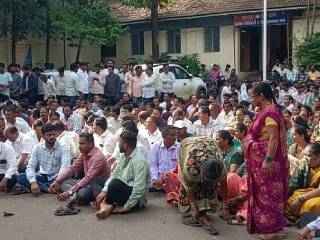 Villagers march to Kagal (Kolhapur district) Police Station in the ‘Love Jihad’ case and demand that the Hindu young woman be handed over to her parents !
 The Temple has fixed deposits worth ₹472 crore and gold and silver worth ₹300 crore !
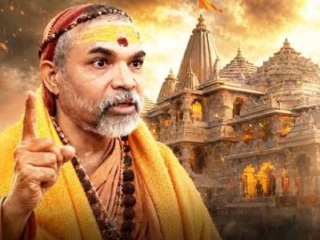 The Shri Ram Temple is an office of the BJP and the RSS; I will go for darshan when it truly becomes a Shri Ram Temple ! : Jyotish Peeth Shankaracharya Swami Avimukteshwaranand Saraswati
 Actor Aamir Khan is the ‘brand ambassador’ of ‘Love Jihad’; Boycott his films ! : Minister Nitesh Rane
 Jaunpur Hosts Seminar on Sanatan Dharma Awakening and Preservation of Vedic Culture
 Case registered against husband and wife for propagating Christianity at Sassoon General Hospital, Pune