
(VIP means Very Important Person) |
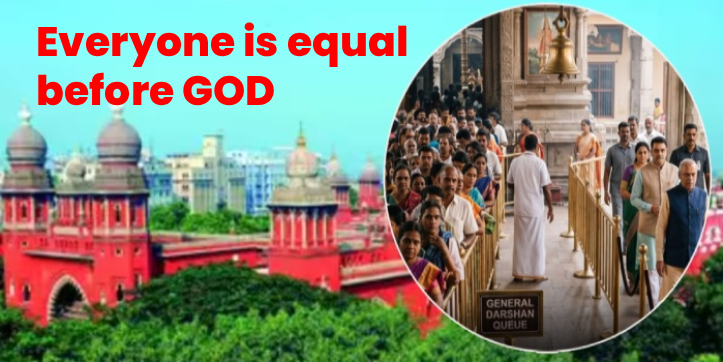
New Delhi – The Madras High Court strongly criticised the practice of ‘VIP darshan’ (special arrangements and priority for prominent persons to have darshan of a Deity) in temples, observing that ministers and MLAs should not assume that they are above the law or that God is waiting for them. Thousands of devotees visit famous temples across the country every day, whether it is the Tirupati Balaji Temple, the Mahalakshmi or Tulja Bhavani temples in Maharashtra, the Shriram Temple in Ayodhya, or the Kashi Vishwanath Temple. However, most such temples follow the practice of ‘VIP darshan’. The Madras High Court raised these serious concerns while hearing a petition challenging this practice.
🚨 Madras High Court Slams VIP Darshan Culture in Temples 🚨
🛕 “Ministers and MLAs should not assume that God is waiting for them!”
The Court reaffirmed a core principle of Sanatan Dharma: All are equal before God.
⚖️ Article 14 of the Constitution guarantees equality to… pic.twitter.com/nyn2UcaibV
— Sanatan Prabhat (@SanatanPrabhat) May 31, 2026
Understand the petitioner’s arguments
The Public Interest Litigation was filed by P. Chokkalingam, an office-bearer of the Vishwa Hindu Parishad. He argued that arrangements such as special tickets, break darshan, and VIP darshan in temples create discrimination between ordinary devotees and VIPs on the basis of wealth. According to him, there is no such discrimination in the eyes of God. Sanatan tradition does not accept any distinction between the rich and the poor. Therefore, providing separate arrangements for darshan on the basis of money is contrary both to constitutional principles and the values of Dharma. He argued that this system should be abolished.
Such special arrangements are not seen in churches and mosques; an important observation by the Madras High Court
The petition was heard by the vacation bench of the Madras High Court comprising Justice G.R. Swaminathan and Justice V. Lakshminarayanan. The judges observed:
1. All are equal before God; this is what Sanatan Dharma teaches us.
2. If equality is the foundation of worship and faith, then what is the need for arrangements such as VIP darshan?
3. Such special arrangements are not seen in churches and mosques. Then how can such arrangements in temples be justified?
Article 14 of the Constitution guarantees equality to all citizens
Referring to Article 14 of the Constitution of India, which guarantees equality before the law to every citizen, the petitioner argued that the law of the land applies equally to all individuals. No one is above the law, whether rich or poor, an ordinary citizen or a government official. If all citizens are equal before the law, then equal opportunities should also be available at religious places.
Temple administration’s position
The temple administration argued that revenue generated from special darshan tickets constitutes a significant portion of the temple’s income. This revenue helps in the management and maintenance of the temple. However, the High Court rejected the argument regarding loss of revenue and observed that a discriminatory system cannot be justified merely based on income. Such issues cannot be ignored.
 Villagers march to Kagal (Kolhapur district) Police Station in the ‘Love Jihad’ case and demand that the Hindu young woman be handed over to her parents !
 The Temple has fixed deposits worth ₹472 crore and gold and silver worth ₹300 crore !
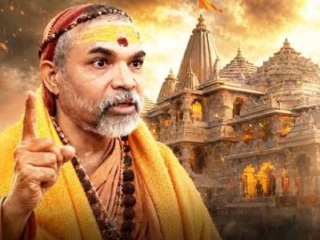 The Shri Ram Temple is an office of the BJP and the RSS; I will go for darshan when it truly becomes a Shri Ram Temple ! : Jyotish Peeth Shankaracharya Swami Avimukteshwaranand Saraswati
 Actor Aamir Khan is the ‘brand ambassador’ of ‘Love Jihad’; Boycott his films ! : Minister Nitesh Rane
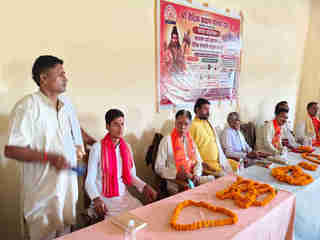 Jaunpur Hosts Seminar on Sanatan Dharma Awakening and Preservation of Vedic Culture
 Case registered against husband and wife for propagating Christianity at Sassoon General Hospital, Pune