
Grant of ₹2,900 crore pending since 2012 !
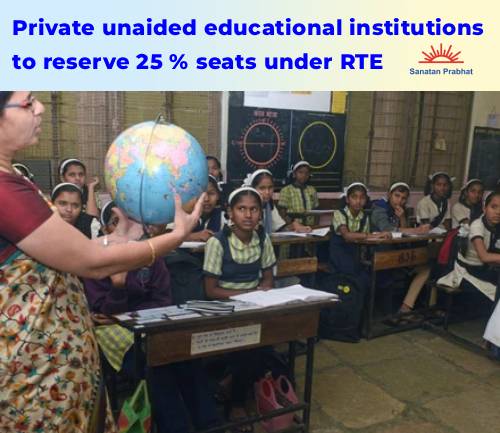
Mumbai, 30 April – Under the Right to Education (RTE) Act, it is mandatory for private unaided educational institutions to reserve 25 per cent seats in schools for students from economically weaker and disadvantaged sections. The Act also provides that the government must reimburse (grant amount) these reserved seats. However, while the government has made the 25 per cent reservation compulsory, it is refusing to pay the reimbursement amount. Since 2012, the government has kept ₹2,900 crore of reimbursement dues pending for educational institutions in the State.
Under the RTE Act, 8,701 schools in the State fall within the criteria of reserved seats in private unaided schools. In these, a total of 1,14,826 seats are reserved for students. At present, a grant of ₹17,670 per student per year has been fixed. The data of these students is submitted online to the government by the concerned educational institutions, based on which the reimbursement amount is determined.
Sanatan Prabhat Exclusive:
📚 RTE Crisis in Maharashtra: ₹2,900 Cr Unpaid!25% reservation for EWS students exists in private unaided schools, but the State Govt hasn’t paid subsidies.
₹2,900 crore pending since 2012
Burden shifts to other students or pushes schools toward… pic.twitter.com/3MwZktlmI1
— Sanatan Prabhat (@SanatanPrabhat) April 30, 2026
Reimbursement requirement ₹750 crore; allocation only ₹220 crore – Education Department
Under the RTE, the Union Government provides 2 per cent of the total funds of the Education Department towards reimbursement. In Maharashtra, approximately ₹750 crore is required annually for reimbursement of all students; however, only ₹220 crore has been sanctioned in this year’s budget. An official from the Education Department stated that, compared to the required amount, only a meagre sum is allocated every year. As a result, crores of rupees in reimbursement remain pending annually.
Additional financial burden on other students
Running an educational institution requires substantial funds for salaries of teachers and staff, infrastructure, and educational materials. Admission fees and donations are primary sources of funding for such institutions. Even when reimbursement from the government is not received, institutions have no option but to make alternative arrangements to continue operations. Consequently, this financial burden is shifted onto other students by charging higher admission fees and donations. While some institutions are financially strong and some operate with commercial motives, financially weaker institutions, especially in rural areas, face severe financial strain.
Attempts to obtain minority status through false information
If an educational institution is granted minority status, it is exempted from the 25 per cent reservation rule under the RTE. Minority status is granted based on religion and language. As a result, many institutions are trying to obtain a minority status. Several cases have come to light in the State where institutions have shown inflated or fake student numbers to secure minority status.
The government must formulate a clear policy
If a private institution is financially capable and does not require reimbursement, or to what extent institutions can reserve seats for economically weaker students, the government must study these aspects and formulate a clear policy. However, framing reimbursement rules and then delaying funds for 14 years not only tarnishes the government’s image but also pushes educational institutions towards questionable practices. The government must take a serious note of this situation.
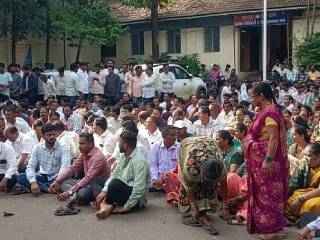 Villagers march to Kagal (Kolhapur district) Police Station in the ‘Love Jihad’ case and demand that the Hindu young woman be handed over to her parents !
 The Temple has fixed deposits worth ₹472 crore and gold and silver worth ₹300 crore !
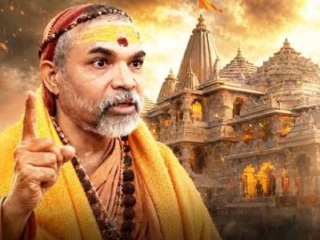 The Shri Ram Temple is an office of the BJP and the RSS; I will go for darshan when it truly becomes a Shri Ram Temple ! : Jyotish Peeth Shankaracharya Swami Avimukteshwaranand Saraswati
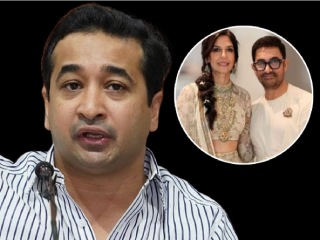 Actor Aamir Khan is the ‘brand ambassador’ of ‘Love Jihad’; Boycott his films ! : Minister Nitesh Rane
 Jaunpur Hosts Seminar on Sanatan Dharma Awakening and Preservation of Vedic Culture
 Case registered against husband and wife for propagating Christianity at Sassoon General Hospital, Pune