
Case on Sabarimala Temple Traditions in the Supreme Court of India
Court states that the government has the authority to intervene
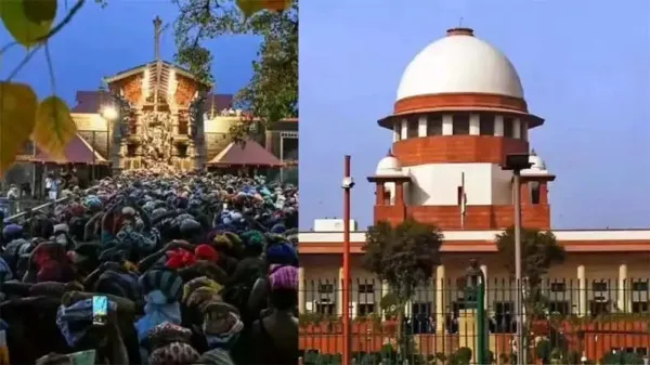
New Delhi – The Supreme Court of India has observed that public roads cannot be blocked in the name of religious activities. While every religious community has complete freedom to determine and practice its mode of worship, and courts generally do not interfere in internal religious matters, the government does have the authority to intervene if such activities disrupt secular functions or public order.
These observations were made during the ongoing combined hearing before a 9-judge Constitution Bench on petitions related to the traditions of the famous Sabarimala Temple in Kerala.
Roads cannot be blocked in the name of religious activities – Supreme Court of India while hearing matters related to Sabarimala Temple.
The Court said governments have the authority to act.
The principle should apply equally everywhere. Across many cities, roads are often… pic.twitter.com/Rmmjhbif5Q
— Sanatan Prabhat (@SanatanPrabhat) April 29, 2026
Arguments presented by petitioners supporting Hindu traditions:
On the 9th day of the hearing, Advocate Akshay Nagarajan, representing the Hindu Dharma Acharya Sabha, argued that under Article 25(2)(a) of the Constitution, the government cannot interfere in the rights of any religious denomination.
However, Article 25(2)(a) also empowers the State to regulate or restrict secular aspects associated with religious practices, including economic, financial, and political activities.
Advocate Nagarajan further contended that the protection granted under Article 25 is not limited merely to matters of belief, but also extends to the outward expression of faith; such as rituals, customs, ceremonies, and practices associated with the worship of a particular deity.
Supreme Court’s position
Responding to these arguments, Justice B. V. Nagarathna observed that if religious activities impact secular functions, the State has the authority to intervene.
She illustrated this with an example: if a temple is organizing an annual festival, such as a chariot procession, it cannot block all surrounding public roads. Such an act is not inherently religious in nature when it affects public infrastructure and civic life.
The Court emphasized that while individuals and communities have full freedom to perform their religious rituals, they cannot do so by obstructing public roads. For the purpose of regulation and maintaining public order, the State government is empowered to step in and take necessary action.
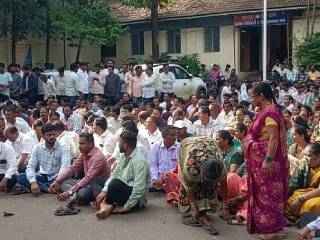 Villagers march to Kagal (Kolhapur district) Police Station in the ‘Love Jihad’ case and demand that the Hindu young woman be handed over to her parents !
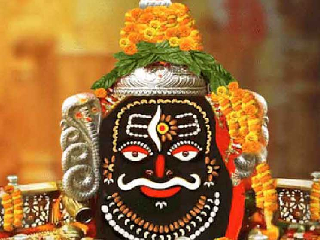 The Temple has fixed deposits worth ₹472 crore and gold and silver worth ₹300 crore !
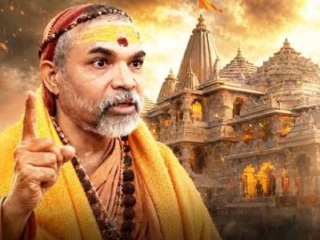 The Shri Ram Temple is an office of the BJP and the RSS; I will go for darshan when it truly becomes a Shri Ram Temple ! : Jyotish Peeth Shankaracharya Swami Avimukteshwaranand Saraswati
 Actor Aamir Khan is the ‘brand ambassador’ of ‘Love Jihad’; Boycott his films ! : Minister Nitesh Rane
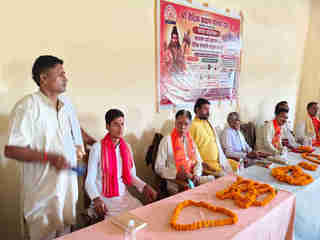 Jaunpur Hosts Seminar on Sanatan Dharma Awakening and Preservation of Vedic Culture
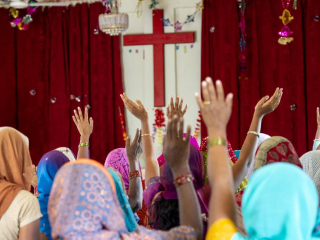 Case registered against husband and wife for propagating Christianity at Sassoon General Hospital, Pune