
Court pulls up Bengaluru civic body for denying hall for Shankaracharya Jayanti
Court says secularism does not mean ban on (Hindu) religious events; Grants permission for programme
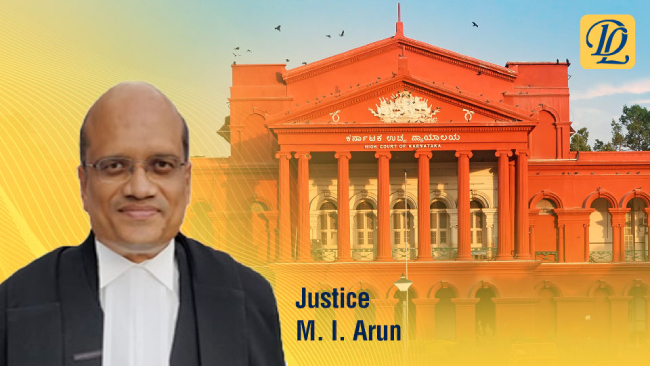
Bengaluru (Karnataka) – The Karnataka High Court observed that Adi Shankaracharya is one of the most revered spiritual teachers in India, and the “Advaita philosophy” he propagated is among the country’s leading philosophical traditions. The Court stated that celebrating Shankaracharya Jayanti should be viewed as both a religious and cultural event. While India is a secular nation, this does not mean that (Hindu) religious and cultural activities cannot be accommodated, the Court clarified. It set aside the order of the Bengaluru City Corporation, which had denied the Malleswaram Brahmin Sabha permission to use a hall for celebrating Shankaracharya Jayanti.
The Court further made a significant observation that Hindu Dharma and Indian culture can never be considered unconstitutional or illegal. Indian culture and (Hindu) Dharma, it said, are the soul of India.
🔥 Soul of Bharat Cannot Be Silenced! 🔥
⚖️ Karnataka High Court strongly rebuked the Bruhat Bengaluru West City Corporation for denying a hall to Brahmana Sabha for Shankaracharya Jayanti.
🛕 Court made it clear:
✅ India is secular, but secularism does not mean banning… pic.twitter.com/WEw3OSiS6o— Sanatan Prabhat (@SanatanPrabhat) April 26, 2026
Civic body’s anti-Hindu arguments
The municipal corporation had argued that the hall could not be used for religious purposes, as it is designated for activities like yoga and related programmes. (In fact, yoga is also a contribution of Hindu Dharma itself. Criticising the municipal corporation for considering it “secular” would still be insufficient! – Editor)
Pathbreaking Verdict in Independent India
⚖️ Karnataka HC slammed Bengaluru West City Corporation for denying a hall for Shankaracharya Jayanti.
🏛️ Court declared:
– (Hindu) Dharma & Indian culture are the soul of Bharat– Secularism does not mean anti-Hindu bias
– Hindu… pic.twitter.com/pUIW3Bw1VQ
— Sanatan Prabhat (@SanatanPrabhat) April 26, 2026
Court’s observations on Indian culture
Responding to this argument, the High Court stated
1. Shankaracharya Jayanti is not merely a religious event but also a cultural one. In fact, the richness of Indian culture is deeply intertwined with its religious and cultural practices and removing them would be akin to removing the soul of the nation. Since the event is not prohibited, it should be permitted.
2. The Constitution of India itself reflects elements of Indian traditions—such as depictions related to Indian culture, the Gurukul system of education, and figures like Gautam Buddha and Mahavir, as well as texts like the Ramayan and the Bhagavad Gita. Therefore, celebrating Indian culture—even when it aligns with religious practices—cannot be prohibited in spaces under the control of the State or its institutions.
 Villagers march to Kagal (Kolhapur district) Police Station in the ‘Love Jihad’ case and demand that the Hindu young woman be handed over to her parents !
 The Temple has fixed deposits worth ₹472 crore and gold and silver worth ₹300 crore !
 The Shri Ram Temple is an office of the BJP and the RSS; I will go for darshan when it truly becomes a Shri Ram Temple ! : Jyotish Peeth Shankaracharya Swami Avimukteshwaranand Saraswati
 Actor Aamir Khan is the ‘brand ambassador’ of ‘Love Jihad’; Boycott his films ! : Minister Nitesh Rane
 Jaunpur Hosts Seminar on Sanatan Dharma Awakening and Preservation of Vedic Culture
 Case registered against husband and wife for propagating Christianity at Sassoon General Hospital, Pune