
Arguments by counsel for the Sabarimala Temple in the Supreme Court
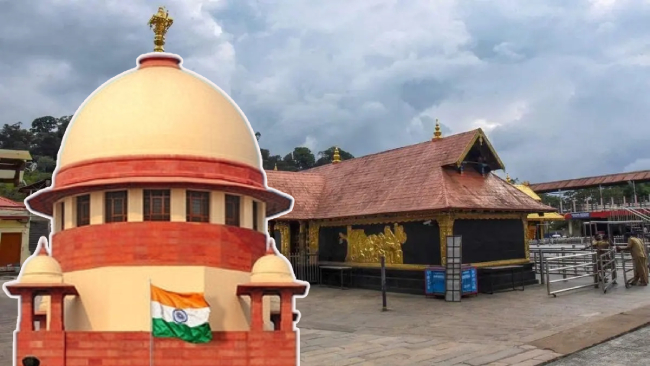
New Delhi – The Supreme Court is currently hearing petitions opposing the entry of women into the Sabarimala Temple in Kerala. During the proceedings, Abhishek Manu Singhvi, counsel for the Travancore Devaswom Board, which manages the Temple, argued, “Whether a religious practice is right or not must be determined on the basis of the beliefs of that particular community. Judges cannot decide this themselves.”
Singhvi further submitted that religion is intrinsically linked to the beliefs of a group or community. Therefore, the rights of a few individuals (women seeking entry) cannot be allowed to override or dominate the rights of the entire community.
Earlier, during the three-day hearing held from April 7-9, arguments were presented opposing the entry of women. The Union Government had stated that in several temples dedicated to Goddesses across the country, men are also barred from entry; hence, religious traditions must be respected.
In 1991, the Kerala High Court had imposed a ban on the entry of women aged between 10 and 50 at Sabarimala. In 2018, the Supreme Court struck down this restriction, terming it discriminatory. Subsequently, based on review petitions filed before the Supreme Court, seven key questions were framed, which are presently under consideration.
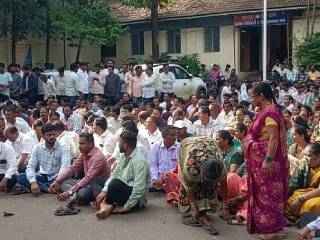 Villagers march to Kagal (Kolhapur district) Police Station in the ‘Love Jihad’ case and demand that the Hindu young woman be handed over to her parents !
 The Temple has fixed deposits worth ₹472 crore and gold and silver worth ₹300 crore !
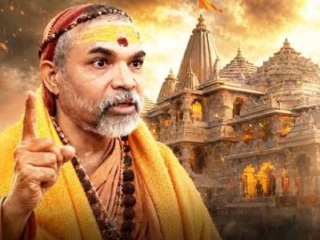 The Shri Ram Temple is an office of the BJP and the RSS; I will go for darshan when it truly becomes a Shri Ram Temple ! : Jyotish Peeth Shankaracharya Swami Avimukteshwaranand Saraswati
 Actor Aamir Khan is the ‘brand ambassador’ of ‘Love Jihad’; Boycott his films ! : Minister Nitesh Rane
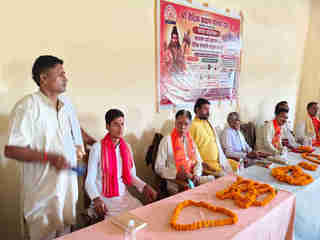 Jaunpur Hosts Seminar on Sanatan Dharma Awakening and Preservation of Vedic Culture
 Case registered against husband and wife for propagating Christianity at Sassoon General Hospital, Pune